Laser Engraving Depth: How Deep Is Deep Enough to Last?
TL;DR
Surface laser marking (annealing) sits on the metal and wears off in years of daily contact. Deep laser engraving (0.1-0.3mm) is cut into the metal and survives decades. The visible clue is whether you can feel the engraving with a fingernail — if you can, it will last; if you cannot, it is likely surface marking and will fade.
Why laser engraving depth is not a single thing
The phrase "laser engraved" covers three distinct processes that produce three different results. Buyers rarely see the distinction on a product page. The distinction determines whether a personalized piece survives the way heirloom jewelry is supposed to survive.
Laser annealing (surface marking)
Low-power laser heats the surface just enough to change the color of the oxide layer without removing metal. On stainless steel, this creates a dark mark against the metal color. No material is displaced. Depth is effectively zero.
Annealing looks clean on day one. It fades over years of wear because the oxide layer is thin and wears with the surface. On coated pieces it can also disappear when the coating layer wears down, since the marking sat within the coating rather than the base metal.
Laser engraving (shallow to moderate depth)
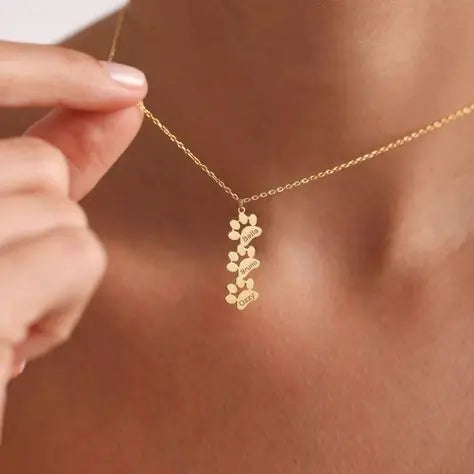
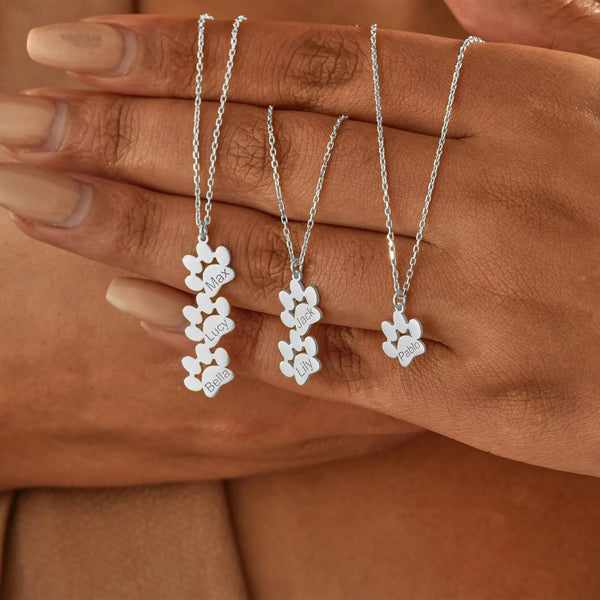
Higher-power pulses vaporize surface material to a controlled depth, typically 0.05 to 0.5 mm on jewelry-scale pieces. The result is a physical groove in the metal. You can feel it with a fingernail.
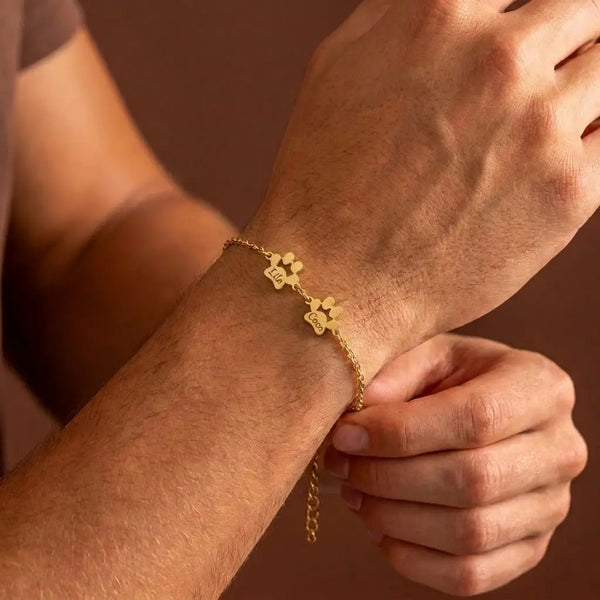
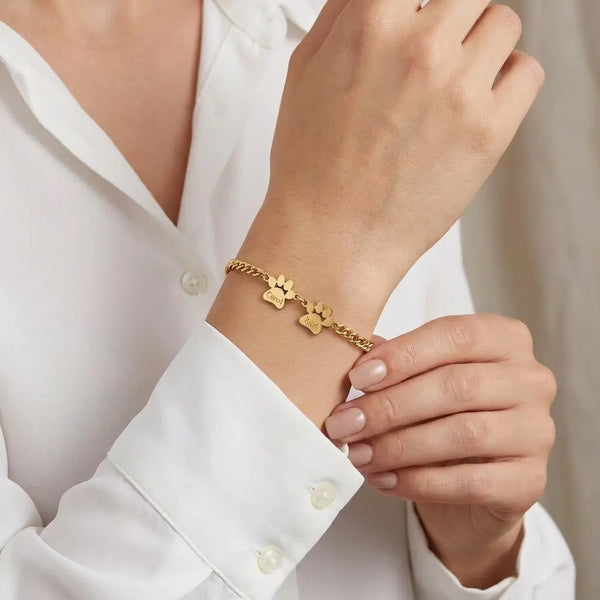
Real engraving lasts as long as the metal it is cut into. The depth determines how much daily wear it can absorb before the engraved lines become shallow enough to feel worn. At 0.1 mm and above, a personalized name on a bracelet survives decades of daily wear on 316L stainless.
Deep laser engraving (over 0.3 mm)
Multiple passes vaporize material to significant depth. Used on watches, hardware, industrial parts where the mark must survive extreme wear or be legible under machining. Rare on jewelry because the depth creates visible ridges that can catch on clothing or skin.
The depth that actually matters for personalized jewelry
For everyday personalized pieces — bracelets, necklaces, pendants, ring bands — the sweet spot is 0.1 to 0.25 mm. That is enough to give the engraving a tactile edge that survives wear, without creating a ridge that snags fabric or feels rough against skin.
| Depth | Feel | Expected life on 316L, daily wear |
|---|---|---|
| Surface annealing (0 mm) | Flat, no fingernail catch | 2-5 years before fading |
| Shallow engraving (0.05-0.1 mm) | Barely perceptible edge | 5-15 years, gradual softening |
| Moderate engraving (0.1-0.25 mm) | Distinct fingernail catch | Decades, essentially permanent under normal use |
| Deep engraving (0.3+ mm) | Pronounced groove | Effectively permanent, but may feel rough |
Our full guide on hand vs laser engraving on personalized jewelry covers both methods and where each fits.
How to test the depth of a piece you already own
Three quick checks tell you what you have.
Fingernail test
Run a fingernail across the engraving. If you feel a distinct catch, the engraving is cut into the metal (real engraving). If the surface feels completely flat and only the color changes, it is surface annealing.
Angle test under bright light
Hold the piece at an angle under a bright light. Real engraving casts small shadows inside the letter strokes. Surface annealing shows only color change with no shadow depth.
Magnification check
Under 10x magnification (a jeweler's loupe or a smartphone macro lens), real engraving shows crisp edges where the metal has been removed, with clean walls inside each stroke. Surface annealing shows soft, ink-like edges without a physical wall.
Why some brands use surface annealing anyway
Speed and cost. Annealing is faster because it requires less power and no debris removal. A high-volume shop can process a piece in seconds versus minutes for real engraving. On low-cost fashion pieces, the trade-off is defensible. On personalized pieces meant to be kept for years, it usually is not.
There is also a legitimate use for annealing: extremely thin metal that cannot be safely engraved to depth without weakening the piece. Very thin bangles and delicate charms sometimes require it. For anything with meaningful metal thickness, real engraving is the durable choice.
Interaction with coatings
Engraving depth interacts with any surface coating in ways buyers rarely see explained.
Engraving before coating
Some manufacturers engrave the base metal first, then apply PVD or other coating. The coating fills the engraving lightly but preserves the physical depth. The engraving is durable because it is cut into the base metal; the coating adds surface protection.
Engraving after coating
Engraving after coating removes coating along the engraved lines. On PVD, this exposes the base metal inside each stroke. The engraving is more visible because of the color contrast between coating and base, but the engraved lines are the least corrosion-resistant part of the piece and can develop dulling first. For sensitive-skin buyers this matters — the exposed base is a potential contact point. See PVD coating chemistry and durability for the underlying physics.
Annealing over coating
Annealing on a coated piece marks only the coating. Once the coating wears at that spot, the mark disappears with it. Combined with an already-shallow finish, this compounds the fade problem.
How much this matters for different piece types
Everyday bracelets
High wear on the inside of the band and around the clasp. Deeper engraving justified. Shallow marking will fade in a few years.
Pendants and charms
Less friction wear because they hang. Even shallower engraving can survive. Surface annealing is more forgivable here.
Ring bands
Highest wear zone in jewelry. Inside of a wedding band or ring shank sees constant friction. Deep engraving is essential; surface annealing will disappear in 1-2 years of daily wear.
Photo lockets and photo projection pieces
The engraving is on the exterior surface of the housing, not directly on the projection element. Standard depth rules apply. Our comparison of photo projection necklaces covers the housing quality question in depth.
What to ask before you buy a personalized piece
Two questions filter most of the ambiguity:
Is the engraving cut into the metal or is it a surface mark? Trustworthy brands answer clearly. Cut engraving lasts. Surface marks fade.
What is the engraving depth, in millimeters or in relative terms? A brand that has a real answer ("approximately 0.1 to 0.15 mm" or "deep enough to feel with a fingernail") is describing a real process. A brand that answers vaguely is often selling annealing under the "engraving" label.
The bottom line
Depth is what separates engraving that survives from engraving that fades. The visible test is simple: can you feel it with a fingernail? If yes, it will last. If no, it will not. For personalized jewelry where the point of the piece is the name or the date or the memorial, depth is not a technical detail — it is the entire product.