Εξατομικευμένο βραχιόλι υπόσχεσης: πότε να το χαρίσετε, ποιος το φοράει, τι να χαράξετε
A promise bracelet is personalized jewelry given between partners — most commonly couples — as a symbolic commitment that isn't yet an engagement. It typically features matching designs (his + hers or her + her), engraved with a meaningful date, initials, or short phrase. The piece sits at the milestone of "this is serious" without the formality or financial weight of an engagement ring.
If you're considering giving (or receiving) one — this guide breaks down the right moment, who actually wears them, and which engraving choices age well versus which read cringe in three years.
What is a promise bracelet, exactly?
The promise bracelet is the bracelet-format equivalent of the promise ring tradition — symbolic jewelry given as commitment marker before engagement. It became popular in the 2010s as alternative to (or precursor of) the promise ring, particularly for couples who:
- Aren't ready for the engagement-ring weight (financial + societal)
- Don't want ring jewelry (some people don't wear rings)
- Want a piece both partners wear (rings can feel one-sided)
- Want something more visible day-to-day than a ring would be
Historically, promise jewelry traces to medieval European betrothal traditions where exchanged rings signaled "we're heading toward marriage." The modern promise bracelet keeps that signaling function without religious overtones.
When is it the right moment?
The promise bracelet works at specific relationship milestones — too early and it feels rushed, too late and engagement is the better fit. Right-moment markers:
- 1–2 year anniversary — beyond honeymoon phase, before engagement consideration
- Long-distance commitment transition — when one partner moves for the relationship
- Pre-engagement "we're heading there" period — typically 6–18 months before planned proposal
- Cohabitation milestone — moving in together = serious enough for symbolic exchange
- Post-engagement-rejection "we're still committed" gesture — for partners not ready for engagement but committed to the relationship
When it's the wrong moment
- Less than 6 months together — too fast, may pressure
- During an argument or makeup phase — emotionally charged context distorts meaning
- To "prove" commitment under suspicion — the piece doesn't fix trust issues
- For someone who has explicitly said "no jewelry" — respect it; gift something else
Who actually wears promise bracelets?
The wearer demographic is broader than typically assumed:
Couples 22–32
The classic demographic — past dating phase, not yet engaged. Often used as anniversary gifts (1-year, 2-year), Valentine's Day pieces, or just-because commitment markers.
Long-distance partners
Promise bracelets serve as physical reminder when partners can't be together. The matching aspect means both wear the same piece, creating a felt connection across distance. See our long-distance couples jewelry guide.
LGBTQ+ couples
For couples who experience engagement ring traditions as gendered or heteronormative, promise bracelets offer non-gendered commitment jewelry. The bracelet format avoids ring-tradition baggage.
Adult children for parents
Less common but increasing — adult children gifting promise-style bracelets to elderly parents (often after a parent's loss of spouse) as "I'm still here" gestures.
Friends as promise of platonic commitment
Rare but valid — best friend pieces given as life-commitment markers (e.g., "we'll be in each other's weddings", "we'll be each other's emergency contacts"). The promise doesn't have to be romantic.
The picks worth considering
Heart-to-Heart Bracelet Set — explicit promise format
Two matching bracelets, designed to be worn by both partners. Each piece can carry one initial of the partner. The format itself signals "we are a pair."
Custom Sideways Initial Bracelet — paired set
Order two sideways initial bracelets with each partner's initial. Both partners wear their own initial, the visual format matches. Less explicit than the heart-to-heart but works for couples who want subtlety.
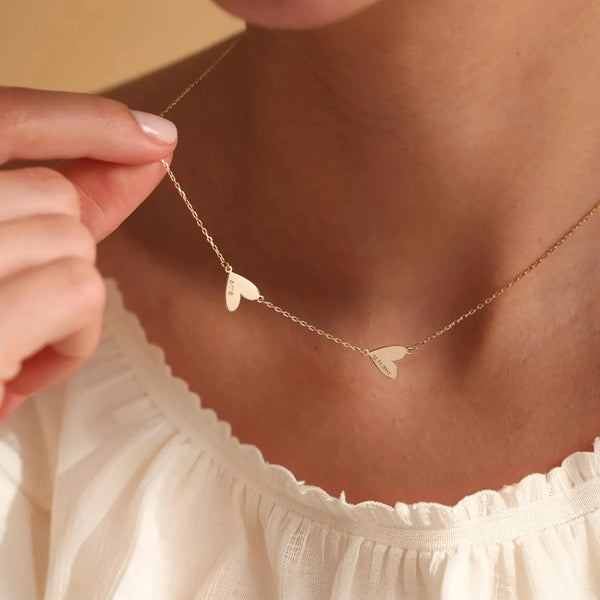
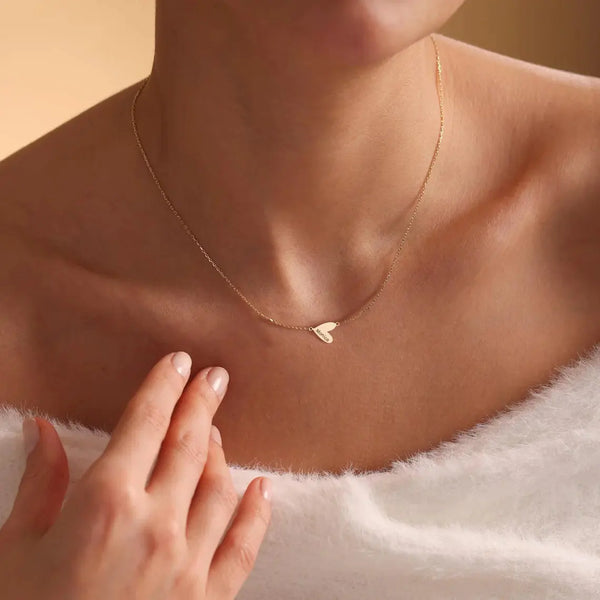
Heart Initial Bracelet — for the affectionate
Single bracelet with the partner's initial inside a small heart. Worn by one partner; the partner who gave it is implied. Works as one-direction promise (one partner gifting to another without expecting same-piece return).
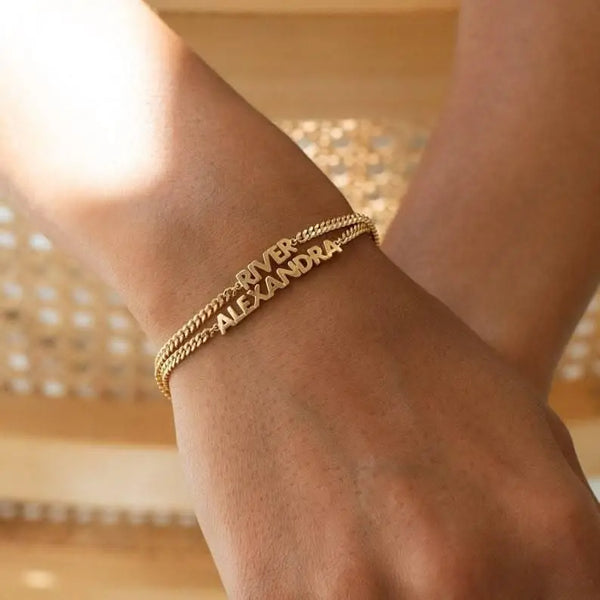
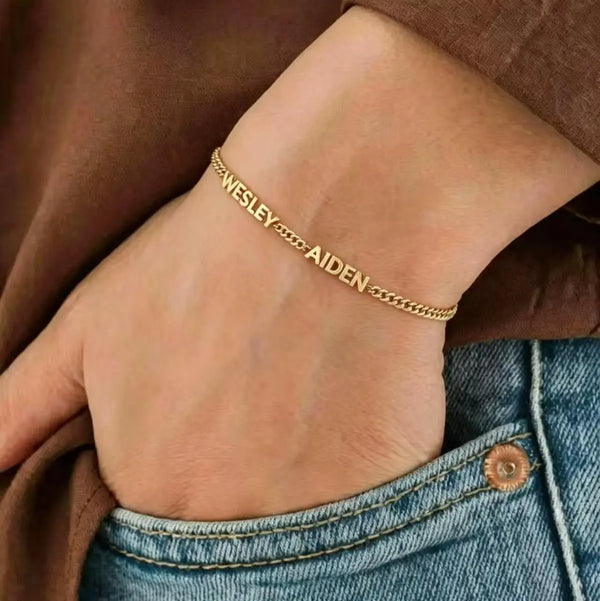
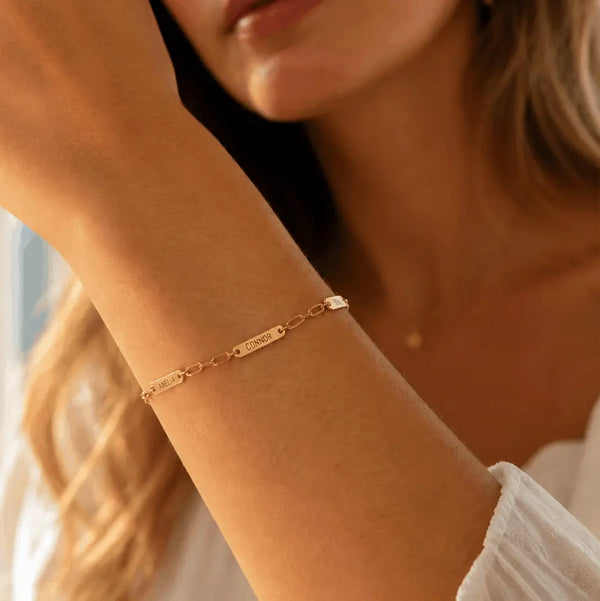
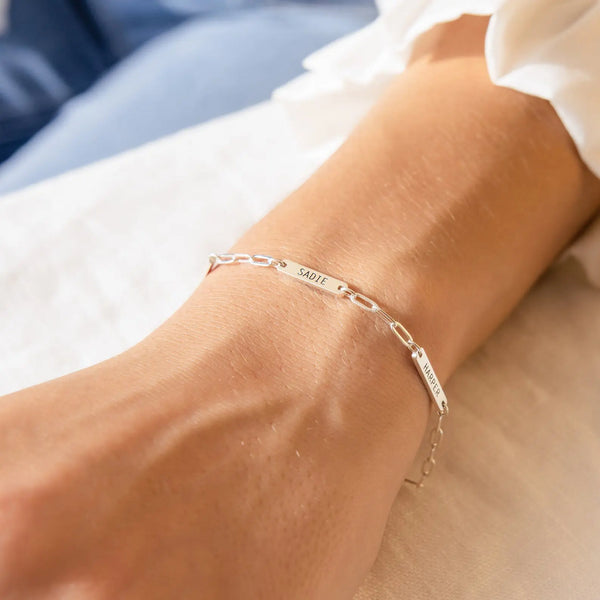
Custom Name Bracelet — for full-name promise
Partner's name engraved on a clean steel bar. More explicit than initial; less common but emotionally direct.
Photo projection couples piece
For modern couples — photo projection bracelet with hidden image of the partner. The promise sits visually inside the piece, only the wearer knows what's there.
What to engrave (and what to avoid)
What works long-term
- The anniversary date (relationship start date, when you said "I love you", first meaningful trip together)
- Both initials in a clean side-by-side or stacked format
- Single meaningful word in the partner's mother tongue ("toujours" / "sempre" / "forever" / "siempre")
- GPS coordinates of a meaningful place (first apartment together, first kiss location, proposal venue)
- A short symbol (heart, infinity, star) — timeless and translates across languages
What to avoid
- Current relationship nicknames — "Bubba" and "Babycakes" age poorly past the dating phase
- Quote lyrics from current songs — feels cringe in 3 years when the song does
- Inside-joke phrases that require explanation — gift recipient may not want to explain to every observer
- Engagement-implying phrases ("my fiancée") — premature if you're at promise-not-engagement stage
- Religious phrases if you're not sure of partner's beliefs
Materials & care
Promise bracelets get worn daily — survival under conditions is critical:
- 316L stainless steel — only material that handles 24/7 wear including showers, sleep, gym
- PVD plating for gold-tone finishes — won't fade or replate
- Comfortable clasp — fumblable one-handed (since partner may not be present to help)
See our bracelet sizing guide for measurement walkthrough.
If the relationship ends
The hardest practical question: what happens to a promise bracelet if the relationship doesn't last? Honest answers from wearers:
- Keep wearing it as a meaningful piece from your past — some wearers do this
- Box it away for future reflection — most common path
- Give it to a sibling or close friend — re-purpose the piece
- Send back to the giver — rare and emotionally fraught, but some people do this
The piece's value isn't undermined by the relationship ending. Many people keep promise jewelry from past relationships as part of their personal history, the way people keep concert tickets and travel mementos.
Difference from engagement / wedding pieces
The promise bracelet sits explicitly below engagement-ring weight. Signaling differences:
| Property | Promise bracelet | Engagement ring |
|---|---|---|
| Public signal | Subtle — friends may notice, strangers don't | Visible — strangers notice, expect questions |
| Financial weight | $30–150 typical | $3,000+ typical |
| Commitment implication | "We're serious" | "We're getting married" |
| Both partners wear? | Often yes | Usually one partner only |
| Removed for activities? | Worn 24/7 | Sometimes removed for safety |
FAQ
Is a promise bracelet a real commitment? Yes — it's a real symbolic gesture. The piece doesn't have legal weight, but neither does an engagement ring. The commitment is in the relationship, not the metal.
Can men wear promise bracelets? Absolutely. The format works particularly well for men who don't wear rings or necklaces — the bracelet sits comfortably under shirt sleeves at work.
What if my partner doesn't want jewelry? Don't gift it. Some people genuinely don't wear jewelry, and the gift becomes pressure. Choose a different symbolic gesture.
Best time of year to give? Less about season, more about milestone. Anniversaries, Valentine's Day, or significant personal dates (graduation, move-in day). Avoid Christmas — promise pieces compete with other holiday gifts and lose meaning.
Should we exchange or one-way gift? Both are valid. Exchange (both partners gift each other matching pieces) is more egalitarian. One-way gift (one partner gives, other receives) is more traditional. Discuss preferences beforehand if possible.