Meaningful Engraving Ideas for Adopted Child Jewelry
TL;DR
The best engravings for adopted child jewelry stay short and specific. Use the Gotcha Day date, the child's chosen name, or a two-to-four-word phrase that reflects your private family language. Save longer sentiments for the interior of lockets or the reverse of pendants, where they get room to breathe.
Engraving is the difference between a nice piece of jewelry and a piece that belongs to one specific person. For adopted child jewelry the stakes feel higher, because the wrong words can flatten a story that deserves depth. This guide is a set of engraving ideas organized by intent, with notes on what fits, what to avoid, and where to place the words.
If you're still choosing the piece itself, our full adoption anniversary jewelry guide covers styles by year and recipient. This article assumes you have the piece and you're stuck on the words.
Start With the Question, Not the Words
Before writing anything on a jeweler's engraving form, answer three questions honestly:
- Is this piece for the child, the parent, or both?
- Do you want the meaning visible to strangers, or private to the wearer?
- How many characters will actually fit and still read cleanly at pendant scale?
Those three answers eliminate most bad choices before you make them. A three-line inscription designed for a parent looks confused on a child's bracelet. A public engraving that reveals a private family term will make a teenager stop wearing the piece within a month.
Date-Based Engravings
Dates are the workhorse of adoption jewelry. They're specific, they're compact, and they mean nothing to strangers, which for many families is exactly the point.
Formats that work
- Numeric: 05.14.2019 or 14.05.2019 depending on region. Reads cleanly on bar pendants and thin bracelets.
- Roman numerals: V.XIV.MMXIX. Feels heirloom, works well on signet-style pieces, harder to read at a glance.
- Written: May 14, 2019. Needs a longer pendant or the reverse of a locket to fit comfortably.
- Year only: 2019. Ideal for minimalist pieces where the wearer wants the reference without the full timestamp.
The date can be the Gotcha Day, the day the referral was accepted, the day the child came home, or the finalization date. Ask the parents which one feels like the anniversary before ordering; families often have strong preferences here.
Name-Based Engravings
Names carry weight, but they need care. The safest choice is the child's current chosen name, engraved in a clean serif or sans-serif font. Things get more complicated when there are multiple names involved.
What tends to work
- The child's first name only, in a legible font
- The child's initial plus a family initial or symbol
- A single-word private name (nickname, term of endearment) that the family actually uses at home
What to think about carefully
- Birth names: Some adopted children want their birth name preserved on their jewelry as part of their whole story. Others do not. This is never the giver's call to make alone.
- Both names side by side: Beautiful for some families, painful for others. Only engrave both if the recipient has explicitly said they want it.
- Parent names on child's jewelry: Works for younger children (a small heart engraved Mom & Dad), can feel patronizing on teenage jewelry.
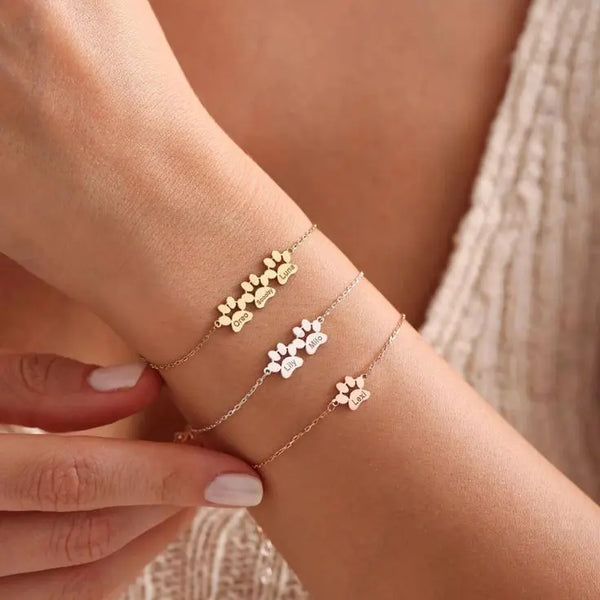
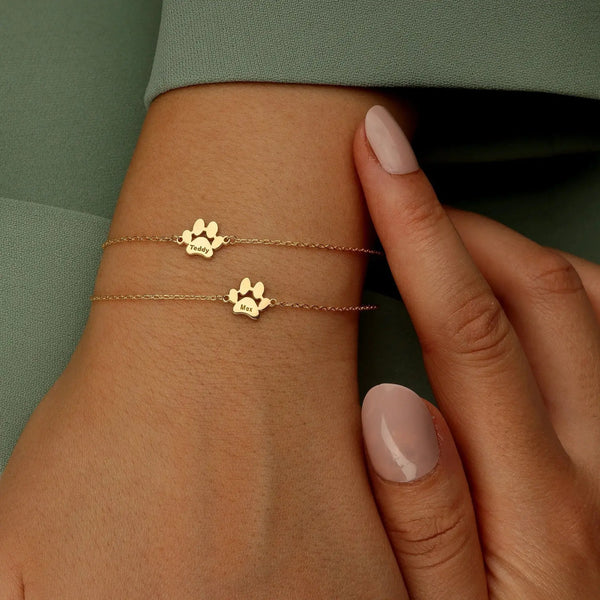
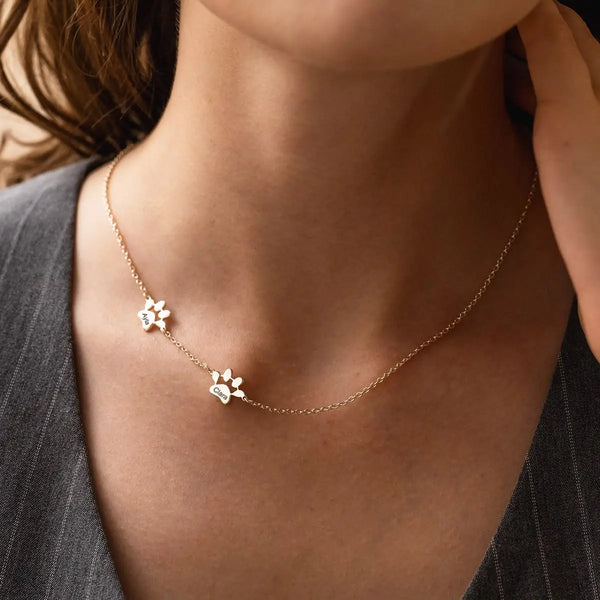
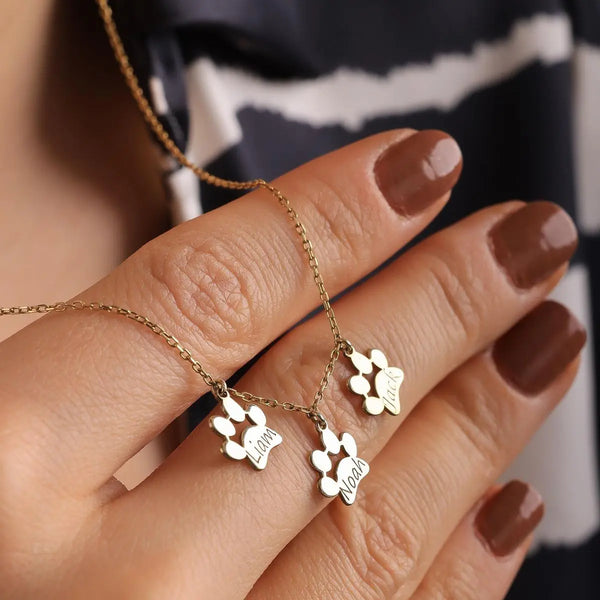
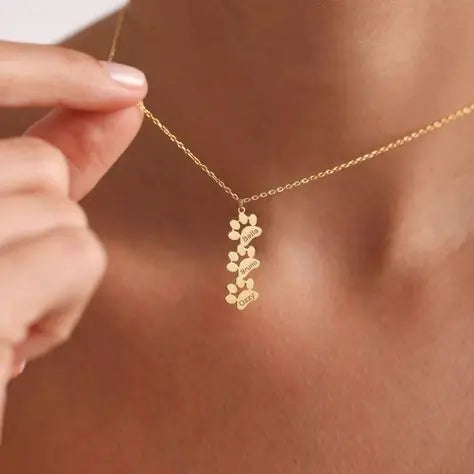
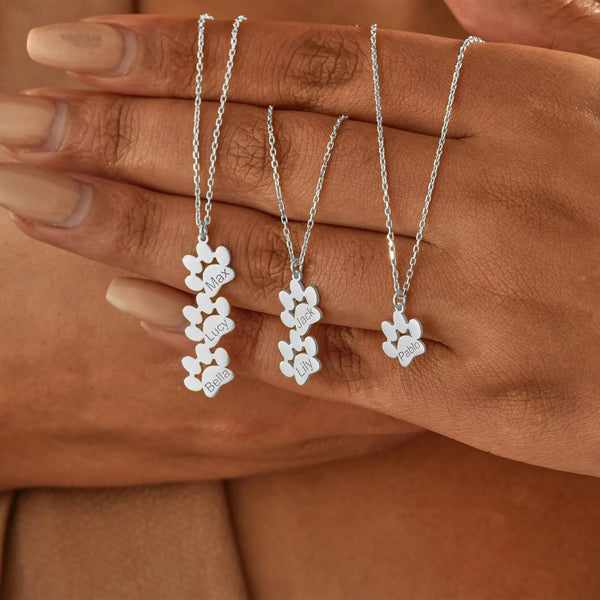
A personalized engraved name necklace with the child's chosen name on the front and a small heart symbol on the reverse is a template that has worked well across many age groups.
Short Phrases (2 to 5 Words)
This is where most engravings go wrong. Long phrases turn to visual noise, and generic phrases turn the piece into a greeting card. Keep it short, keep it specific to the family, and read it out loud before ordering.
Phrases that work
- Chosen
- Always home
- Ours from day one
- You made us four
- Wanted, loved, kept
- Home is you
Phrases to avoid
- Anything mentioning God's plan unless the family is openly religious and has used that language themselves
- Anything that implies the child was saved or rescued, even if lovingly meant
- Long inspirational quotes that could apply to any child anywhere
Coordinates and Location-Based Engravings
For internationally adopted children, or for families whose Gotcha Day happened somewhere memorable (the airport, the courthouse, the agency), latitude-and-longitude engravings can be a beautiful, discreet way to hold the geography of the story.
Formats
- Full coordinates: 40.7128° N, 74.0060° W. Long, but fits on the reverse of a locket or a long bar pendant.
- City initials with year: NYC 2019. Compact enough for a thin bracelet.
- Airport codes: JFK - HOME. Sweet for adoption stories that include a long flight home.
Hidden Engravings and Interior Inscriptions
For older adopted children, teenagers, and adult adoptees, the single best engraving choice is usually a hidden one. The piece looks like beautiful, clean jewelry from the outside. Turn it over, open the locket, or catch the light on the interior of a bangle, and the whole story is right there.
Where to hide the words
- Inside a locket, under the photo
- On the reverse of a heart pendant
- On the interior of a bangle or cuff
- Behind the setting of a birthstone piece
This approach respects the wearer's control over their own story. They decide who gets to see the engraving, and when. For adopted teenagers navigating identity questions with peers, that control matters more than the specific words chosen.
Multi-Piece Engraving Sets
When a family wants matching pieces for parents and child, the engravings should complement, not duplicate. A common template:
- Parent piece: child's name and Gotcha Day date
- Child piece: family surname or a shared symbol, plus the same date
The date links the pieces without either wearer looking at the other's jewelry and seeing themselves reflected back too obviously.
Font, Case, and Size Notes
Fonts do a lot of quiet work. A few practical notes from repeat customers:
- Serif fonts read as heirloom, work well with dates and Roman numerals
- Sans-serif fonts read as modern, work well with single words and names
- Script fonts can be beautiful but often lose legibility below 3mm text height; test on a sample before committing
- All caps reads bolder but takes more space; lowercase reads softer but can feel too casual for milestone pieces
When in doubt, ask the jeweler for a mockup at actual size before production.
Reading the Engraving Out Loud: The Best Test
Before committing to any engraving, read it out loud in the tone the wearer would read it. Not the tone you're feeling when you write it. This one test catches more bad engravings than any other check.
An engraving that sounds sincere when the giver reads it can sound saccharine, condescending, or forced when the wearer reads it. Read it as the child at age 8, at age 15, at age 30. If any of those readings makes you wince, rewrite.
Final Rule of Thumb
If you can't say your engraving out loud without cringing, don't put it on metal for a lifetime. Read it to a trusted friend before ordering. If they wince, rewrite. The best adoption-jewelry engravings sound simple, honest, and slightly specific to one family. That's the whole target.