Grandparent Loss Memorial Jewelry: Honoring Nonna, Grandpa, Opa Across Cultures
Grandparent Loss Memorial Jewelry: Honoring Nonna, Grandpa, Opa Across Cultures
TL;DR
A grandparent's real name is usually the word a child made up at eighteen months. Nonna, Opa, Yiayia, Abuela, Bà nội, Mamaw. Memorial jewelry for a grandparent works best when it carries that family name, not the generic word "grandmother." The four pieces grandchildren choose most often are a name bar with the family name, an initial pendant, a hidden photo locket, and a date bar. Every ByHeart piece is 316L stainless steel, hand-engraved with the exact spelling and accents you send, hypoallergenic, and built to be passed down decades later.
A grandparent's name is rarely their given name. It is the word a child made up at eighteen months and everyone in the family adopted forever. Nonna. Opa. Papi. Yaya. Mamaw. Ba. The name is small and specific and belongs to a whole family.
Memorial jewelry for a grandparent is often the first jewelry a grandchild orders in their life. This guide is for the person choosing something that holds that name and everything behind it.
Why grandparent grief lives longer than people expect
The cultural script for grandparent loss is that it's the natural loss — the one you're supposed to be able to handle. In practice, it often isn't. Grandparents are frequently the primary caregivers of a childhood, the first people who unconditionally loved a person, the household where a grandchild felt fully safe.
Grief for a grandparent can surface years after the funeral, at a wedding, a child's birth, a family recipe. A piece of jewelry is a way to keep the name and the presence in daily life, so the grief has a place to land when it visits.

The pieces grandchildren choose most often
Across cultures and countries, four pieces come up most often for grandparent memorial orders. What they share: the personal name — not grandmother, but Nonna.
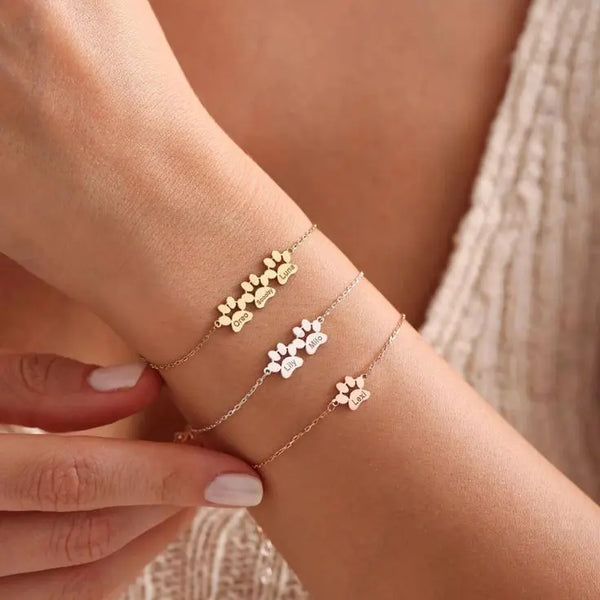
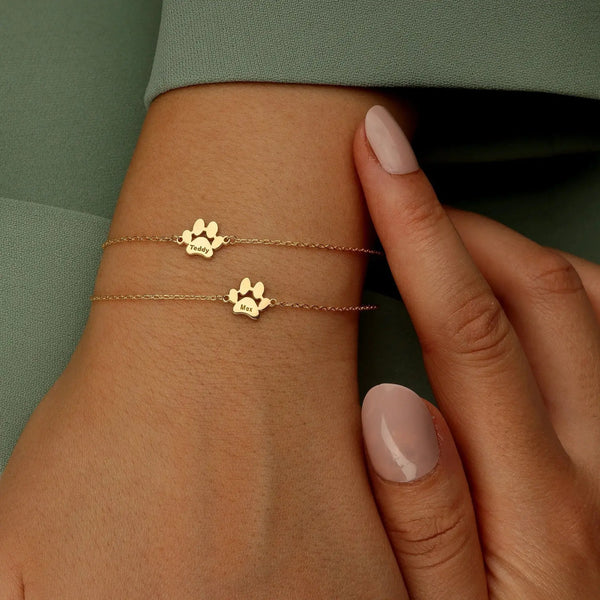
- A name bar necklace engraved with the grandparent's family name — Nonna, Opa, Bà nội, Yiayia. Read as personal jewelry; carries the whole relationship for the wearer.
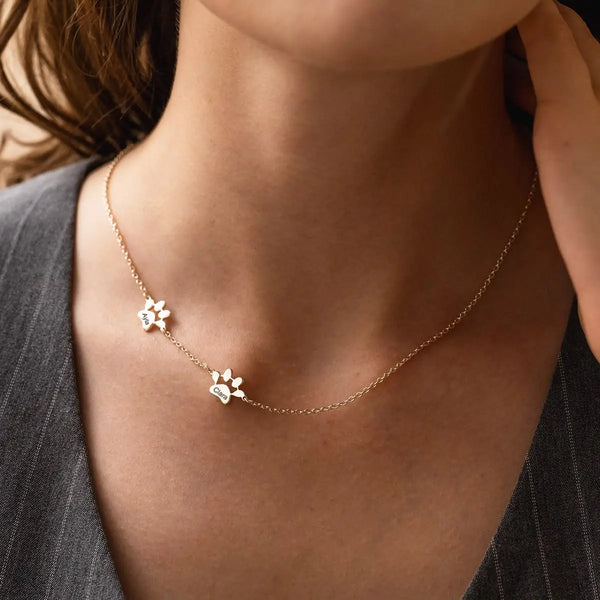
- An initial pendant for grandchildren who want something smaller, engraved with the grandparent's first initial or the initial of their family name.
- A hidden photo locket with a photo of the grandparent — often a photo of them holding the grandchild as a baby.
- A date bar with the grandparent's birth year, or with the year they passed. Some grandchildren engrave both years connected by a dash.
What to engrave
Grandparent engravings are often the most culturally specific engravings we do. The word for grandparent is different in every family. Here are engravings we see most often, in the original language:
- The family name for the grandparent — Nonna, Opa, Yiayia, Abuela, Bà ngoại, Mamaw, Grammy. Example: Nonna Rosa
- Their first name, no title — for grandchildren who called their grandparent by first name, or want something more intimate. Example: Rosa
- Birth year, the year that shaped them — for grandparents born in a time period the grandchild wants to remember. Example: 1932
- A phrase they always said — a saying, a prayer, a warning, a joke. In their language. Example: Mangia, mangia, God bless
- Their recipe abbreviation or a food they made — for grandparents whose love language was cooking. Example: Nonna's sauce
- Their signature or handwriting — engraved from a photo of a card or note they wrote you.
- Their initials with a family symbol — a small cross, a flower, an anchor.
Honoring grandparent names across cultures
One of the things we get wrong most often, and one of the things families care most about, is the correct spelling and accent of a grandparent's family name. This matters. Here are terms we engrave regularly, with the accents parents most often want preserved:
- Italian — Nonna, Nonno, Zia, Zio
- German — Oma, Opa, Omi, Opi
- Spanish and Portuguese — Abuela, Abuelo, Vovó, Vovô, Yaya, Tita
- Greek — Yiayia, Papou
- Vietnamese — Bà nội (paternal grandmother), Bà ngoại (maternal grandmother), Ông nội, Ông ngoại
- French — Mémé, Pépé, Mamie, Papi
- Polish — Babcia, Dziadek
- Chinese — Nai Nai (paternal grandmother), Wai Po (maternal grandmother)
If your family uses a name that isn't listed here, we can engrave it. Add the exact spelling — with any accents — in the engraving box on the product page. If we need to confirm a character or accent, we email before engraving.
When more than one grandparent has passed
Many people order memorial jewelry when a second grandparent has died, especially when it's the last surviving grandparent of a set. A common piece for this is a two-name bar — both grandparents' family names side by side. Example: Nonna & Nonno. This becomes a piece that represents the household of childhood, not one person.
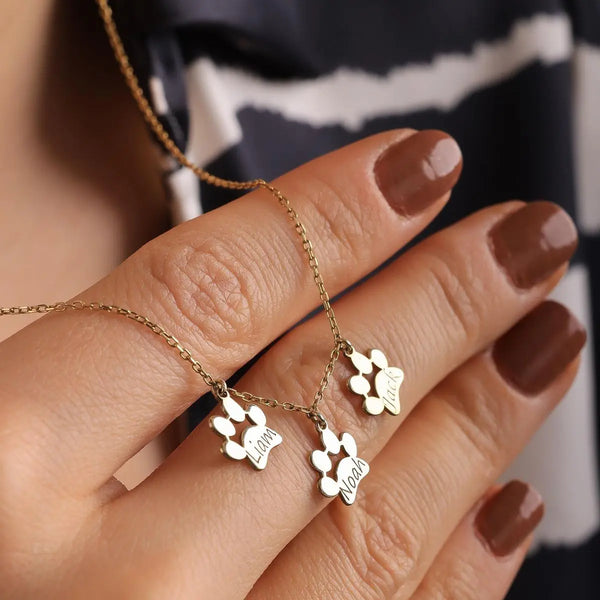
Other families choose a piece per grandparent, layered on one chain. A layered set of three or four small initial pendants — one per grandparent — reads as delicate personal jewelry to strangers and as a family history to the wearer.
For the parent grieving their own parent
When a grandparent dies, the person carrying the heaviest grief is often not the grandchild but their parent — the daughter or son who has just lost their mother or father. Personalized jewelry for this loss is a bridge across generations. A piece that holds the grandparent's name can be a gift from an adult child to their parent who is grieving.
Common piece for this: a name bar or initial pendant engraved with the grandparent's name, given to the adult child so they can wear their own parent close. The gift acknowledges the middle-generation grief that often goes unnamed.

Passing the piece down
One of the reasons stainless steel matters for grandparent memorial jewelry: these pieces are often kept for decades. A locket ordered when Nonna dies may be passed to a granddaughter twenty years later, then to her daughter another twenty years after. Our pieces don't tarnish, don't fade, and the engraving stays legible for the life of the piece.
If you're ordering a memorial piece with the intention of passing it down, choose a design with room for a second engraving on the back or interior. We can leave one side blank for a future name.
How to order
Choose the piece, add the family name and any accents in the engraving box on the product page, and check out. Every piece is engraved by hand and ships in brand-neutral gift packaging. If you want to confirm the spelling of a name in a language we haven't listed, add it in the order notes and we'll email you before engraving.
Frequently Asked Questions
Can you engrave grandparent names in languages other than English?
Yes. We regularly hand-engrave Italian, German, Spanish, Portuguese, Greek, Vietnamese, French, Polish, and Chinese pinyin family names, including accents like á, ñ, ü, and ç. For non-Latin scripts (Chinese characters, Arabic, Cyrillic, Hebrew), add a note in the order and we confirm the character by email before engraving.
Should I engrave the death date on a grandparent memorial piece?
Most people choose not to. Grandchildren tend to prefer the birth year alone, the family name alone, or a saying the grandparent used. The death date can feel heavier to wear daily than the year that shaped them. There is no rule, but if you are uncertain, leaving the death date off tends to age better.
Can I add a second name to the piece later if my other grandparent passes?
Yes, if you choose a piece with a back or interior surface. Many families ordering after one grandparent's loss deliberately choose a design with room for a second engraving. Add a note in the order asking us to leave one side blank, and we can engrave the second name later on the same piece.
Is a grandparent memorial piece appropriate as a sympathy gift for the middle generation (the adult child who just lost their parent)?
Yes, and it is often the piece that lands hardest. When a grandparent dies, the heaviest grief is often carried by the daughter or son who has just lost their mother or father, and that grief goes largely unnamed. A name bar or initial pendant engraved with the grandparent's name, given by an adult child to their parent, acknowledges that middle-generation loss directly.
How long will a grandparent memorial piece last if I want to pass it to my own child one day?
Decades. Our 316L stainless steel does not tarnish, PVD coating does not fade or peel, and hand-engraving stays legible for the life of the piece. Every piece carries a 2-year structural warranty and is designed to be worn continuously across generations, not stored between wearers.