Hidden Photo Projection Necklaces: How the Magic Works
TL;DR
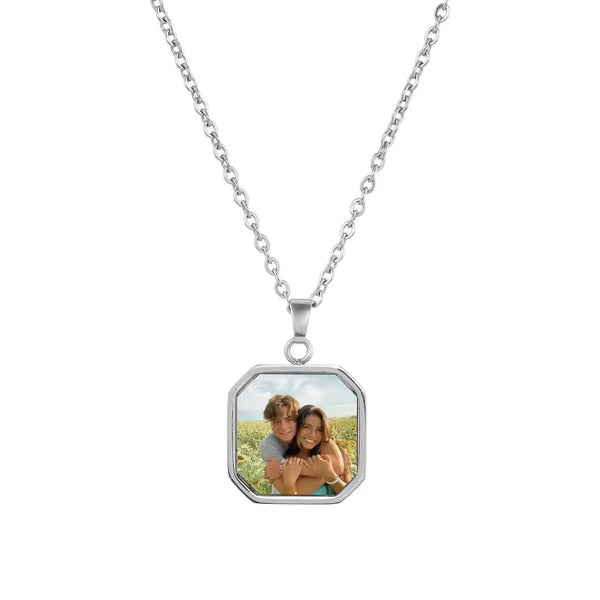
A hidden photo projection necklace hides a full image inside a pendant no larger than a coin — visible only when you hold the lens up to your eye and point it toward light. The trick is a 19th-century optical device called a Stanhope: a tiny photograph printed on a slide roughly 2mm across, sealed behind a small magnifying lens. The lens enlarges the miniature image so it appears full-size to the viewer. No batteries, no screens, no moving parts — just glass and light, in a technique that has worked since the 1850s.
The first time you hold a photo projection necklace up to the light and see a full image appear inside what looks like a plain charm, it feels like a magic trick. It isn't — it's a 100-year-old optical technique called the Stanhope lens, reborn for personalized jewelry.
This guide explains how it works, what makes a great projection photo, and how to choose a piece that stays meaningful for years.
How a photo projection necklace actually works
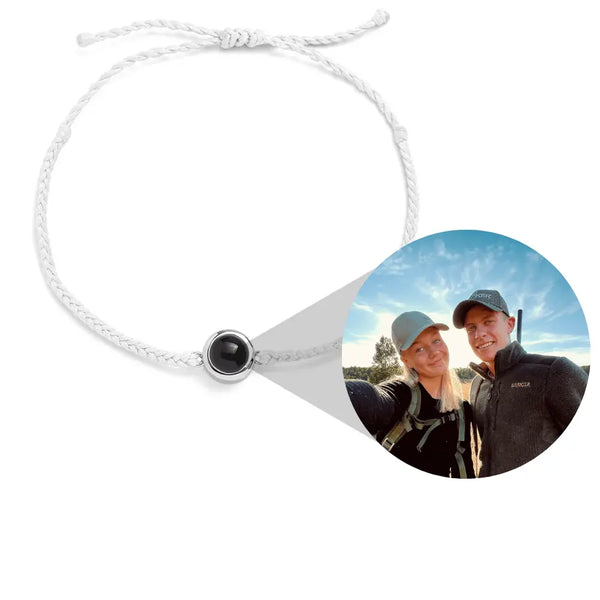
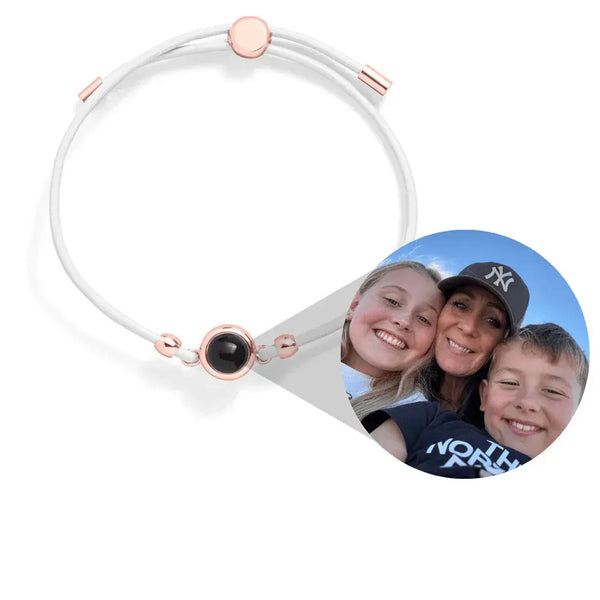
Inside the charm, there's a microscopic image — printed and bonded to a tiny lens. The lens magnifies the image so that, when you hold the charm up to bright light and look through the small aperture, you see the full photo at apparent normal size.
The original technique was patented by Sir David Brewster in 1857 and named after his collaborator John Benjamin Stanhope. Victorian travelers carried Stanhope lenses inside pendants, walking-stick handles, and tiny souvenirs. Modern projection jewelry uses the same optical principle with much sharper image quality and brighter charms.

What makes a great projection photo
Not every photo translates well to a 4mm lens. The three rules:
- One clear subject, close-up. Group photos lose detail. A single face, a single pet, or two faces close together work best.
- Bright, even lighting. Photos taken in daylight or near a window project much more clearly than dim indoor shots.
- Tight crop. The lens magnifies whatever is in the original frame, so a tightly cropped photo will read as full-sized — a wide shot will feel small and distant.
Before ordering, look at the photo you're considering on your phone, zoomed in to fill the screen. If it still reads clearly, it'll project well. If it gets blurry or feels distant, choose a different one.
The styles available
Photo projection isn't just for necklaces anymore. The same optical charm fits into several formats:
- Photo projection necklace — the classic format, worn close to the chest
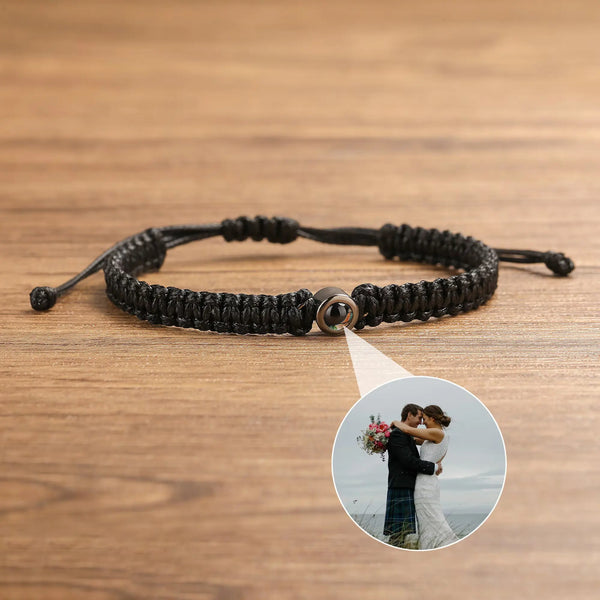
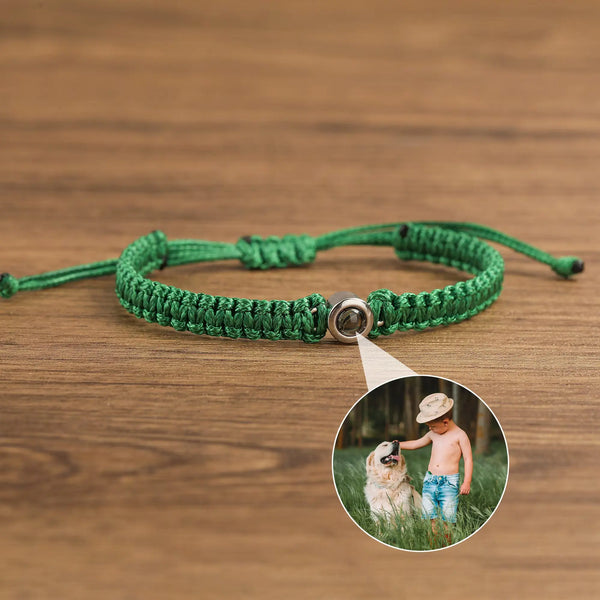
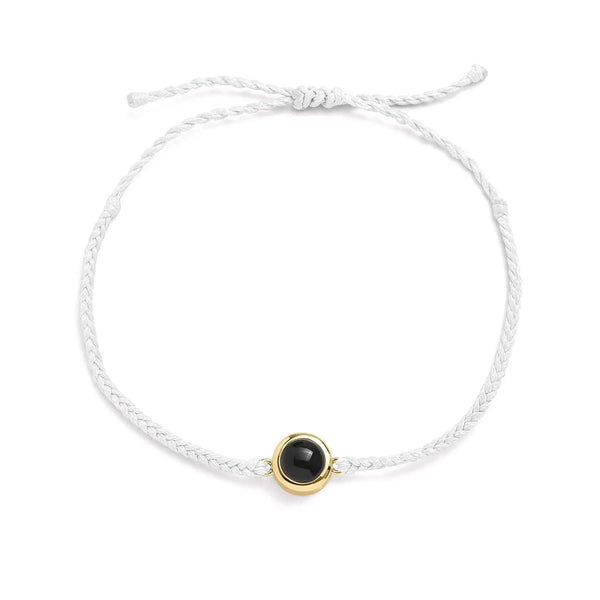
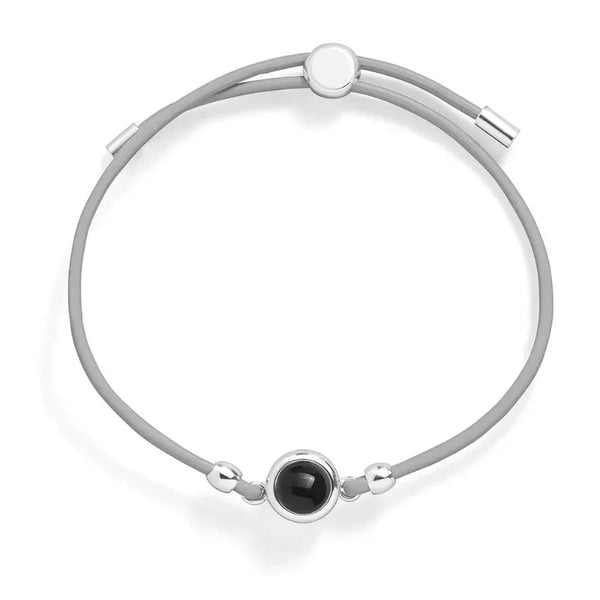
- Photo projection bracelet — the charm sits on the wrist, glimpsed throughout the day
- Photo projection keychain — practical and pocketable, often gifted to people who don't wear jewelry
- Paw + photo combination — a paw outer charm with the photo lens hidden inside

What's inside a projection charm
Behind the small aperture you can see, there's:
- A clear sapphire-style lens (the magnifier)
- A high-resolution photo printed at micro-scale
- A sealed housing of 316L stainless steel
- An optional outer design — a heart, a paw print, an oval, a teardrop
The whole assembly is sealed, which means projection charms are waterproof against showers, rain, and sweat without damaging the internal image.
Care tips that matter
- Wipe the lens occasionally. Fingerprints and lotion build-up on the small aperture can dim the projection. A microfiber cloth restores brightness.
- Look through the lens toward bright light. Phone flashlights work, but daylight produces the truest image quality.
- Don't try to open the charm. It's sealed for a reason — opening breaks the lens alignment.
- Avoid extended saltwater. Long ocean exposure can degrade the outer plating; the internal photo is safe.
Who photo projection jewelry is for
This format isn't for everyone — and that's part of what makes it special. It tends to resonate with:
- Pet parents who want to carry an image, not just a name
- Long-distance partners or family members
- People who've lost someone and want a quiet, private way to keep them close
- Travelers who like keepsake objects with a story
If you're choosing for someone else, photo projection is a gift that almost always lands — the moment of revealing the image inside is its own emotional event.
FAQ
Is the photo visible without holding the necklace to light?
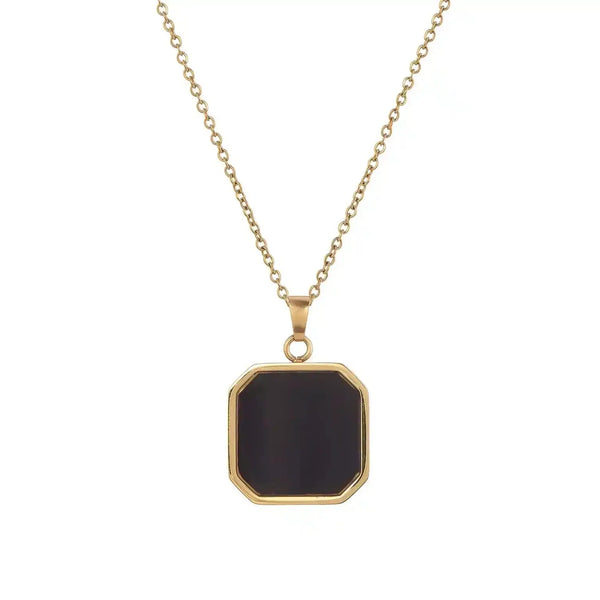
No — that's the design. The outer charm looks like a regular pendant. The image only appears when you hold it up to bright light and look through the small lens.
Can I change the photo later?
The image is sealed inside the charm at production, so it can't be swapped after the fact. Choose carefully.
How long does production take?
Photo projection pieces take a few days longer than standard engraving — usually 2–4 days — because of the micro-printing step.
Will the photo fade over time?
The image is sealed under a sapphire-style lens and protected from light, oxygen, and moisture. With normal wear, it stays sharp indefinitely.
What's the best photo to use?
A tight, bright photo of a single subject — face, pet, or two people close together. Cropped tight, taken in good light.
The keepsake nobody else sees
There's a kind of intimacy to jewelry that only reveals itself when you hold it up to the light. Browse the full photo jewelry collection to see all the formats available.
Frequently Asked Questions
How does a hidden photo projection necklace actually work?
The pendant contains a microscopic printed slide of your photograph, positioned directly behind a small glass lens. When you look through the lens toward any light source — a window, a lamp, sunlight — the lens magnifies the slide and the image appears full-size to your eye. The mechanism is purely optical.
Do I need a phone or app to see the hidden image?
No. Projection lockets are entirely analog. You just hold the pendant up to your eye, point the lens toward a light source, and the image appears. There is nothing to charge, connect, or install. This is part of why the technology has survived unchanged since the 1850s.
How is my photo transferred inside the pendant?
Your digital image is printed onto a specialized micro-slide using high-resolution photographic transfer, sealed behind the lens during assembly, and permanently protected from moisture and dust. Once made, the image is fixed for the life of the piece — it does not fade or dislodge under normal wear.
What photos work best in a projection locket?
Bright, sharp, well-lit photos with the subject centered work best. Close-up faces reproduce more clearly than group shots. Avoid dark, blurry, or heavily filtered images — the miniaturization amplifies flaws in the original. Send the highest-resolution version you have.
Are hidden photo projection necklaces waterproof?
The sealed lens compartment is water-resistant for everyday exposure — handwashing, rain, brief swimming. Prolonged soaking in chlorine or salt water is not recommended for any locket-style piece. Every ByHeart projection necklace is 316L stainless steel with a 2-year warranty, and free shipping applies to any order of two or more.