18K Gold Plated vs Gold Filled vs Solid Gold: A 2026 Buyer's Guide
TL;DR
18K gold plated, gold filled, and solid gold are three different constructions with three different price points and lifespans. Solid gold is pure gold alloy through and through — the most expensive and the only one that retains resale value. Gold filled is a thick layer of gold mechanically bonded to a base metal, and lasts 10-30 years. 18K gold plated is a thinner gold coating over a durable base like 316L stainless steel, and lasts 3-5 years for quality PVD plating. The right choice depends on budget, wear frequency, and whether the piece is an heirloom or a daily wearer.
18K gold plated, gold-filled, and solid gold are three different gold-bearing constructions — not three quality levels of the same thing. 18K gold plated has a thin layer of 18K gold bonded to a base metal (best for affordable daily wear). Gold-filled has a thicker mechanically-bonded gold layer (5% of the piece's weight, best for long-term durability under $300). Solid gold is gold throughout (best for heirloom value but most expensive). Below is the full comparison, with the trade-offs each makes — and a decision framework for which is right for you.
What each construction actually is
18K gold plated (technical: 18K-PVD-plated stainless or brass)
A thin layer of 18K gold — typically 0.1 to 2 microns thick — bonded to a base metal core. The base is most commonly stainless steel (premium plated jewelry) or brass (lower-cost plated jewelry). Bonding is done through electroplating or, for higher-quality results, PVD (Physical Vapor Deposition) — a vacuum-chamber process used in industrial coatings.
What "18K" means here: the gold layer is 18-karat (75% pure gold), not the entire piece. The piece itself is mostly base metal.
Gold-filled (technical: 1/20 14K or 1/20 12K gold-filled)
A thicker gold layer — by law in the U.S., gold-filled must contain at least 1/20th (5%) of the piece's total weight in 14K or 12K gold. The gold is mechanically bonded (heat + pressure) to the base metal core, which is typically brass or jeweler's bronze.
What the "1/20" means: 1 part gold to 19 parts base metal, by weight. This makes the gold layer 50–100× thicker than typical plating.
Solid gold (technical: 10K, 14K, 18K solid gold)
The entire piece is gold alloyed to the stated karat. 14K is 58% pure gold (mixed with other metals for durability); 18K is 75% pure gold; 24K is pure gold but too soft for jewelry. Solid gold has no base metal at all — the piece will look the same color all the way through if cut.
Gold layer thickness comparison:
- 18K gold plated (flash): 0.1-0.5 microns of gold
- 18K gold plated (heavy, PVD): 1-3 microns of gold
- Gold-filled: ~30-150 microns of gold (5% of piece weight)
- Solid 14K gold: gold throughout — no layer concept

Side-by-side comparison table
| Property | 18K gold plated | Gold-filled | Solid 14K gold |
|---|---|---|---|
| Gold content | ~0.05% of total weight | 5% of total weight | 58% pure gold |
| Base metal | Stainless steel or brass | Brass or jeweler's bronze | No base — gold throughout |
| Bonding method | Electroplating or PVD | Heat + pressure | Not applicable |
| Durability (daily wear) | 3-5 years (PVD), 6-12 months (flash) | 10-30 years | Lifetime+ |
| Waterproof? | Yes (PVD on 316L) | Yes, with care | Yes |
| Tarnish-resistant | Yes (PVD on 316L) | Yes | Yes |
| Skin reaction risk | Low (on 316L) | Low | Very low |
| Can be resized | Usually no | Yes (specialized) | Yes |
| Resale value | ~None | Modest | High (tracks gold spot price) |
| Price band (necklace) | $25-$80 | $80-$250 | $400-$2,000+ |
| Hallmark required | Usually labeled "18K GP" or "GP" | "1/20 14K GF" required by FTC | "14K" or "585" required |

Durability ranking: which lasts longest?
- Solid gold (longest) — no plating to wear, no base to corrode. A solid 14K piece can survive multiple generations of daily wear. The gold itself doesn't tarnish, doesn't oxidize, doesn't fade. It can be polished back to original luster indefinitely.
- Gold-filled (very long) — the gold layer is 50–100× thicker than plating, so it survives decades of daily wear before any base metal becomes visible. Most gold-filled pieces last 10–30 years of daily wear; carefully worn pieces last 30+ years.
- 18K PVD-plated on 316L stainless (long for plating) — quality PVD plating typically lasts 3–5 years of daily wear before showing wear at high-friction points. The 316L base underneath doesn't tarnish, so even when plating wears, the piece doesn't develop discoloration. Replating extends life by 3–5 more years.
- 18K flash plating on brass (shortest) — flash electroplating on a brass base typically wears in 6–18 months of daily wear. Once the base shows through, the brass can tarnish, turn skin green, and discolor.
Price comparison at typical retail
For a comparable simple chain or bar necklace:
| Construction | Typical retail (necklace) | Cost per year of daily wear* |
|---|---|---|
| 18K PVD-plated on 316L | $40-$80 | $8-$20/year (5 years) |
| 18K flash-plated on brass | $15-$40 | $15-$40/year (1 year) |
| Gold-filled | $120-$250 | $6-$15/year (20 years) |
| Solid 14K gold | $400-$800 | $8-$15/year (50+ years) |
*Annualized cost is the retail price divided by realistic daily-wear lifespan. Solid gold also has resale value at the end, so its true cost can be lower or even negative if gold prices rise.

Which is right for you?
| If you… | Choose… |
|---|---|
| …want gold look on a $40-$80 budget for daily wear | 18K PVD-plated on 316L stainless |
| …want a piece that lasts 10+ years and you don't need heirloom value | Gold-filled |
| …want to leave the piece to your kids in 50 years | Solid 14K or 18K gold |
| …have very sensitive skin or known nickel allergy | PVD on 316L (best price), or solid gold (best comfort) |
| …wear jewelry to the gym, pool, ocean daily | PVD on 316L stainless |
| …want a personalized memorial piece that won't lose engraving | PVD-plated 316L (engraving is permanent on stainless) |
| …want to retain monetary value | Solid 14K+ gold only |
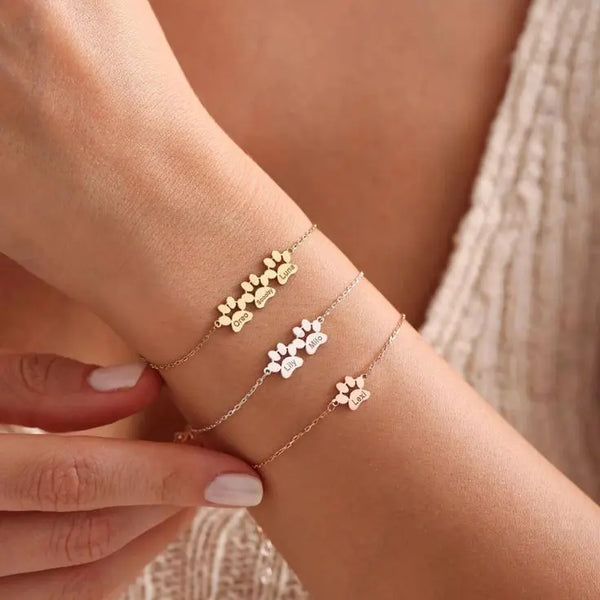
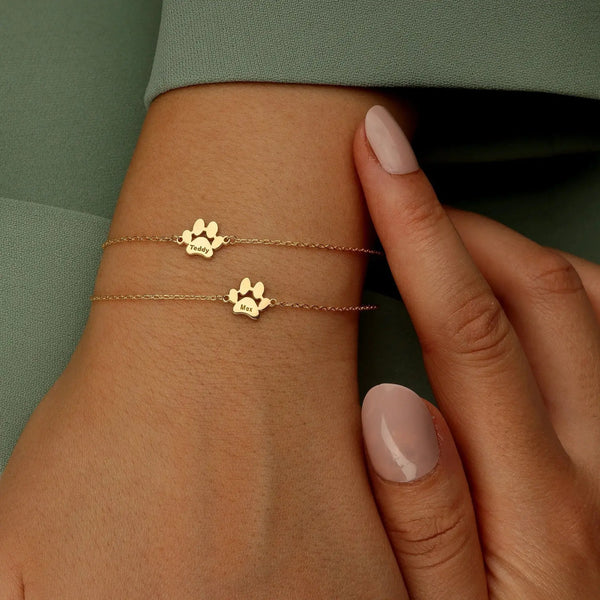
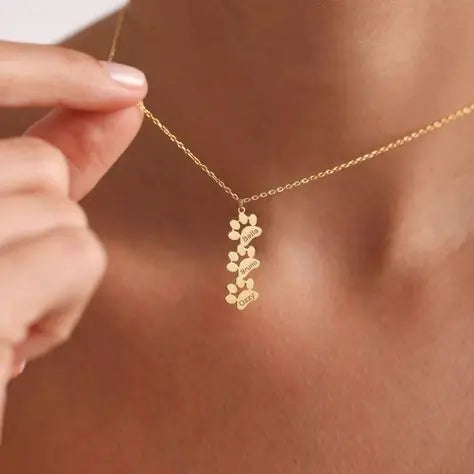
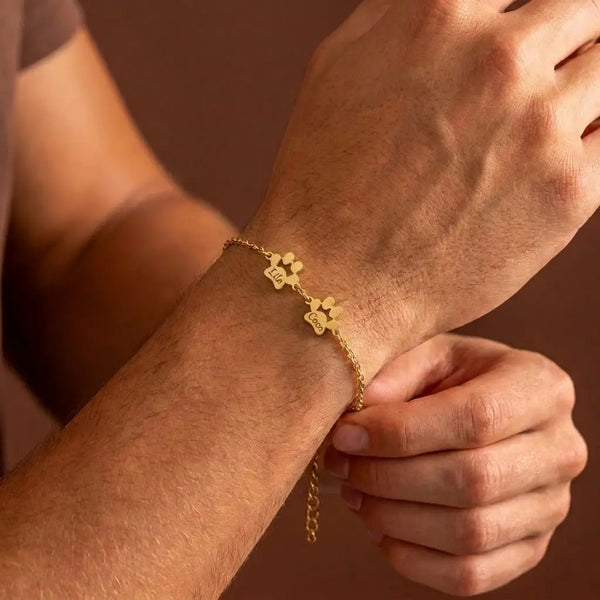
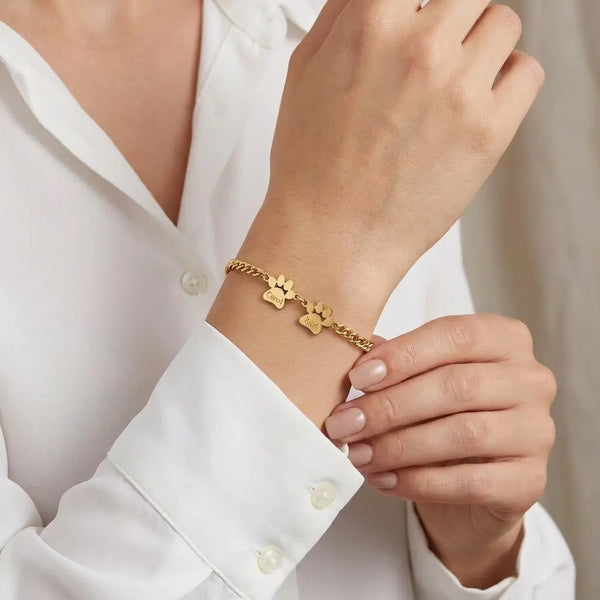
"I have one solid 18K piece that was my grandmother's and a ByHeart 18K PVD-plated paw bracelet I bought for $58. The grandmother's piece I save for special occasions. The ByHeart piece I wear every single day for two years and it still looks identical. Two different jobs, two different price points, both legitimate."
— — Jessica W., ByHeart customer review (verified, April 2026)
A note on gold vermeil and other categories
- Gold vermeil: A subset of gold-plated jewelry where the base is sterling silver (not brass) and the gold layer is at least 2.5 microns thick. Bridges between plated and gold-filled. Premium-priced for the silver base value. Common in fine jewelry brands.
- Rolled gold: An older term for what is now mostly called gold-filled. Mechanically bonded gold layer on base metal core.
- Hollow gold: Solid gold construction but with a hollow interior to reduce weight and cost. The exterior is genuine solid gold; the inside is empty. Common in larger pieces.
- Gold-toned / gold-color: Marketing terms for base metal pieces with no actual gold content. Avoid for daily-wear personalized jewelry — these can tarnish quickly.
Frequently asked questions
Is 18K gold-plated the same as 18K solid gold?
No. 18K gold-plated has a thin 18K gold layer on a base metal core (usually stainless or brass). 18K solid gold is 18K gold throughout — 75% pure gold mixed with strengthening metals. The look can be similar; the durability and resale value are very different.
Will gold-plated jewelry turn my skin green?
It depends on the base metal. PVD plating on 316L stainless will not — there's no copper to react with skin acids. Flash plating on brass can, once the plating wears through. This is one reason to prefer stainless-based plated pieces over brass-based plated pieces.
Is gold-filled better than gold-plated?
Generally yes, for durability — the gold layer is 50–100× thicker. But gold-filled is also 2–4× more expensive and almost always built on a brass base (which can show through if the piece is heavily scratched). PVD-plated stainless can be a better choice for buyers who prioritize a base metal that doesn't tarnish even if the plating eventually wears.
How can I tell what I'm buying?
Look for hallmarks: "18K GP" or "GP" indicates plated; "1/20 14K GF" or "GF" indicates gold-filled; "14K" or "585" indicates solid 14K; "18K" or "750" indicates solid 18K. Reputable retailers also disclose the base metal (e.g., "18K PVD-plated 316L stainless steel").
Can I shower with gold-plated jewelry?
Quality PVD-plated 316L stainless pieces are showerproof. Flash-plated brass pieces should not be showered with — water accelerates the breakdown of the bond and the underlying brass corrodes. ByHeart's plated pieces are PVD on 316L and are rated for daily showering.
Do all gold-plated necklaces tarnish eventually?
The gold layer itself does not tarnish. What "tarnishes" on a low-quality gold-plated piece is the base metal showing through as the plating wears. Quality PVD-plated 316L stainless avoids this because the base doesn't tarnish even when exposed.
Shop the collection: All gold-plated jewelry · Paw Print Bracelet (18K PVD-plated)
Read next:
- How long does gold-plated jewelry actually last?
- Is stainless steel jewelry actually good?
- Does stainless steel jewelry tarnish?
What is the difference between gold plated and gold filled?
Gold plated jewelry has a thin layer of gold applied by chemical or vapor deposition — typically 0.5 to 2.5 microns thick. Gold filled has a much thicker layer, at least 5% of the total weight, mechanically bonded to a brass or steel core. Gold filled lasts significantly longer, but costs more upfront and is heavier for the same size piece.
Is 18K gold plated worth buying?
Yes, for daily-wear jewelry where solid gold would be impractical or too expensive. Quality 18K PVD gold plating on 316L stainless steel resists tarnish, is hypoallergenic, and holds up for years of continuous wear. It is not an investment piece, but for pieces you actually put on every day, it delivers the look without the anxiety.
How long does 18K gold plated jewelry last?
Quality 18K PVD gold plating typically lasts 3-5 years of daily wear before showing thinning at high-friction points like clasp backs and ring undersides. Cheaper flash plating (under 0.5 microns) can wear through in 6-18 months. The base 316L stainless steel underneath remains intact regardless.
Can gold-filled jewelry be worn in water?
Gold filled jewelry handles brief water contact well — showers and handwashing are fine. Long soaks in chlorine pools, salt water, or hot tubs can eventually loosen the bond between layers. Quality 18K gold-plated pieces on 316L are more water-tolerant for daily swimming.
Which type is best for sensitive skin?
18K gold plated on 316L surgical-grade stainless steel is one of the safest choices for sensitive skin — both layers are hypoallergenic and nickel-safe. Solid 14K or 18K gold is also safe but expensive. Gold filled depends on the base metal underneath — brass-based fill can react in some people. ByHeart uses 18K PVD gold over 316L across every gold-tone piece, with a 2-year warranty.