Helping a Child Grieve a Grandparent: A Parent's Guide
TL;DR
Children grieve differently than adults — in bursts, sideways, through play, and often long after the death. Tell them the truth in age-appropriate language, use the word "died" plainly, answer their questions honestly, and keep the grandparent's presence alive in ordinary conversation.
Your parent has died. Your kids adored him. And now you're standing in the kitchen trying to figure out how to tell a seven-year-old what happened, while also grieving your own father, while also holding the family together. This is one of the harder places to be as a parent.
This guide is written for the mom or dad trying to help a child through the loss of a grandparent, without pretending to have it all figured out. It walks through how to tell them, what to expect in the weeks and months after, and how to hold his memory alive in ways that help both of you.
Telling Them: The First Conversation
Use the Word "Died"
Not "passed away." Not "went to heaven." Not "we lost him." Grief experts and child psychologists are consistent on this: soft language confuses young children and delays their ability to understand what actually happened.
Say it directly: "Grandpa died this morning. His body stopped working, and he isn't going to come back." This is hard to say. It's also the version that helps kids most.
You can add spiritual or religious framing after the plain sentence, if that's your family: "We believe he's with God now" or "His spirit lives on in the people who loved him." But start with the plain truth. Otherwise, kids often interpret "we lost Grandpa" as "Grandpa is missing and might be found" or "Grandpa is on a trip" and later feel betrayed when they realize what really happened.
Tell Them in a Safe, Familiar Place
Not in the car. Not at a restaurant. Not right before school. Tell them at home, in a quiet room, when there's time to sit together afterward.
Get down to their eye level if they're young. Physical contact helps. If they want to be held, hold them. If they want space, give it.
Answer Their Questions Plainly
Kids ask questions that can feel jarring: "Where is his body now?" "Will you die too?" "Can I still have his birthday cake?" These aren't cold. They're the natural work of a child trying to understand a huge new reality.
Answer honestly and simply. "His body is at a place called a funeral home. Yes, everyone dies eventually, but I plan to be here for a very long time. Yes, we can still have birthday cake and remember Grandpa on his birthday."
If you don't know the answer, say so. "I don't know what happens after we die. Nobody really does. Different people believe different things." Kids can handle uncertainty better than false confidence.
Prepare Them for What They'll See
If there will be a funeral, an open casket, or a memorial, describe it in advance. "There will be a wooden box called a casket. Grandpa's body will be in it. He'll look like he's sleeping. It's okay to look. It's okay not to look. You can hold my hand the whole time."
Kids do best when they know what to expect. Surprises at a funeral often become traumatic memories that shape how they experience future losses.
What Grief Looks Like in Kids (It's Weirder Than You Expect)
The Return to Play
You'll tell your kid that Grandpa died, and then 20 minutes later she'll ask if she can watch a show. This is not because she doesn't care. This is because children process grief in bursts they can tolerate, and then they need to return to normal life to metabolize what they just heard.
Adults grieve more continuously. Kids grieve in flashes: 10 minutes of intense sadness, then two hours of Legos, then a random tearful question at bedtime, then dinner, then a fine morning, then a meltdown at Target three days later. This pattern is healthy. Don't try to make her sit with grief longer than she can.
Regression
Grieving kids often regress. Bedwetting after they'd stopped. Wanting to sleep in your bed. Reverting to a younger vocabulary. Clinginess. Difficulty at school. All of this is normal and usually temporary. Meet them where they are without shaming the regression.
Physical Symptoms
Kids often express grief through their bodies. Stomachaches, headaches, loss of appetite, disrupted sleep. If these persist beyond a few weeks or interfere significantly with daily life, mention it to their pediatrician.
Anger and Behavior Changes
Some children get angry after loss. They snap, they hit siblings, they act out at school. This is often grief coming out sideways. Behavior interventions alone won't work. The underlying grief needs space, and the child usually needs adults to name what's happening: "I know you've been feeling a lot since Grandpa died. It's okay to feel angry. Let's figure out what to do with it."
Delayed Grief
Some kids don't seem affected initially and then have a big grief reaction weeks, months, or even years later, often triggered by a related event: a friend's grandparent dying, a school project about family, a milestone Grandpa would have been at. This delayed grief is normal and doesn't mean anything went wrong earlier.
What to Say in the Days and Weeks After
Name Him Often
Don't tiptoe. Reference Grandpa in ordinary conversation. "Grandpa loved this song." "Grandpa used to make this for breakfast." "You know how Grandpa always said..." Kids learn from you whether the dead person can still be part of family life. If you erase him from conversation, they learn that dead means forgotten. If you keep referencing him casually, they learn that people who die stay part of the family in a different way.
Answer the Same Questions Repeatedly
Kids will ask the same questions over and over. Where is Grandpa now? Why did he die? Will you die? Each time isn't stalling. It's a child reprocessing at a different developmental moment. Answer consistently and patiently.
Don't Pretend You're Fine
You're grieving too. If your child sees you cry, that's okay. Tell them plainly: "I'm crying because I miss Grandpa. It's a way of loving him. It's okay to be sad." Kids who see healthy adult grief learn that grief is survivable and not something to hide.
What isn't helpful is putting your grief on your child. Don't cry for hours while they try to comfort you. If you're overwhelmed, find another adult to lean on, and let your kid see you grieving in manageable doses.
Rituals That Help Kids
A Grandpa Memory Jar
Get a jar and some strips of paper. Any time anyone in the family remembers something about Grandpa, they write it down and drop it in. Pull one out at dinner every Sunday. This gives grief a small ongoing home and turns memory-keeping into an active practice.
A Drawing or Letter Corner
Some kids process grief through drawing. Give them the materials. "Would you like to draw a picture for Grandpa? We can hang it up." Some parents keep a small growing gallery of these drawings.
Marking His Birthday
On his birthday, do something small together as a family. Make his favorite meal. Look at photos. Tell one story each. Kids do well with predictable rituals attached to grief. It gives them a container for feelings that would otherwise show up randomly.
A Small Keepsake
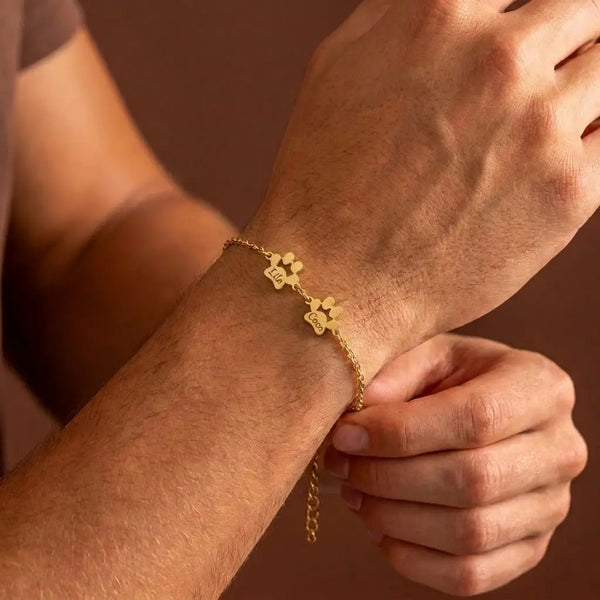
Some children find comfort in a small physical object that connects them to their grandparent. Grandpa's watch. Grandpa's cap. A book he read to them. Some families choose something quieter and more portable — a small bracelet engraved with his name or initials, a bar necklace with the years he lived, a pendant with his fingerprint. Small memorial pieces made specifically for kids exist and can become deeply meaningful. Our guide to grandparent memorial jewelry covers gentle options.
Don't force this. Some kids want something to hold. Others don't, and prefer photos or stories. Read their lead.
What to Skip
"He's Watching Over You From Heaven"
Even in religious families, this language can create anxiety in kids. They may start feeling watched, judged, or under pressure to behave for a ghost. Some children find it comforting; others find it disturbing. Read your child and go easy on this framing.
"He's in a Better Place"
Young kids often interpret this literally. If Grandpa's in a better place, why don't we go there? Why did he prefer that place to being with us? This phrase confuses more often than it comforts.
Comparing Loss to Pets
Unless the child brings up a pet's death themselves as a comparison, avoid it. Some kids find the parallel helpful; others find it minimizing to compare Grandpa to their fish.
Excluding Them from the Funeral
Many well-meaning parents skip taking kids to funerals to "protect" them. Research generally suggests the opposite: kids do better when included in age-appropriate ways. They get to see that Grandpa is really gone, participate in family grieving, and understand the ritual their family used to say goodbye.
You can prepare them, sit near an exit, and leave early if they can't handle it. But excluding them entirely often creates confusion and delayed grief later.
Kids don't need adults to have all the answers. They need adults who tell the truth plainly, hold them steadily, and keep the person they loved present in ordinary conversation.
When to Get Extra Support
Most kids process grief with the help of loving adults and don't need formal intervention. Signs to consider a child grief specialist or therapist:
- Significant behavior changes lasting more than 4-6 weeks.
- Persistent trouble at school beyond a brief adjustment period.
- Withdrawal from friends and previously loved activities.
- Anxiety about your death or their own that doesn't ease.
- Talk of wanting to die or join the grandparent.
Children's grief programs exist in many cities (Dougy Center, Judi's House, and similar organizations). Some hospice programs offer child bereavement support even when the grandparent didn't die in hospice. Ask around; you don't have to figure this out alone.
If You're Also Grieving Deeply
You lost your parent. That's massive grief in itself, and doing it while also parenting through their grief is one of the harder simultaneous demands life offers. Please make sure you have your own space to grieve — a friend, a therapist, a group. You cannot be the sole container for your child's grief while carrying your own.
If you're also grieving other losses, like a sibling or spouse in a recent period, the compounded weight is real. Resources on sibling loss and spouse loss may help name what you're carrying alongside parenting through grandparent loss.
The Long Arc
Your child's grief for a grandparent doesn't finish. It changes shape. At six, she may cry when a movie has a grandparent character. At twelve, she may write about him in an essay. At twenty, she may name a child after him. At forty, she may catch herself doing a gesture that was his and stop for a second.
Your job isn't to make the grief go away. Your job is to help her carry it, and to keep him present enough in the family that her memory of him stays vivid rather than fading. That's the whole assignment. You can do that. You already are.
Related reading
Frequently Asked Questions
Should I take my young child to the funeral?
Generally yes, with preparation. Explain what will happen, sit near an exit, and be ready to leave if they need to. Kids who are included in funerals usually do better than kids who are excluded, according to child grief experts.
My child doesn't seem sad. Is that a problem?
Not usually. Children grieve in bursts and often return to play or normal activity quickly. Grief may show up in behavior, sleep, or physical symptoms rather than obvious sadness. Watch for delayed or sideways grief over the coming months.
What if my child asks if I'm going to die?
Answer honestly. "Yes, everyone dies eventually. But most adults my age live for a very long time, and I plan to be here for you for a very long time." This is more reassuring than false promises.
How do I explain what happened if the death was traumatic?
Give a truthful but simplified version. "Grandpa's heart stopped very suddenly. Doctors did everything they could. It wasn't anyone's fault." Kids don't need graphic details, but they do need enough truth to prevent them from filling in scary blanks with their imagination.
Should I let my child see me cry?
Yes, in moderation. Kids benefit from seeing healthy adult grief. What isn't helpful is putting your full grief on your child. Cry with them sometimes; grieve deeply elsewhere with other adults.
What if I don't have the emotional bandwidth to help my kid grieve right now?
Enlist another trusted adult — the other parent, a close aunt or uncle, a family friend, a grandparent from the other side. Kids don't need one specific person; they need at least one loving adult who's available to talk. It's okay to admit you can't be everything right now.