Stillborn & Infant Loss Memorial Jewelry: A Gentle Guide
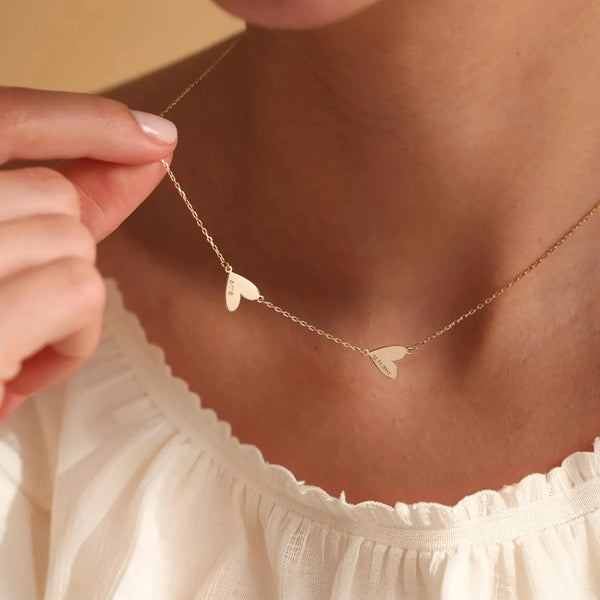
Memorial jewelry for stillborn and infant loss is typically a small engraved pendant carrying the baby's name, birth date, and either a heart, a feather, or initials of older siblings. Most parents choose a piece they can wear daily — not stored away — because the wearing itself becomes part of how they continue to be that baby's parent.
This guide was written quietly. We don't push, we don't rush, and we don't pretend to know what you're carrying. We just lay out what other parents have chosen so you don't have to research alone.
If you're newly grieving — what to do first
Nothing has to be decided this week. The most-asked question we get from newly bereaved parents is: did I miss the window for memorial jewelry? No. Parents commission memorial pieces 3 days, 3 months, 3 years, 30 years after their loss. There is no expiration.
If you're reading this in the first week after a loss, here are the only practical things that matter:
- Don't decide on engraving wording yet. The words that feel right at week 1 are often not the words that feel right at month 6. Wait for clarity.
- Photograph any hand/footprint cards or hospital memorabilia. Many memorial pieces can incorporate a traced footprint silhouette if you have one.
- Talk to your partner about visibility. Some parents want the piece visible; some want it private (under clothing, in a ring). Both are right.
The pieces parents most often choose
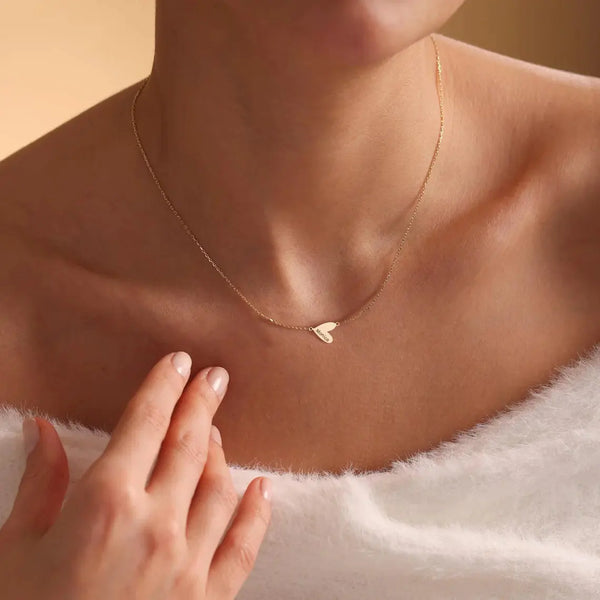
Small engraved heart pendant — with name + date
The most-requested piece. A delicate heart pendant with the baby's name and birth date engraved. Often worn on a fine chain so it sits at the collarbone or under clothing. Stainless steel with gold plating survives daily wear including tears, washing, and the rest of life.
Hidden photo locket — if you have a photo
For parents who have photographs — even of held-only-briefly babies — a hidden-photo locket keeps the image private and close. The image is sealed inside; only the wearer knows what's there.
Initial necklace — for the baby's first letter
Some parents prefer the single initial of the baby's name rather than the full name. Less explicit publicly, no less meaningful privately. Pairs well as part of a layered piece that includes living siblings' initials.
Photo projection pendant — for the sibling who carries
If a parent already has older children, a piece showing a single visible initial (the older sibling's) with a hidden projected image of the lost baby creates a layered memorial. The older child knows what's in the piece; outsiders don't.
Engraved bracelet — for the parent who can't wear necklaces
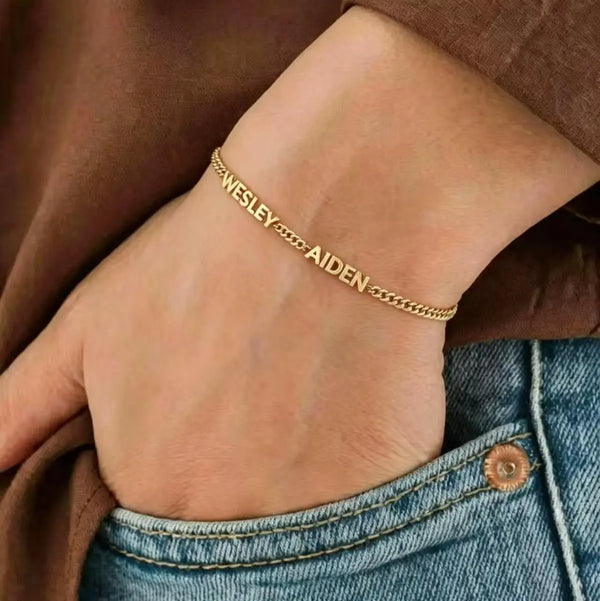
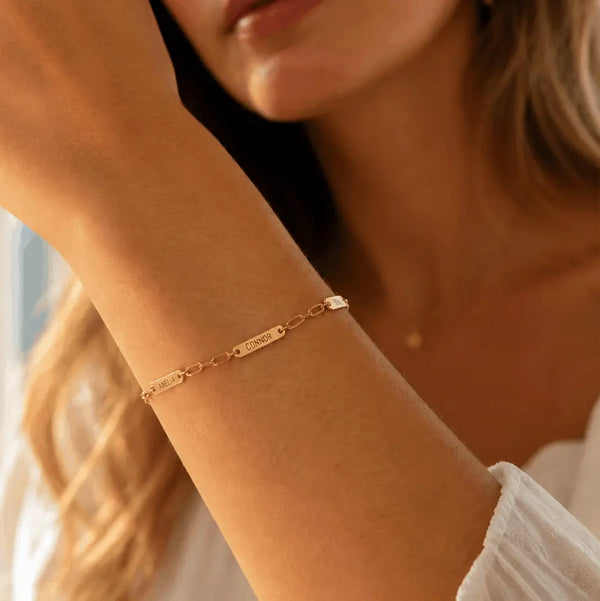
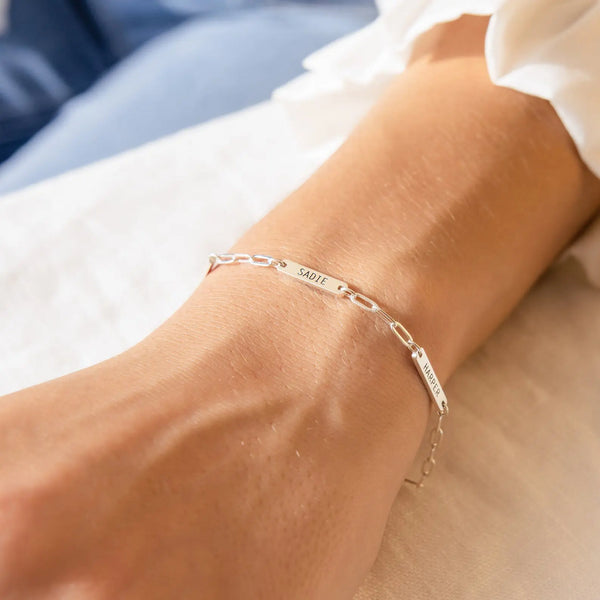
Not everyone wants something at the throat. A wrist piece — engraved bar bracelet with name + date — sits more privately and works for parents in healthcare, food service, or other jobs where necklaces aren't practical.
What to engrave (words other parents have chosen)
The most-honored choice is simple: just the name. The name itself does the work. If you want more:
- Name + birth date (the most common)
- Name + birth date + heart symbol
- "Loved beyond measure" + name
- "Forever ours" + name + date
- "Wanted, waited for, wished for" + name (often chosen by parents who lost a baby after fertility journey)
- "Always our baby" + name
What to avoid — these read sweetly in cards but become heavy worn daily: religious phrases parents are unsure about, dates that don't feel definitive (some parents prefer no date over a wrong-feeling one), or quotes from other people. The piece should be in your own voice.
If you have a sibling already
Many parents who lose a baby already have an older child. The older child often becomes part of how the lost baby is remembered. Options that incorporate siblings:
- Two-pendant layered necklace: older sibling's initial on one chain, lost baby's name on a second, slightly different chain length
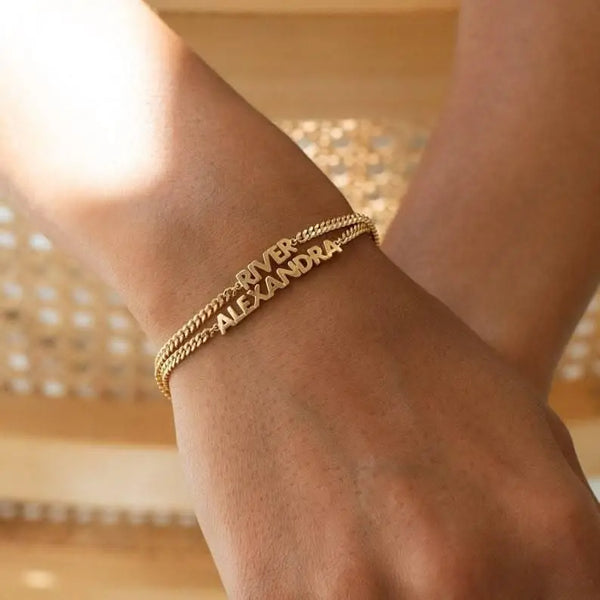
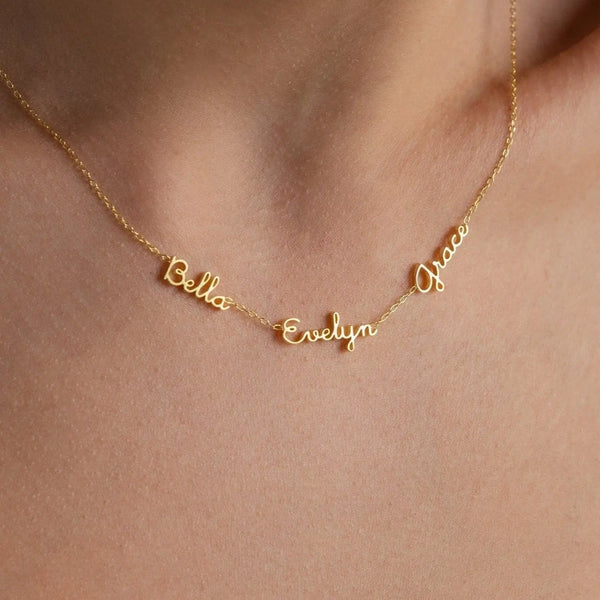
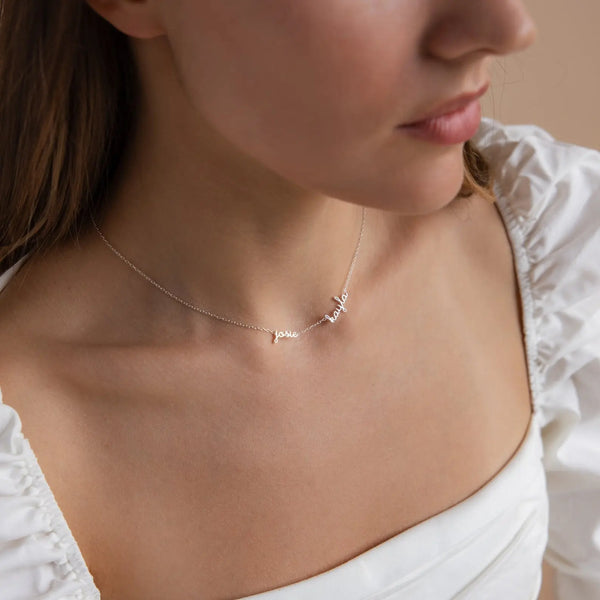
- Multi-name dainty bar: all children's names engraved in birth order. The lost baby is included as part of the family, not separate from it.
- Birthstone layered piece: both children's birthstones, with the lost baby's stone positioned where birth order places them
The decision of whether to include the lost baby in family-count pieces (e.g., a "mama of 3" necklace when one child died) is deeply personal. Many parents choose to include — the baby was their child. Others prefer separate pieces. There is no wrong answer.
For partners + extended family
Partners often grieve in parallel but in different ways. Some partners want a piece; some don't. Don't push — but don't assume. Ask once, gently. If they want one, smaller and more private pieces (key chain, leather bracelet, hidden locket) often suit partners who didn't carry the pregnancy but loved the baby.
Grandparents who lost a grandchild sometimes want a small commemorative piece too. Honor it. Their grief is real, and their wanting to participate in remembering is healthy.
Practical care
You'll wear this through everything — including showers, crying, sleeping, and the rest of your life. 316L stainless steel with PVD gold plating is the only material that handles this with no special care. Solid gold and silver require maintenance you won't have energy for in the first year. Plated brass tarnishes and may need replacing.
A note on timing
If you're newly grieving and reading this: there is no rush. The piece will mean what it needs to mean whether you order it next week or next year. Sit with it. When you're ready, you'll know. We've shipped pieces to parents marking 18 years since their loss — the piece was right when it was right, not on a deadline.
FAQ
Is it weird to want jewelry after a baby loss? No. It's one of the most common ways parents continue to be parents to a child they can't hold. Therapists call it "continuing bonds" — and the research supports it as healthy grief, not stuck grief.
Should I wear it visibly or hidden? Both are right. Some parents need others to know; some need only themselves to know. Many switch over time. The piece doesn't change based on visibility.
What if my partner doesn't want a piece? Respect it. Grief takes different shapes. Their not wanting a piece doesn't mean they're not grieving — it may mean they grieve differently.
Can I commission a piece for someone else's loss? Ask first, gently, before ordering. Some grieving parents welcome it; some find unsolicited memorial gifts overwhelming. A simple "would a piece honoring [baby's name] feel right, or not for you?" lets them choose.