Losing a Brother as an Adult: The Grief No One Names
TL;DR
Losing a brother in adulthood is often called disenfranchised grief because the world treats it as smaller than it is. You lose a childhood witness, a peer, and a future all at once. The grief is not misplaced. It's the size it seems.
People send flowers when your spouse dies. They take casseroles to your parents' house when a parent dies. When your brother dies in adulthood, they often send you a card and then quietly assume the primary grievers are your parents. Your loss is treated as a supporting role in someone else's tragedy.
This is one of the reasons adult sibling loss cuts so deep and heals so slowly. The grief itself is enormous, and the recognition of it is small. Sociologists call this disenfranchised grief. The person living through it usually just calls it lonely.
What You Actually Lost
A brother in adulthood is not just a person. He's a set of relationships you're losing all at once.
The Witness to Your Childhood
Your brother is one of very few people who remembers the same kitchen you grew up in, the specific way your mother said your full name when you were in trouble, the summer the dog got out. When he dies, half of that shared archive dies with him. There is no one left who remembers those things the way you both did.
The Peer
Parents die in the wrong direction on the family clock — they're supposed to. A brother is your generation. Losing him breaks a rule the mind unconsciously depends on: we go through life together. Cousins have kids at the same time. You watch each other's parents age. You're supposed to be sitting next to each other at his daughter's wedding in fifteen years.
The Future
Adult siblings are the people you assumed would be at your side for the second half of life, when your parents were gone and you needed someone who understood where you came from. That anchor is now missing. Every future family gathering has an empty chair.
The Version of You That Was His Sibling
You may not have realized how much of your identity was constructed in relation to him until he was gone. Older sister, younger brother, middle child. Those aren't just labels. They're a whole set of instincts about how you show up in the world. When he dies, one part of your identity loses its counterpart.
The Ways This Grief Shows Up Differently
Compared to spousal or parental grief, adult sibling grief tends to show up in some specific patterns worth naming.
Guilt About How Much It Hurts
You might catch yourself thinking, "My mom lost her son, I should be supporting her, not falling apart." Grief is not a fixed resource that has to be rationed. You can be shattered and also be a good child to grieving parents. You are allowed to need support even while giving it.
The Sudden Weight of Being an Only
If he was your only sibling, you're now an only child in your parents' eyes, and the sole future caretaker of aging parents. The practical implications of this often arrive later, when you realize you're carrying a load two people used to carry. This is worth naming to yourself early so it doesn't ambush you at 55.
Complicated Family Dynamics
Grief exposes how a family communicates. Some families draw closer. Some fracture. If you were the sibling who kept in touch with each parent, or who mediated between two parents, or who was closer to one side of the extended family, his absence may destabilize dynamics you weren't consciously aware of.
The Erosion of Casual Rituals
You may not have called each other every week. Maybe you texted about your fantasy football league, or sent memes, or only really talked at Christmas. Those small threads were the fabric of your ongoing relationship. Their absence adds up slowly over months.
What Helps
Say His Name Out Loud, Often
The world will stop saying his name within a few months. Your friends won't want to bring him up because they're afraid it'll upset you. Say his name yourself. Bring him up at dinner. Reference his opinion on things. Refuse to let him become a topic people tiptoe around.
Find Someone Who Also Lost a Sibling
Support groups for adult sibling loss exist and are wildly underused. Compassionate Friends, Twinless Twins, and various online communities offer specific space for this grief. The relief of talking to someone who instantly gets it, without you having to explain why this is such a big deal, is real and worth seeking out.
Give Yourself Grief Days
Not big ones. Small ones. On his birthday, take the afternoon off. On the day he died, plan nothing after 3pm. On the anniversary of a shared trip, drive to a diner and eat what he'd have ordered. Micro-rituals that acknowledge he existed and matters, in ways that don't require anyone else to participate.
Keep Something Small That's His
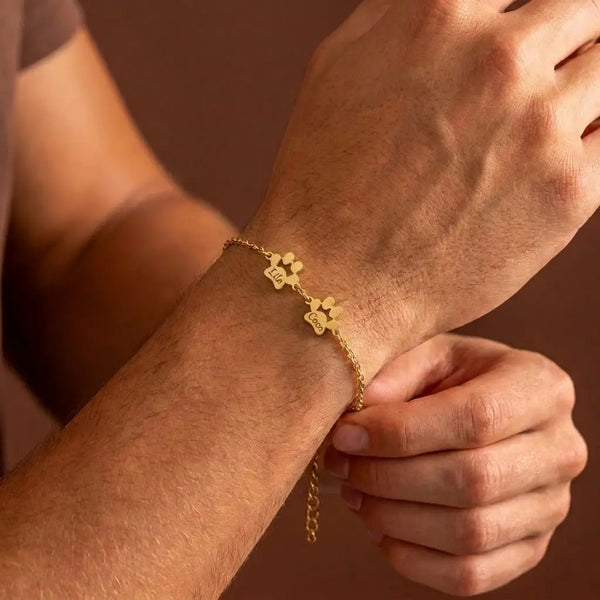
His watch. His hoodie. A record from his collection. Or, some families choose to make something new: a bracelet engraved with his name, a pendant with his handwriting, a bar with the years he lived. These are private objects, not performances of grief. They live in your dresser and get worn on days you need him close. If you're weighing whether this feels right, our overview of sibling loss remembrance jewelry covers what tends to help and what doesn't.
If He Died Suddenly
Sudden loss of a sibling — car accident, overdose, suicide, cardiac event — carries a specific kind of shock. There was no chance to say anything. There was no goodbye conversation. The last thing you said to him was probably ordinary.
Two things help here. First, don't let the last conversation define the relationship. A grocery-list text isn't your relationship. Twenty or thirty or fifty years of being siblings is your relationship. Second, if there's trauma (you found him, you got the call in a way that replays), please consider talking to a trauma-trained therapist. Trauma and grief are cousins, not twins, and they respond to different kinds of care.
If He Died From a Long Illness
If you had months or years to prepare, you may be carrying anticipatory grief that started long before his actual death. This is a legitimate exhaustion, and it doesn't disqualify the fresh grief you feel now. You didn't already grieve him. You started grieving him. Now you're doing the rest. Resources on anticipatory grief may help name that layered experience.
Adult sibling grief is not a smaller grief because you were adults. If anything, it's a longer grief, because he was supposed to be walking beside you for another forty years.
Watching Your Parents Grieve
One of the hardest parts of losing a brother in adulthood is watching your parents lose a child. Your grief and theirs intersect but are not the same. They may need you to be steady. You may need them to acknowledge your loss. Both needs are legitimate and often conflict.
What helps: don't try to protect them from your grief entirely. It'll come out sideways if you do. Also don't dump the full weight of your grief on them. They can't hold it. Find a friend, a therapist, or a support group for the version of your grief they can't carry.
If a parent later dies, you may find their loss reopens your brother's loss with startling force. This is normal. Resources on losing a parent or grandparent often help sibling grievers, because both losses reshape the family map at the same time.
The Long Arc
Adult sibling loss doesn't finish. What changes is your relationship to it. The first year, it's a raw wound. The third year, it's a scar that still catches on things. The tenth year, it's a permanent shape of who you are, one that occasionally aches on a particular Wednesday for no reason you can identify.
You will keep having your brother in your life, even as he stays dead. You'll hear his voice in your own laugh. You'll catch a stranger's mannerism and lose your breath for a second. His absence and his presence will live inside you at the same time, and that is not a broken state. That's just what it means to have loved someone who was there for the first part of your life and isn't going to be there for the rest.