Colier cu pietrele de naștere pentru mama: câte pietre, în ce ordine, în ce metal
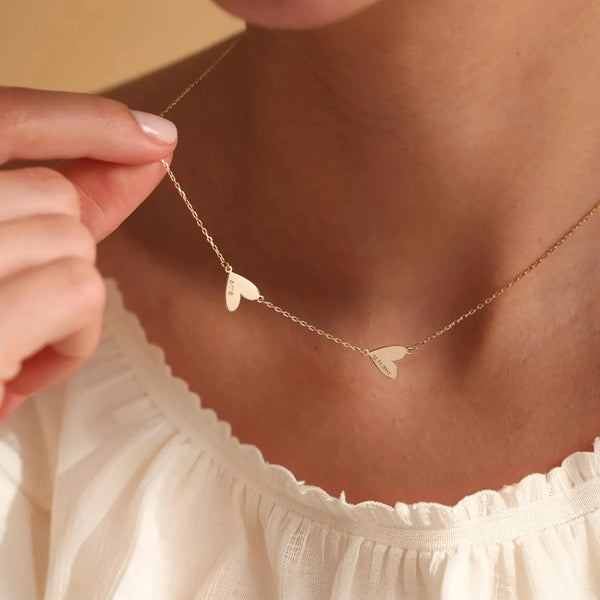
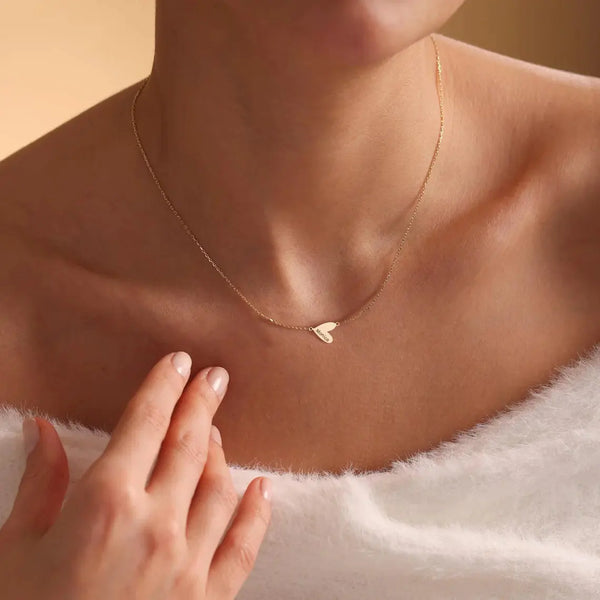
A birthstone necklace for mom is a pendant that incorporates one gemstone for each child, traditionally arranged in birth order — a visual signal of family without spelling out names. The three decisions that determine whether the piece works: how many stones, which arrangement, and which metal. Below is the full guide, with the birth-month chart, layout patterns for 2 to 7+ kids, and material recommendations that won't tarnish around the stone settings.
What a "birthstone necklace" actually is
A birthstone necklace for mom is a pendant set with one small gemstone for each of her children, where each gemstone corresponds to the child's birth month. Unlike a "name necklace," it doesn't reveal who the children are at a glance — only their visual signature in color. This is why many moms prefer birthstone over engraved name necklaces: it personalizes without announcing.
The stones are typically small (3–5mm) and set in bezels, prongs, or channels. The pendant can hold 2 to 7 stones comfortably; beyond 7, the layout gets cramped and a different format (multi-strand layered with one stone per chain) works better.

The 12-month birthstone chart (traditional + modern)
| Month | Traditional stone | Modern alternative | Color |
|---|---|---|---|
| January | Garnet | Rose quartz | Deep red |
| February | Amethyst | Onyx | Purple |
| March | Aquamarine | Bloodstone | Pale blue |
| April | Diamond (CZ) | White sapphire | Clear |
| May | Emerald | Chrysoprase | Deep green |
| June | Pearl | Moonstone / alexandrite | White/cream |
| July | Ruby | Carnelian | Red |
| August | Peridot | Sardonyx / spinel | Lime green |
| September | Sapphire | Lapis lazuli | Royal blue |
| October | Opal / pink tourmaline | Rose zircon | Iridescent / pink |
| November | Citrine / topaz | Yellow sapphire | Golden yellow |
| December | Turquoise / blue topaz | Tanzanite / zircon | Teal blue |
Most modern personalized jewelry uses synthetic or simulated stones (cubic zirconia for diamond, lab-created sapphires/rubies, glass for pearl alternatives) — they look identical to natural stones in small sizes (3–5mm) and avoid the cost issue when you need 4+ stones. Natural stones are usually only worth it for solid-gold heirloom pieces.

Arrangement: which order do the stones go in?
Three common conventions:
- Birth order (most common). Oldest child's stone on the left, youngest on the right, reading left-to-right like text. Reflects the family timeline.
- Visual color balance. Stones arranged by color to look intentional rather than chronological (e.g., warm colors clustered, cool colors clustered). Sacrifices "birth order" meaning for aesthetic.
- Birth-month chronological. January closest to one end, December at the other — regardless of which child was born when. Useful for kids born across multiple years where birth-order vs. month order matter.
For most moms, birth order is the right call — it's the convention they expect and the one that matches how she thinks about her kids.

2 kids · 3 kids · 4 kids · 5+ kids — layouts that work
Mom of 2 kids: horizontal bar
Two stones side-by-side on a thin horizontal bar pendant (typically 18–22mm wide). Clean, balanced, simple. Works for any color combination.
Mom of 3 kids: row or triangle
Three stones in a horizontal row work for most color combinations. A small triangle arrangement (one stone above two below) works better when one of the colors is very different from the others (e.g., a pearl + two emeralds).
Mom of 4 kids: 2x2 grid or arc
Four stones in a 2x2 small grid look modern. Four stones in a gentle arc (slight curve) look more sentimental. Choose grid for moms with minimalist style, arc for moms with traditional style.
Mom of 5 kids: arc or staggered row
Five stones in a gentle arc reads as one cohesive pendant. Five stones in a straight row gets too wide (28–35mm) and stops looking like jewelry.
Mom of 6 or 7 kids: cluster pendant
Six or seven stones arranged in a small cluster (one center stone surrounded by others) reads as a floral or constellation pendant. Beyond 7 stones, switch format entirely — see below.
Mom of 8+ kids: multi-strand layered necklace
Don't try to fit 8+ stones on one pendant. Instead, layer two thin chains together, each carrying 4 small bezel-set stones. The piece looks substantial; the meaning stays personal.
"I'm a mom of 5 (mostly grown now) and I'd resisted birthstone necklaces for years because everything I saw looked crowded or childish. The arc layout in 18K gold-plated stainless was the first version that actually looked like jewelry I'd wear to a board meeting. It's been on my neck nearly daily for 14 months."
— Patricia W., ByHeart customer review (verified, March 2026)
Which metal goes best with which stones
| Stone color | Best metal | Why |
|---|---|---|
| Warm tones (red, orange, yellow) | 18K gold or 18K PVD-plated stainless | Gold amplifies warmth |
| Cool tones (blue, green, purple) | 316L stainless or silver-tone | Silver-tone complements cool colors |
| Mixed warm + cool | 316L stainless (neutral) | Neutral metal lets each stone read on its own |
| White / clear (April, June) | Either — gold for warm skin, silver for cool skin | Choose to match her usual jewelry tone |
| All-white pearl theme | 18K gold for warmth | Prevents the piece from looking washed-out |
ByHeart birthstone necklaces are built on:
- 316L surgical-grade stainless steel (silver-tone) or 18K PVD-plated 316L stainless (gold-tone)
- Lab-created stones (CZ, lab sapphire, lab ruby) for consistent color and size
- Bezel settings — most secure for daily wear, no prong-snag on fabric
- Hypoallergenic, waterproof, tarnish-resistant for 5+ years of daily wear
Frequently asked questions
Should I use traditional or modern birthstones?
Traditional is what most moms expect — when she Googles "March birthstone" she expects aquamarine, not bloodstone. Stick with traditional unless she specifically prefers a modern alternative. The modern list exists for stones that are hard to source or that have ambiguous traditional assignments.
Can I use lab-created stones instead of natural?
Yes — lab-created stones are visually identical to natural ones in small sizes (3–5mm) and cost a fraction. ByHeart uses lab-created stones for all birthstone necklaces. Natural stones are only worth the premium for solid-gold heirloom pieces.
What if a child was born on a month boundary (e.g., late February / early March)?
Use the birth month as listed on the birth certificate. If she wants both stones, some birthstone necklaces accept a "transitional" arrangement (e.g., amethyst + aquamarine for late-Feb / early-March babies). Less common but possible.
What about birthstones for kids who passed?
Many moms who lost a child still include that child's stone — it preserves the family count as it was. Some choose to include the stone in a slightly different metal (e.g., one rose-gold setting among silver-tone) as a subtle marker. There's no rule; do what feels right.
How long does a birthstone necklace take to ship?
Standard ByHeart birthstone necklaces ship in 5–8 business days from order (longer than name necklaces because stone setting is hand-done). Allow 2 weeks for Mother's Day, birthday, or anniversary gifting.
Will the stones come loose over years of wear?
Bezel-set stones (the kind we use) are the most secure setting type. ByHeart's 2-year warranty covers any manufacturing defect including stone loss. For peace of mind, avoid prong-set birthstone necklaces from generic catalogs — prongs catch and bend over time.
Shop the collection: Mom & birthstone necklaces
Read next: