Children's Birthstone Necklaces: A Parent's Practical Buying Guide
A children's birthstone necklace is not a smaller version of an adult one. Sizing, clasp choice, material safety, and chain strength all need to match what a child can actually safely wear at their age — and what they'll actually choose to put on. The framework below covers ages 3 through 16.
Children's birthstone necklace by age group
| Age | Chain length | Pendant size | Clasp type | Material rule |
|---|---|---|---|---|
| 3-5 | 30-35 cm | 4-6mm pendant | Magnetic break-away | 316L steel, no plating |
| 6-8 | 35-40 cm | 5-8mm pendant | Lobster + safety chain | 316L steel or 18K PVD |
| 9-12 | 38-42 cm | 6-10mm pendant | Lobster clasp | 316L steel or 18K PVD |
| 13-16 | 40-45 cm | 6-12mm pendant | Lobster clasp | Same as adult: 316L + PVD plating |
The 5 safety rules for children's jewelry
- Break-away clasp under age 6. A regular clasp can cause neck injury if pulled. Magnetic break-away clasps release at 1-2kg pull.
- Hypoallergenic 316L stainless steel only, not sterling silver or brass-base plating. Children's skin reacts more often than adult skin; nickel-free is non-negotiable.
- No small loose parts under age 8. Single solid pendant fused to bail. Avoid cluster pendants, charm-style add-ons, or decorative beads under 6mm.
- Test the clasp weekly for ages 3-8. Children play hard; clasps fatigue. ByHeart kids' clasps include a 2-year warranty.
- Never sleep wearing the necklace. No matter the clasp. This is the universal pediatric jewelry rule.
Birthstone chart for kids (12-month)
| Birth month | Stone | Color shorthand |
|---|---|---|
| January | Garnet | Deep red |
| February | Amethyst | Purple |
| March | Aquamarine | Pale blue |
| April | Diamond / crystal | Clear |
| May | Emerald | Bright green |
| June | Pearl / moonstone | White / opal |
| July | Ruby | Red |
| August | Peridot | Olive green |
| September | Sapphire | Blue |
| October | Opal / tourmaline | Pink / multicolor |
| November | Topaz / citrine | Golden yellow |
| December | Tanzanite / turquoise | Blue-purple |
Children's pieces use lab-created or simulated stones, not natural. Same color, no extraction concerns, durable enough for kid wear.
Design choices kids actually wear
- Ages 3-5: single birthstone pendant, no engraving, on the shortest chain. Magnetic clasp non-negotiable.
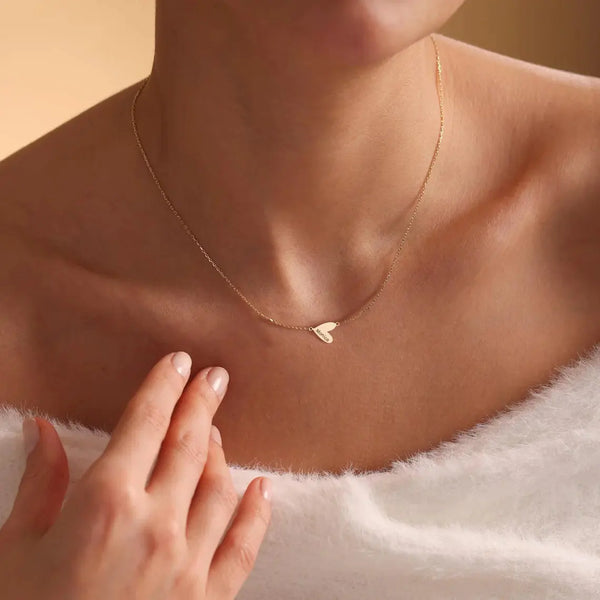
- Ages 6-8: birthstone + tiny engraved heart or initial pendant. They start to want their name on something.
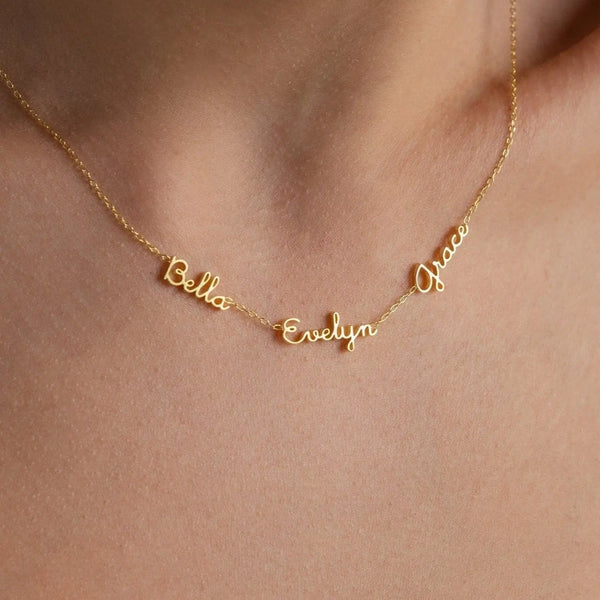
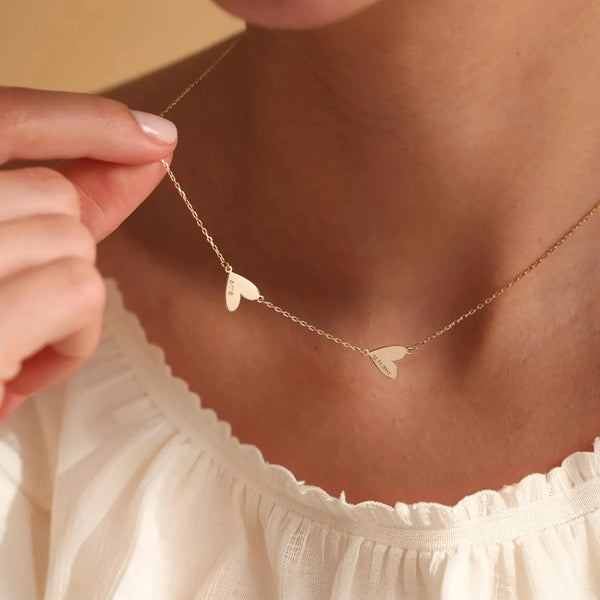
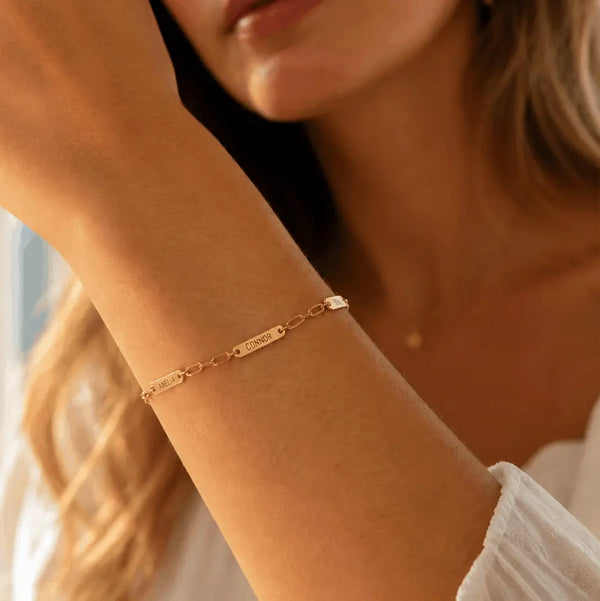
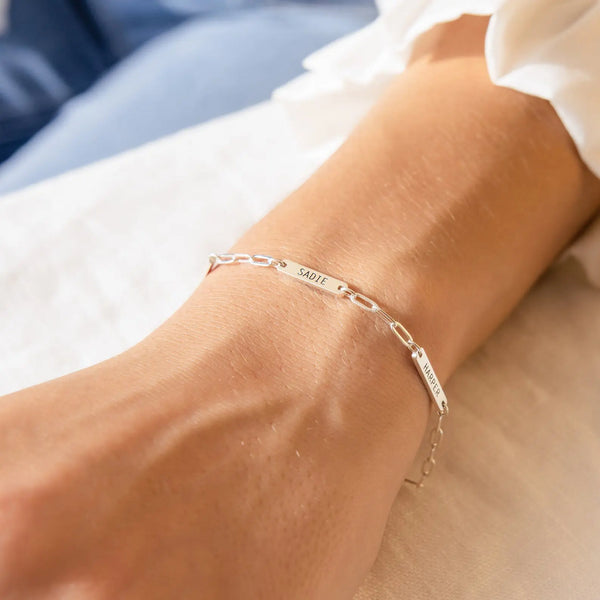
- Ages 9-12: birthstone pendant + engraved name bar layered on the same chain. The "first grown-up necklace" stage.
- Ages 13-16: full adult sizing. Birthstone choice often shifts to a friend's or sibling's stone, not their own. This is the age where engraving phrases enter (initials, inside jokes, song lyrics).
Skin reactions: when to take it off
316L stainless steel is hypoallergenic for ~98% of wearers including children. The signs to watch for in the 2% with reaction:
- Red ring at the bail-skin contact point within 24h
- Itching that resolves when removed
- Skin discoloration (greenish or grayish ring)
If any of these appear, switch to an uncoated 316L piece (no PVD plating). Plating reactions are rare but more common than base-steel reactions.
How to clean a children's necklace
Daily-wear children's pieces accumulate sunscreen, food residue, and pool chemicals. Weekly clean:
- Warm water + mild dish soap, soft toothbrush
- Rinse, pat dry with soft cloth
- Air dry overnight, store in pouch (never wet in jewelry box)
Avoid: hot tubs (chlorine), saltwater (corrosion over time), perfume/lotion applied after putting on.
FAQ
What age can a child first wear a necklace?
Most pediatric guidance starts at age 3 with break-away magnetic clasp only. Under age 3 jewelry is decorative only (worn for photos, not for daily wear).
Is stainless steel safe for kids' skin?
Yes — 316L surgical-grade stainless steel is hypoallergenic for children. It's the same grade used in body piercings and pediatric implants. Avoid: brass-base plated jewelry (can contain nickel underneath).
What's the safest necklace clasp for a young child?
Magnetic break-away clasp — releases under 1-2kg pull, prevents neck injury from playground tangles or playmate grabbing. Standard lobster clasps are safe from age 8 onward.
How long does a kids' birthstone necklace last with daily wear?
5-7 years if 316L steel with PVD plating; 8-10 years if uncoated 316L. Chains usually fail at the clasp first (mechanical wear), pendant lasts indefinitely.
Can a child be allergic to their birthstone?
Not to the stone itself (lab-created stones are inert). Reactions almost always come from the metal setting. Switch to 316L without plating if reaction occurs.
ByHeart's children's collection uses hypoallergenic 316L stainless steel, magnetic break-away clasps for ages 3-7, and includes a 2-year warranty on every piece.