Hand-Engraving vs Laser-Engraving on Personalized Jewelry: The Real Difference
Hand-Engraving vs Laser-Engraving on Personalized Jewelry: The Real Difference
TL;DR
Laser engraving is fast, cheap, and shallow. Hand-engraving is slower, more expensive, and cuts a real groove 100 to 300 microns deep into the metal, which is ten to twenty times deeper than surface laser marking. On daily-wear personalized pieces, this is the difference between engraving that stays sharp for a decade and engraving that fades in five years. Every ByHeart piece is hand-engraved into 316L stainless steel, with depth calibrated to the pendant size and covered by a 2-year warranty.
Every personalized jewelry brand claims their engraving is precise and lasting. Some do it by machine, some do it by hand, and a lot of them blur the distinction on purpose. The differences are visible if you know what to look for, and they matter more on some pieces than others.
This is a straight explanation of what hand-engraving and laser-engraving actually do to metal, what each does well, what each does poorly, and what we use on which of our pieces.
What laser engraving actually is
A laser engraving machine focuses a high-intensity beam onto the surface of the metal. The beam either vaporizes a thin layer of metal to create a line (deep laser engraving) or discolors the surface without removing material (surface marking). Most consumer jewelry laser engraving is the second type — a heat-based color change that reads as darker than the surrounding metal.
Laser engraving is fast, consistent, and cheap at scale. A laser can do a hundred bracelets an hour with identical output. This is why it's the default for large personalization operations. The tradeoff is depth. Surface-marked laser engraving lives on the outer 10-20 microns of the metal. Deep laser engraving goes further but requires more powerful machines and slower cycle times, which most brands don't run.

What hand-engraving actually is
Hand-engraving uses a physical tool — a rotary bur, a diamond drag, or a traditional graver — pushed into the metal by a human operator. The tool physically removes metal to form each letter and line. The depth is typically 100 to 300 microns, ten to twenty times deeper than surface laser marking.
Hand-engraving is slower and costs more per piece. Each letter is drawn individually. A skilled engraver can do maybe six to ten pieces an hour for typical name-length engravings. The tradeoff is depth, character, and durability. A hand-engraved line is a real groove cut into the metal, and it stays visible for the life of the piece.
How to tell them apart on a finished piece
Hold the piece under a bright light and tilt it slowly. The differences show up quickly.
- Laser surface marking reads as a slightly darker color where the letters are, but the surface feels smooth when you run a fingernail across it. No physical groove.
- Deep laser engraving has a shallow groove, usually with a slightly rough or granular texture from the vaporization process. Under magnification, the edges look pixellated.
- Hand-engraving has a clean, deeper groove with sharp, faceted edges that catch and reflect light differently than the surface. Under magnification, the letter forms look drawn, not printed.
How each ages over time
The most honest test of engraving is how it looks after two years of daily wear. Here's what happens.
Surface laser marking starts to fade as the discolored surface layer wears off. On silver-tone pieces the fade is subtle; on PVD-coated gold pieces the fade is more visible because the laser mark is often on the coating itself. After three to five years of daily wear, surface-marked engraving is often barely readable.
Deep laser engraving lasts longer than surface marking because the groove is physical. It survives daily wear reasonably well, but the granular texture inside the groove can trap oils and skin debris, which can make the engraving look dark or dirty until it's cleaned.
Hand-engraving ages best. The groove is clean-walled and deep enough that skin oils rinse out cleanly. The letter edges stay sharp. On our 316L pieces, hand-engraving from years ago still reads as if it were done yesterday.
What each is good for
Neither method is universally better. What matters is the piece.
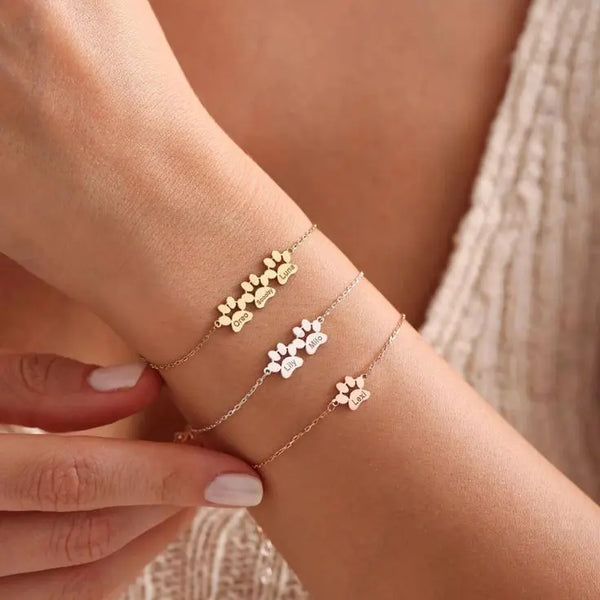
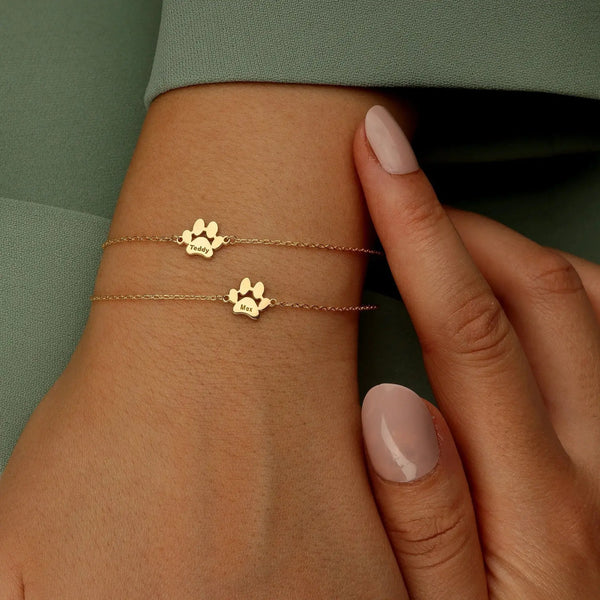
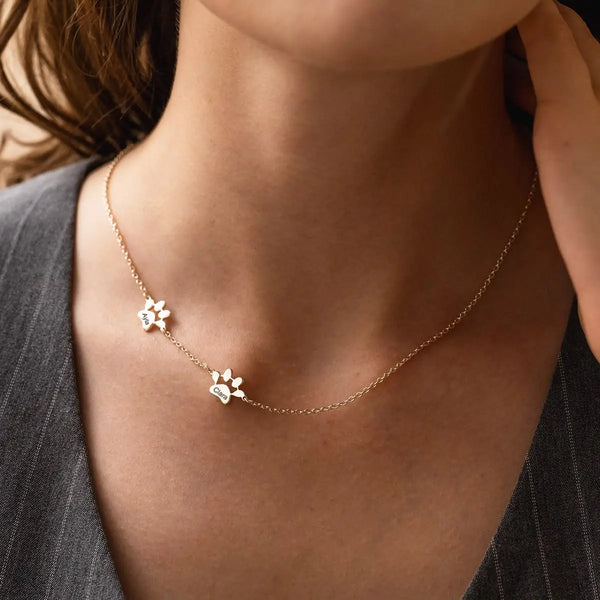
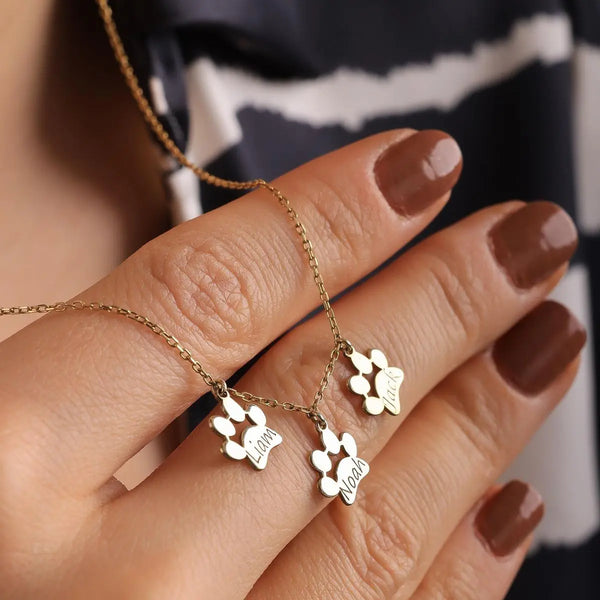
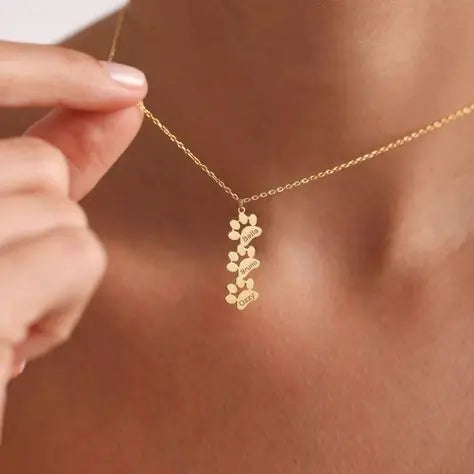
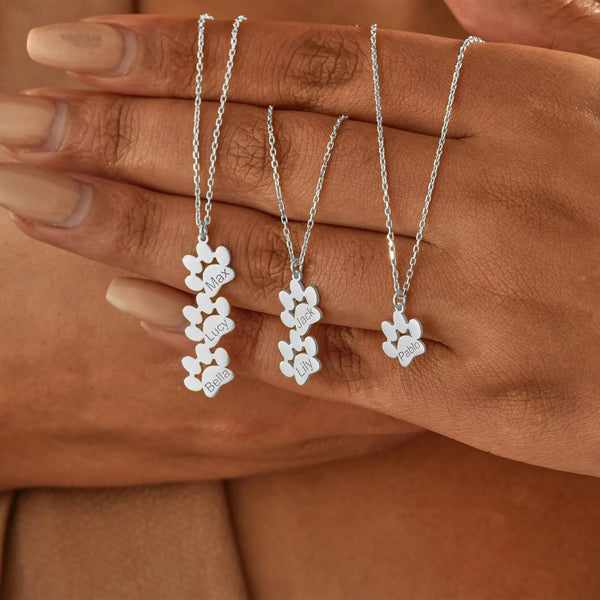
- Hand-engraving is better for personalized pieces meant to be worn daily for many years — memorial jewelry, wedding bands, name bars, pet paw prints. Anything where the engraving is the piece.
- Laser engraving is better for high-volume batch marking (serial numbers, small logos), fine detail on very small pieces, and situations where a shallow, subtle mark is the goal rather than a deep engraving.
- Deep laser engraving is a good middle ground for pieces that need consistent depth across thousands of units, like corporate gifts or standardized products.
Why we hand-engrave personalized memorial and gift pieces
Our decision to hand-engrave came down to two things: how long people wear these pieces, and what the engravings mean.
Memorial jewelry gets worn every day for a decade or longer. A surface-marked laser engraving of a lost child's name that fades after five years is not what a grieving parent is asking for. A hand-engraved name that reads as clearly at year fifteen as it did at year one is.
Similarly, name jewelry meant as a gift is often the first jewelry a person owns from a brand — a bar necklace with their child's name, an initial pendant from a spouse. These pieces need to survive the life they're bought into. Hand-engraving is the answer to that specific question.
What hand-engraving can and can't do
Realistic limits, because we've been asked:
- Character count — our name bars hold up to 12 characters comfortably. Longer engravings compress the letter width and reduce readability.
- Character types — English, most Latin-alphabet European languages (including accents like á, ñ, ü, ç), numerals, common punctuation. Non-Latin scripts (Chinese, Arabic, Cyrillic) we handle case-by-case; add a note in the order.
- Handwriting engraving — we can engrave from a photo of a signature or note. Send a clear high-contrast photo and we trace it into the engraving.
- Symbols — hearts, infinity symbols, small crosses, arrow marks, and paw prints are all in our library. Custom symbols we handle case-by-case.

Depth and readability tradeoff
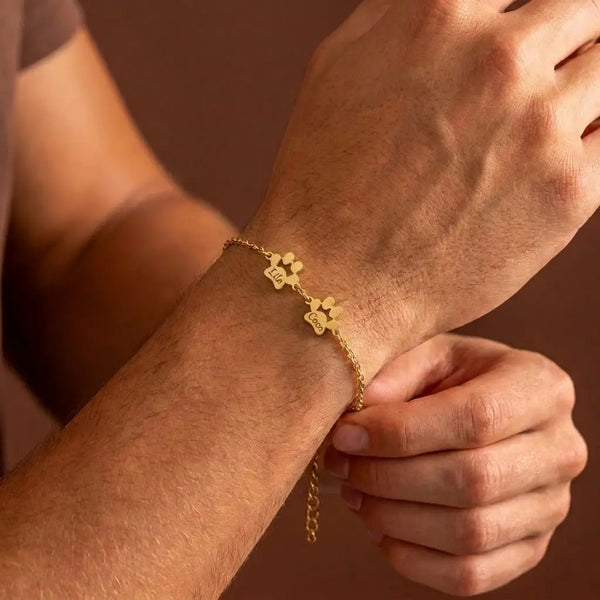
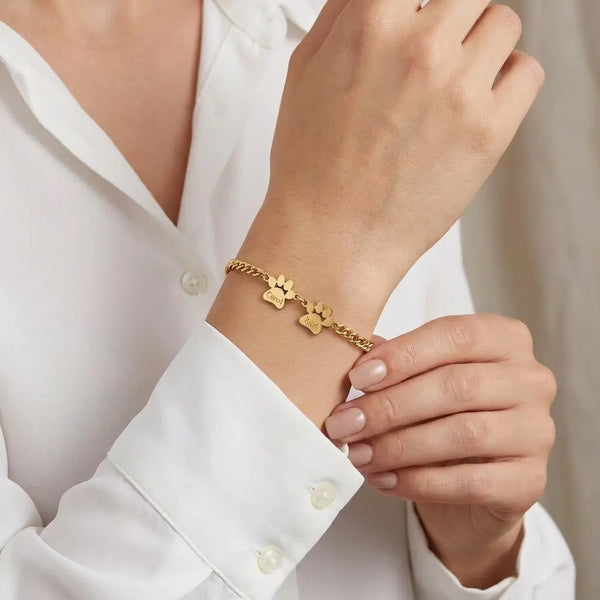
The one honest limitation of hand-engraving is that going very deep on very short characters can look heavy. On a paw print bracelet with 6 to 8 small letters, we engrave slightly shallower to keep the letter forms clean. On a wider name bar with 4 to 8 letters, we can engrave deeper for a bolder, more permanent look. Both are done by hand, both age well.
If you're not sure which depth is right for your piece, order the default. We've calibrated depth per product based on how each piece is meant to be worn and read.
How to order
Every piece on our site is hand-engraved on 316L stainless steel. Choose the piece, type the engraving in the box on the product page (or upload a handwriting image), and check out. Every piece ships in brand-neutral gift packaging. Standard engraving turnaround is included in the order timeline.
Frequently Asked Questions
How can I tell if a piece I already own was hand-engraved or laser-engraved?
Hold it under a bright light and run a fingernail across the engraving. Surface laser marking feels smooth, with only a color change. Hand-engraving has a physical groove you can feel, with sharp faceted edges that catch light. Under magnification, hand-engraved letters look drawn; laser-engraved letters look printed or pixellated.
Is laser engraving ever better than hand-engraving?
Yes, for specific jobs. Laser wins for very fine detail on very small surfaces, for high-volume batch marking like serial numbers, and for pieces where a subtle surface mark is the design intent. For personalized memorial jewelry, name bars, and paw print pieces meant to be worn every day for years, hand-engraving is the better fit because depth is what survives daily wear.
Can I request a deeper engraving on my order?
The depth is calibrated per product based on the pendant size and letter count. On a small paw print bracelet with 6 to 8 letters, going too deep can crowd the letter forms. On a wider name bar, we engrave deeper for a bolder look. If you have a specific preference, add a note in the order and we can adjust within the range that reads cleanly.
What happens if my engraving is misspelled or wrong when I get it?
If the error is ours (we misread your submission), we remake the piece at no cost under the standard warranty. If the error is on the typed input at checkout, we offer a partial refund path (typically 20 percent) and can re-engrave on a replacement piece at a discounted rate. Both cases are covered in writing.
Do you engrave in languages with accents or non-Latin characters?
Yes. Latin-alphabet European languages with accents like á, ñ, ü, ç are standard. Non-Latin scripts including Chinese, Arabic, Cyrillic, and Hebrew are handled case-by-case — add a note in the order and we confirm the exact character by email before we engrave into the 316L.