How to Memorialize a Pet: 12 Meaningful Ideas (Including Jewelry)
TL;DR
There are twelve meaningful ways to memorialize a pet, and they sort naturally by time horizon. In the first week, small physical acts help — keeping the collar, taking a paw print, writing down what you loved. In the first month, permanent keepsakes like a memorial necklace or engraved plate give the grief somewhere to live. By the first year, some people plant a tree, commission a portrait, or dedicate an annual walk. The right idea depends on where you are in the grief, not what looks meaningful from the outside.
To memorialize a pet is to create a lasting, tangible way to keep the relationship present after the pet has died. The 12 ideas below — ranked from immediate (do this week) to long-term (do this year) — are the most common approaches recommended in pet-bereavement literature and chosen by ByHeart customers across more than 40,000 personalized memorial orders. Pick one to start. You can do more later.
Why memorializing matters (and why "just move on" is bad advice)
Grieving a pet is a documented, measurable form of bereavement. A 2024 review in Veterinary Sciences identified pet loss as a form of "disenfranchised grief" — real mourning that receives less social validation than human loss, which often leaves mourners feeling pressure to hide or accelerate their grief. Tangible memorialization counters that pressure by creating an object, ritual, or piece of jewelry that says "this was real."
Clinical bereavement counselors consistently recommend continuing-bonds practices — small, ongoing rituals or objects that maintain a sense of connection — over "closure" practices that try to end grief. Memorialization is a continuing-bonds practice.
What the research says:
- 95% of U.S. pet owners consider their pet a family member (American Pet Products Association, 2022)
- Pet bereavement symptoms last 6–12 months on average; 1–3 years for some (Veterinary Sciences, 2024)
- Tangible memorial objects (jewelry, paw prints, urns, plaques) are repeatedly cited as effective continuing-bonds tools in pet-loss therapy literature
Do this week (acute grief, 0–14 days)
1. Capture or save the paw print
How: If your pet has just passed, ask your vet whether they offer a clay paw-print cast — most do, often as part of cremation services. If your pet died at home, you can press their paw onto a non-toxic ink pad (~$10) within a few hours. Save the paper or clay print in a labeled envelope.
Why first: This is the only memorial that has a strict time window. Paw prints are easier to capture in the first 24 hours; later, you'll wish you had.
2. Save a tuft of fur
How: Clip a small piece from a part of the coat that won't be visibly altered (under the ear, behind the front leg). Store in a small zip-seal envelope or a sealed glass vial. Label with date.
Why: Fur is the only physical trace you can capture without involving cremation. It's used later for ash-or-fur capsule pendants, shadow boxes, and DIY memorials.
3. Write the obituary (even if you don't share it)
How: One page. The pet's name, dates, where they came from, what they loved, what you'll miss. You don't have to post it. Write it for yourself. Date it.
Why: A pet's life leaves an impression that's easy to lose once the routines disappear. Writing the obituary forces a one-time, structured pass through the memories while they're still vivid.

Do this month (30 days)
4. Order a personalized memorial necklace or bracelet
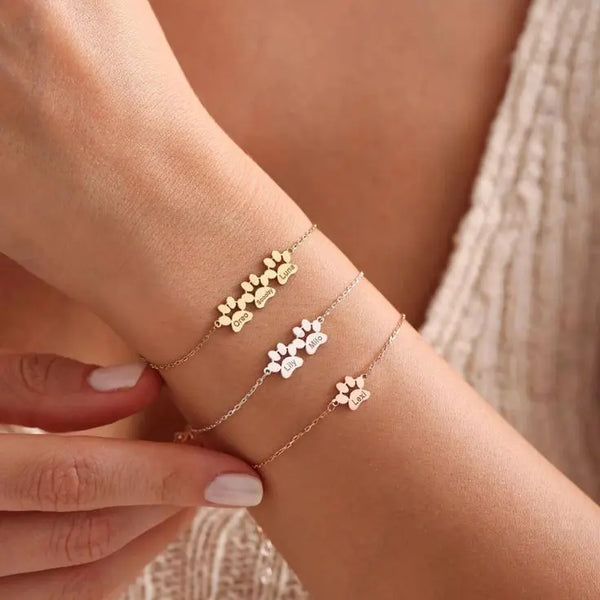
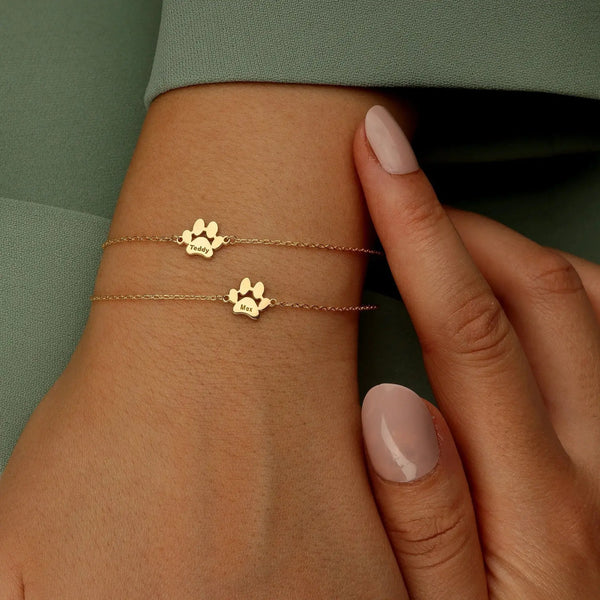
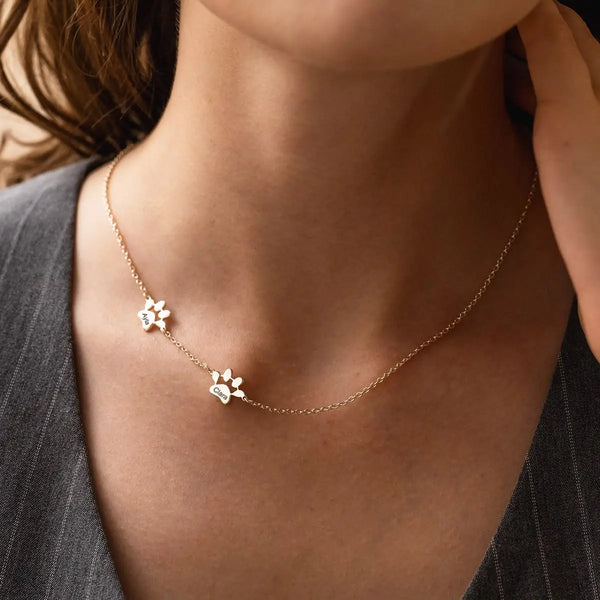
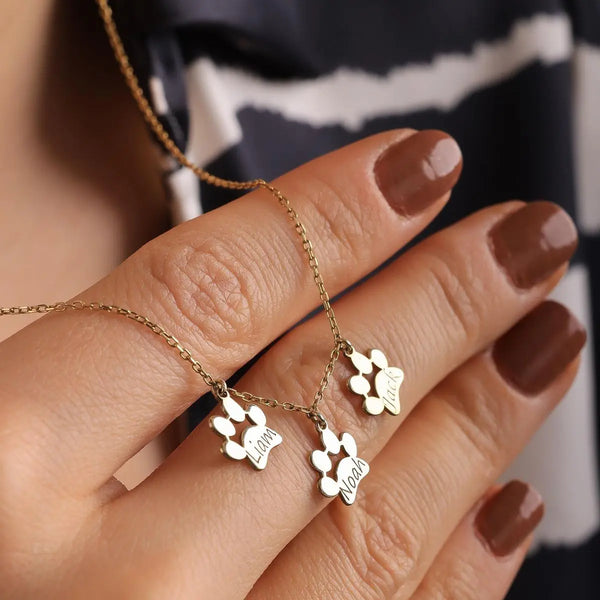
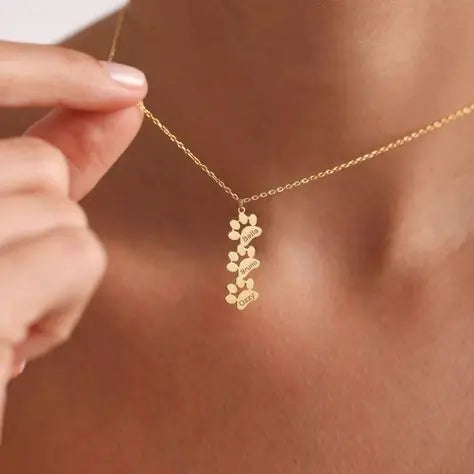
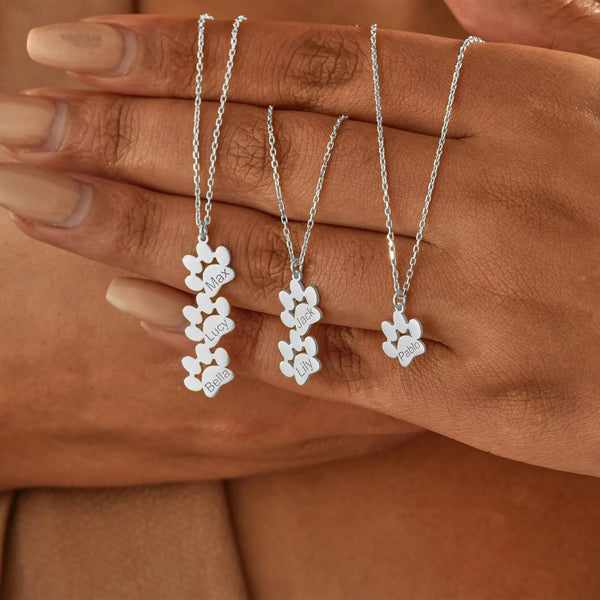
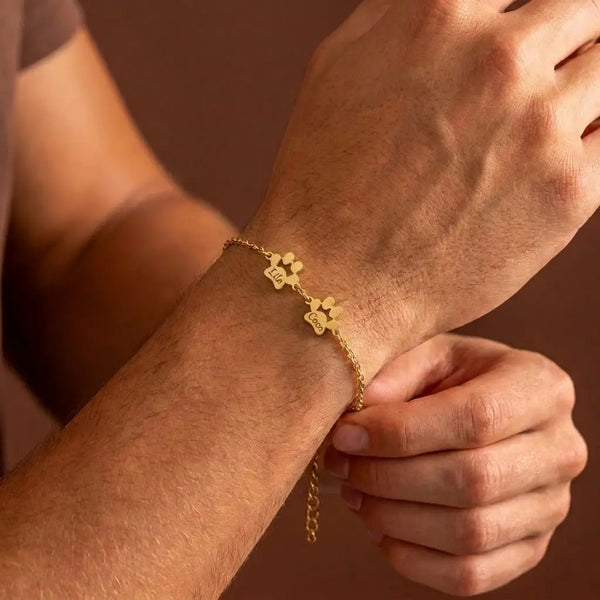
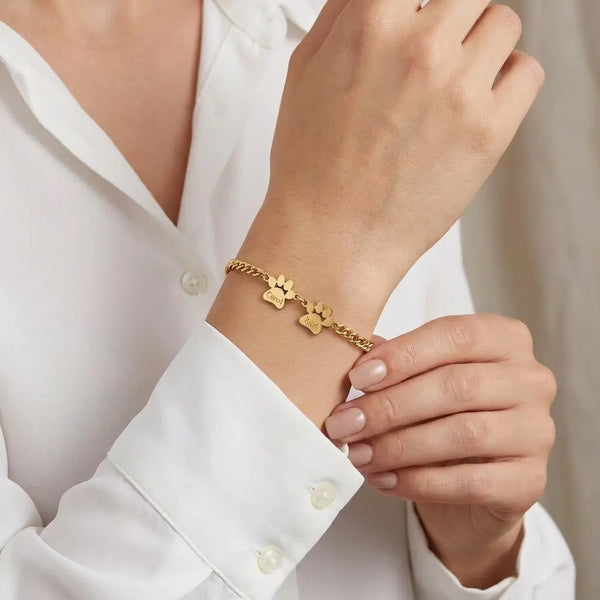
How: Pet memorial jewelry comes in five families — paw print, name pendant, hidden-photo locket, ash capsule, fur capsule. Our guide to pet memorial necklaces walks through each. Most pet parents start with a paw print piece because it reads as ordinary jewelry to strangers but as deeply personal to the wearer.
Why now: Acute grief lasts 2–8 weeks. A wearable memorial gives that grief a daily anchor — something your hand reaches for in hard moments. It also marks the loss as permanent in a healthy way, without forcing you to "move on."
5. Frame a photo (the one you keep choosing)
How: Pick the one photo that you keep returning to — not the most recent, not the most flattering, the one that captures the pet most as you remember them. Print it at 8×10 or larger. Frame it. Place it somewhere visible.
Why: A framed photo on a shelf is small enough to ignore on neutral days and present enough to acknowledge on hard ones. It also signals to visitors that the pet matters here — which prompts comfort instead of awkwardness.
6. Plant something — indoors or out
How: A potted herb (basil, rosemary) on the windowsill works. So does a tree in the yard, if you have one. If you scattered ashes outdoors, plant the marker over the spot. Skip plants the pet would have hated being around — leaves they always tried to eat, flowers that triggered allergies.
Why: Living memorials grow alongside grief. They also give you a small daily task (watering) that maintains the bond as routine rather than as a crisis ritual.
7. Create a small physical altar or shelf
How: One shelf, one corner, or one drawer. Put the framed photo, the collar, the paw print, the obituary, and one favorite toy or blanket. Keep it small. Add nothing for a month, then reassess.
Why: Centralizing grief objects in one place gives you a destination — a "where" to go when the grief feels formless. You can light a candle there, sit with it for two minutes on a hard morning, then leave it.

Do this year (1–12 months)
8. Donate or volunteer in your pet's name
How: A donation to a shelter, rescue, or breed-specific rescue, given in your pet's name. Or volunteering hours at a shelter monthly. Many pet parents do this on the pet's adoption anniversary or birthday rather than the death date.
Why: Channeling grief outward — toward other animals or other pet parents going through it — is a structurally healthy continuing-bond. It also gives the loss a forward motion.
9. Commission a custom portrait
How: A digital or oil-painted portrait from a high-resolution photo. Independent artists on Etsy or Instagram can be commissioned for $80–$400. AI-generated portraits exist but tend to look generic — invest in a human artist if you want a piece that captures your specific pet.
Why later (not month 1): Commissioned art takes 4–12 weeks. Most pet parents aren't emotionally ready to brief an artist in the acute window. Waiting also lets you choose the photo that represents how you want to remember them, not just the most recent one.
10. Make a small ash piece (if you cremated)
How: A pinch of cremated ash can be sealed into a memorial pendant, a glass paperweight, or even commissioned into a piece of artisan glass jewelry. You don't have to use much — most ash-into-jewelry services need less than a teaspoon. The rest can stay in the urn or be scattered.
Why later: Many pet parents aren't ready in week one to make decisions about ash placement. The decision is easier at month 4 or month 8 when grief has shifted from acute to integrated.
11. Write a letter, then seal it
How: Write the pet a letter — what you'd say if you could say it now. Date it. Seal it in an envelope. Store it with the other memorial objects. Don't reread it unless you need to.
Why: Many things go unsaid during a pet's final weeks because nobody wants to acknowledge the ending. A sealed letter is a place for those unsaid things to live without becoming a daily weight.
12. Mark the one-year anniversary
How: The first death anniversary is often heavier than expected. Plan something small in advance: a walk on the pet's favorite trail, a meal of their favorite human-safe food, a flower placed at the burial or scattering site, or a quiet evening with the framed photo. Tell one person what you're doing so it feels witnessed.
Why: Anniversary grief is a documented pattern in pet bereavement. Planning ahead — instead of being ambushed by the date — converts an emotionally chaotic day into a chosen ritual.
"I did exactly three of these in the first month: I framed Bella's photo, I bought the paw bracelet from ByHeart, and I wrote her obituary. The bracelet was the one I underestimated. I've worn it every day for nine months. It doesn't make the grief lighter, but it makes it more bearable."
— — Emily P., ByHeart customer review (verified, February 2026)

Which idea is right for you?
| If you want… | Start with… |
|---|---|
| …a daily reminder you can touch | A memorial necklace or bracelet (#4) |
| …to honor without "moving on" | A framed photo + altar shelf (#5, #7) |
| …the loss to mean something beyond your own household | A donation in your pet's name (#8) |
| …to physically keep the pet near | An ash-capsule pendant or ash glass piece (#10) |
| …something to do with your hands when the grief is heavy | Plant or care for a living memorial (#6) |
| …to remember the pet as they were, not as they were at the end | A commissioned portrait (#9) |

What not to do
- Don't make permanent decisions in week one. Don't get a tattoo, scatter ashes, or donate all the pet's belongings in the acute window. Wait until at least week 4.
- Don't rush a new pet to "fill the void." Bereavement counselors consistently warn against this in the first 60 days. A new pet should arrive on their own timeline, not on grief's.
- Don't memorialize someone else's pet for them. If you're a friend or family member, your role is to support — give the bereaved a gift voucher to choose later, not a piece you engraved on their behalf.
Frequently asked questions
How do you memorialize a pet without a body to bury?
This applies if the pet was cremated and the ashes were scattered, or if the pet was lost and never recovered. The 12 ideas above work without a burial site — particularly the paw print (if captured), the memorial necklace, the planted living memorial, and the obituary letter. Many pet parents create a small altar shelf at home in place of a grave.
Is it okay to memorialize a pet I had for only a short time?
Yes. Grief duration doesn't track ownership duration. Pet parents who had a foster pet for two weeks, a senior rescue for six months, or a pet that died young report the same intensity of grief as pet parents with 10+ year bonds. Use any of the 12 ideas above — they apply equally.
What's the best gift to give someone whose pet just died?
In the first two weeks: a meal, a written card, and a sympathy plant. After 2–4 weeks: a gift voucher for a personalized memorial piece (jewelry, paw print frame, custom portrait) — so they choose the design themselves when ready. Don't preselect the engraving for them.
Can children participate in memorializing the family pet?
Yes, and bereavement experts widely recommend it. Age-appropriate ways: drawing a picture of the pet, planting a flower together, helping write the obituary out loud, putting a small toy on the altar shelf. Avoid hiding the loss — children handle truthful, simple acknowledgment better than ambiguity.
Is it disrespectful to memorialize a pet the same way you'd memorialize a person?
No. The instinct to apply human memorial practices (obituary, framed photo, anniversary rituals) to pets isn't disrespectful — it's an accurate match of how families actually grieve their pets. Disenfranchised grief literature explicitly endorses treating the loss with the same seriousness as a human loss.
Shop the collection: All pet memorial jewelry · Paw Print Bracelet
Read next:
- Pet memorial necklaces: a gentle guide for anyone grieving a pet
- Dog memorial necklaces: 9 ways to carry your best friend with you
- Paw print necklace personalized: designs for living + memorial
What is the most meaningful way to memorialize a pet?
The most meaningful gesture is usually the smallest one that gets repeated. A necklace worn daily, a walk taken every anniversary, a small photo kept in your wallet — these outlast grand gestures because they stay in your life. A single act you keep is worth more than five acts you plan and abandon.
How soon should I start memorializing my pet?
You do not have to start immediately. Some people need to make something within days because the grief is unbearable to hold. Others cannot look at photos for months. Both are normal. If you need a starting point, taking a paw print or saving the collar in the first week costs nothing and preserves options for later.
What is a good pet memorial for kids?
Something they can hold and add to over time works best — a small keepsake box for the collar, a scrapbook of drawings, a plant they help water. Kids grieve in pulses, not straight lines, so a physical object they can visit when they need to is gentler than a single ceremony.
Can memorial jewelry help with pet grief?
For many people, yes. Wearing a paw print necklace or engraved pendant gives the grief a physical location — you can touch it when the missing feels loudest. It does not replace grief or shorten it, but it gives it somewhere to live. ByHeart pet memorial pieces are 316L stainless steel with a 2-year warranty, built for daily wear.
Is it okay to memorialize a pet years after they passed?
Yes. There is no expiration date on grief. Many people order a memorial necklace or commission a portrait months or years later, once the immediate shock has settled and they can think about how they want to remember. Late does not mean less.