Comment fonctionnent vraiment les médaillons à photo cachée (mécanisme pas à pas)
TL;DR
A hidden-photo projection locket works through a 19th-century optical technique called a Stanhope. A microscopic photo, roughly 2mm across, is fixed inside the pendant behind a tiny magnifying lens. When you hold the lens up to your eye and point it toward light, the miniature image expands into a full, clear photograph. There is no battery, no screen, and no moving part — just glass, light, and a printed slide that lasts decades. The mechanism has been in continuous use since the 1850s.
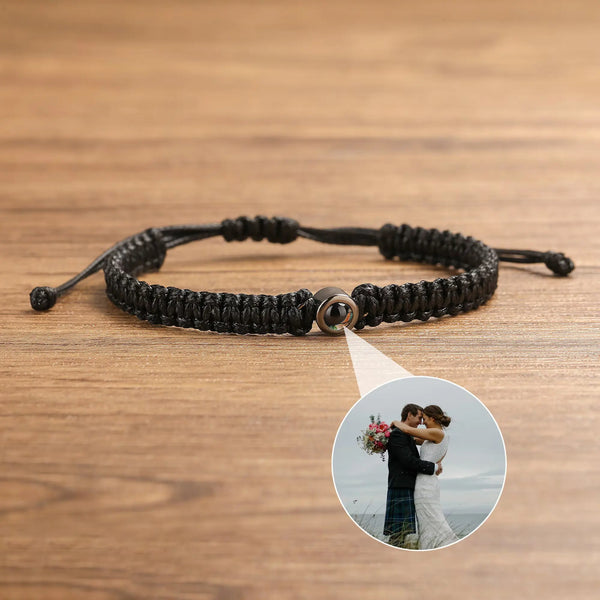
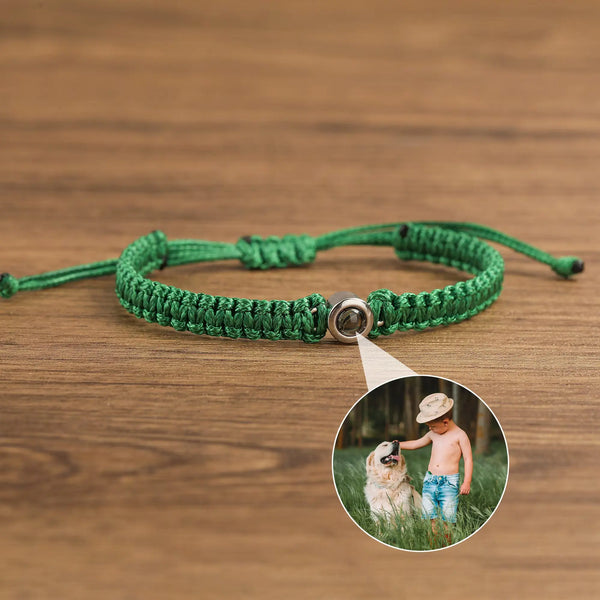
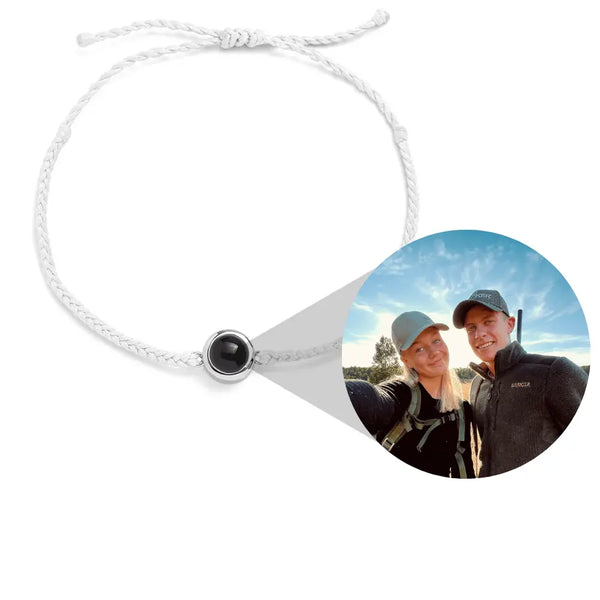
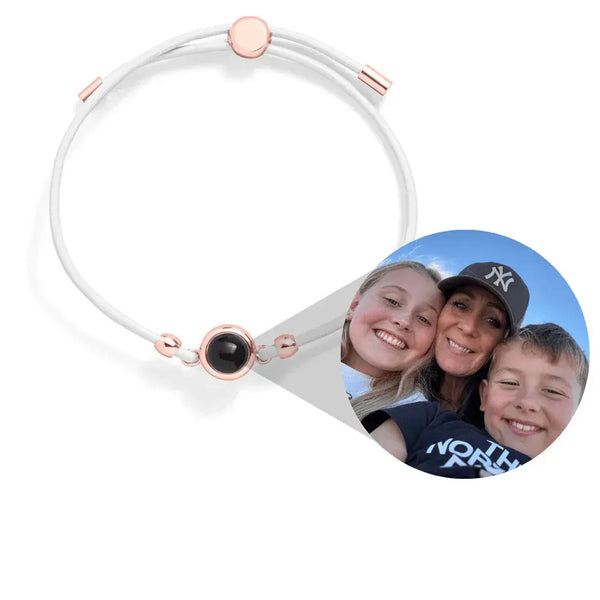
A hidden-photo projection locket is a pendant that contains a tiny color photo slide and a focusing lens. When you shine a phone flashlight through the back of the pendant, the light passes through the slide and the lens projects the photo onto a wall, your palm, or a surface a few inches away — making the photo visible only to the person holding it. From the outside, the pendant looks like a plain piece of jewelry. The mechanism is borrowed from a 19th-century optical technique called Stanhope lens micro-photography, miniaturized into modern jewelry-grade hardware.
What a hidden-photo projection locket actually is
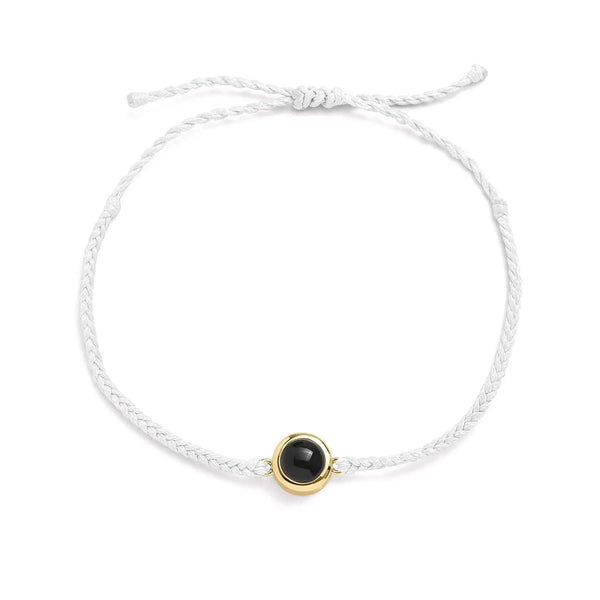
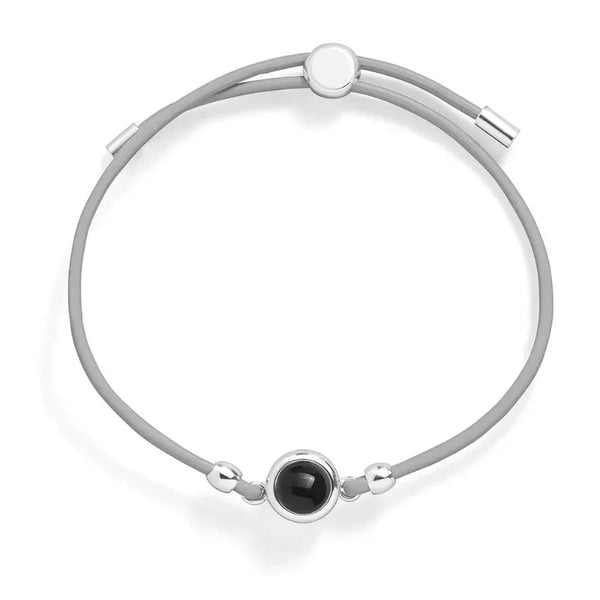
A hidden-photo projection locket is a small pendant — usually cylindrical, sometimes a flat disc with a side hole — that houses three components: a transparent color photo slide (about 1mm wide), a focusing lens, and a small opening for light to pass through. Unlike a traditional locket, the pendant does not open. The photo is permanent, sealed at manufacturing time, and visible only by projection.
The outside of the pendant gives no indication that there's a photo inside. To strangers, it's just a pendant.

How the optical mechanism works (step by step)
- The photo slide. A high-resolution image is reduced to a 1mm-wide transparent slide using offset printing on optical-grade polymer. The slide is the source of the projected image — it's transparent so light can pass through it.
- The lens. Behind the slide sits a small spherical or plano-convex lens, typically 2–4mm in diameter and made of optical-grade resin or glass. This lens is what focuses the light passing through the slide into a clear projected image.
- The light source. The lens system has no internal light. To see the image, you need an external light — a phone flashlight is the most common choice. Light enters one side of the pendant (usually the back), passes through the slide, then through the lens.
- The projection. The lens focuses the slide image at a specific distance — usually 6 to 18 inches from the front of the pendant. Hold the pendant a few inches from a wall, a card, or your palm, shine the flashlight in, and the photo appears.
- Visibility. The projected image is only visible at the right distance and angle. From most positions, the pendant looks like a plain piece of metal jewelry. This is the design point: the photo is private.
Quick technical specs of a typical hidden-photo locket:
- Photo slide size: 1mm × 1mm (color, transparent)
- Lens diameter: 2–4mm
- Optimal projection distance: 6–18 inches from pendant face
- Light source required: phone flashlight or equivalent (any white LED)
- Image is permanent and sealed — non-removable, non-replaceable

A brief history: Stanhope lenses, 1857–today
The technique was invented in 1857 by French photographer René Dagron, who patented a method of mounting a microphotograph behind a small magnifying lens. The lenses were called "Stanhopes" after Charles Stanhope, the inventor of the original short-focus lens used. Throughout the 19th century, Stanhopes were embedded in pens, rings, cigarette holders, and souvenir trinkets — typically showing tourist landmarks, royal portraits, or risqué Parisian scenes.
Modern hidden-photo lockets are direct descendants of the Stanhope. The optics are the same in principle — a microphotograph viewed through a short-focus lens — but the slide is now a high-resolution transparent print rather than a wet-plate microphotograph, the lens is precision-molded resin, and the housing is jewelry-grade metal rather than carved bone.

Hidden-photo locket vs. regular photo locket: the comparison
| Feature | Hidden-photo projection locket | Traditional photo locket |
|---|---|---|
| Does the pendant open? | No — sealed | Yes — hinged |
| How is the photo viewed? | Light projection | Open to view |
| Can the photo be changed? | No — permanent | Yes — replaceable |
| Is the photo visible to others? | Only when projected (private) | Visible whenever opened |
| Number of photos held | Typically 1 (some hold 2) | 1–2 (front/back) |
| Waterproof? | Yes (sealed) | No (hinge admits water) |
| Best for… | Private daily wear, memorial | Open viewing, traditional sentiment |
Both work. The difference is whether you want the photo visible to anyone who picks up the pendant (traditional locket) or visible only when you choose to project it (hidden-photo locket). The hidden-photo locket has surged in popularity since 2021 partly because it's water-resistant — a traditional hinged locket lets water into the photo chamber over time.

How to use one (and what people get wrong the first time)
First-timers often hold the pendant too far from the surface or shine the flashlight at the wrong angle. The technique:
- Pick a dark or dim surface. Projection works best against a white wall, a piece of white paper, or your palm. Avoid bright direct sunlight.
- Hold the pendant 6 to 12 inches from the surface. Closer for a smaller, sharper image; farther for a larger, dimmer one.
- Shine your phone flashlight against the back of the pendant. The flashlight should be ~1 inch from the back, pointed straight at the pendant. If your pendant has a small light-entry hole, align the flashlight to that hole.
- Adjust the distance until the image is sharp. The focal length is fixed, so you move the pendant closer or farther from the surface — not the flashlight.
- If the image is upside-down, rotate the pendant 180°. The slide's orientation determines the projected orientation.
"It took me three tries to see it. The first two times I was too far back and I thought my locket was broken. Once I got it to 8 inches from the wall it was like magic — there's my mom's face, projected on the wall."
— — Jennifer L., ByHeart customer review (verified, January 2026)
Can you put multiple photos in one?
The standard hidden-photo locket holds one photo, fixed at manufacturing. Some advanced designs (less common, more expensive) hold two photos on either side of a rotating slide — flip the slide and you see the second photo. ByHeart's standard projection locket is single-photo for reliability: the more moving parts in optics this small, the higher the failure rate.
If you want multiple photos (e.g., several family members), the common workaround is to buy a piece per person and layer them, or to commission a single composite photo that includes all the faces in one frame.
Why projection lockets work well as memorial jewelry
Three reasons:
- Privacy. A traditional locket is visible to anyone who notices you opening it. A projection locket lets you view the photo only when you choose to, in private — which matches the introvert quality of much grief.
- Permanence. The photo is sealed at manufacturing and cannot fade, scratch, or come loose. Traditional locket photos curl, water-damage, or get replaced over years.
- Waterproof daily wear. The pendant is sealed — no hinge to admit water — so the wearer can shower, swim, and sweat without protecting it.
The most common use case in the ByHeart catalog is a parent, child, partner, or pet — someone the wearer wants to keep close but does not need to announce.
Frequently asked questions
How small does my photo have to be to fit?
The slide is roughly 1mm wide, but you don't have to provide a photo at that size. ByHeart and similar manufacturers accept high-resolution digital photos (300+ DPI, ideally a clean portrait shot) and reduce the image to slide size in production. Faces should fill at least 30% of the original photo for best clarity.
Can I change the photo after the locket is made?
No. The slide is permanently sealed during manufacturing for waterproof integrity. If you want to update the photo, you'd need a new pendant. This is why most pet-memorial and family-memorial customers wait until they have the "right" photo before ordering.
Does the locket need to be charged or have batteries?
No. The locket is purely optical — there is no electronics, no internal light, no battery. It works only by shining an external light (typically your phone flashlight) through the back.
Is the projected image bright enough to see in daylight?
Indoors at normal room lighting, yes — easily visible on a wall or white surface. In direct sunlight outdoors, the projection is hard to see; the technique works best in lower-light environments. Some users go into a closet or a darker room to view.
Is a hidden-photo locket waterproof?
Yes — the optical chamber is sealed at manufacturing. ByHeart's projection lockets in 316L stainless steel and 18K PVD-plated stainless are rated for showers, sweat, hand washing, and light swimming. Avoid hot tubs and prolonged saltwater exposure for long-term care.
How does the image quality compare to a printed photo?
The projection is comparable to a small color slide projection — not as crisp as a printed photo, but the face is clearly recognizable. Resolution depends on the original photo's clarity. A blurry source photo will project blurry; a sharp portrait shot will project sharply.
Will the image degrade over time?
The slide is printed on UV-stable polymer and sealed away from light when not in use, so the image itself is stable for decades. The component most likely to fail over a long lifespan is the lens coating; ByHeart's pieces are rated for 10+ years of normal daily wear.
Shop the collection: Hidden-photo projection lockets · Photo Projection Locket
Read next:
- Custom photo necklace: 11 picks that carry the memories that matter
- Pet memorial necklaces: a gentle guide
- How to memorialize a pet: 12 meaningful ideas
How does a hidden photo projection necklace actually work?
The pendant contains a tiny slide with your photograph printed on it, positioned behind a small glass lens. When you look through the lens toward a light source, the lens magnifies the slide so the image appears full-size to your eye. It is the same principle used in old-style photographic viewers — no electronics involved.
Do I need a battery or charger for a projection locket?
No. Hidden-photo lockets are entirely optical. They use ambient light — a window, a lamp, even sunlight — to illuminate the slide from behind. There is nothing to charge, replace, or switch on, which is part of why the design has survived for over 170 years.
How is the photo put inside the locket?
The image is printed onto a specialized micro-slide, typically 2-3mm in diameter, using high-resolution photographic transfer. The slide is then sealed behind the lens during assembly, so the photo is protected from moisture, dust, and daily wear. Once sealed, the image is fixed for the life of the piece.
Can the hidden photo be replaced or updated later?
Most projection lockets are sealed permanently at the factory, which is what protects the image long-term — so the photo cannot usually be swapped after the piece is made. If you may want multiple images over time, order more than one piece rather than planning to update a single one.
How long does the hidden image last inside the locket?
Because the slide is sealed against air and light, a properly made projection locket can hold its image for decades — antique Stanhopes from the 1800s still show clear photos today. ByHeart projection lockets are 316L stainless steel with a 2-year warranty against manufacturing defects, and free shipping applies to any order of two or more.