Does Stainless Steel Jewelry Tarnish? (Real Answer, 2026 Tested)
No — quality stainless steel jewelry does not tarnish. The chromium content in 316L stainless steel forms a protective oxide layer that prevents the metal from reacting with air, water, sweat, or skin oils. This is why surgical instruments, marine hardware, and food-processing equipment all use stainless: it stays the same color essentially indefinitely. The catch: lower-grade stainless (304, generic "stainless") can show very minor surface dulling over years, and PVD-plated stainless can show plating wear over 3+ years. Below is the full answer with exactly when, why, and how it can happen.
Short answer: no
If you bought a quality 316L stainless steel piece, you can wear it daily — shower, sweat, swim, sleep — and it will look the same in five years as it does today. The chromium oxide layer that makes stainless "stain-less" reforms automatically if scratched and self-passivates at room temperature.
This is different from sterling silver, which tarnishes (oxidizes) within weeks of air exposure, and different from brass or copper, which tarnish even faster. Stainless is in a different chemical category.
Why stainless doesn't tarnish (the chemistry)
The relevant chemistry: when stainless steel is exposed to oxygen in the air, the chromium atoms on its surface bond with oxygen to form chromium oxide (Cr₂O₃) — a microscopic, transparent, glass-like layer that is just a few atoms thick. This layer is what prevents further oxidation of the underlying iron and other metals in the alloy.
Three important properties of this layer:
- It's self-healing. Scratch it and oxygen-in-air rebuilds it within seconds.
- It's transparent. You can't see it — the silver-colored "shine" of stainless steel is the metal beneath, viewed through this protective layer.
- It's inert to most chemicals. Water (including saltwater), sweat, soap, sunscreen, perfume, alcohol, chlorine — none of these break through it under normal use conditions.
This is in contrast to sterling silver, which has no equivalent self-passivating layer. Silver reacts directly with sulfur compounds in the air (and in some foods, soaps, and rubber) to form silver sulfide — the dark tarnish you scrub off with silver polish.
The relevant comparison (corrosion behavior in normal conditions):
- 316L stainless steel: essentially zero tarnish or color change in 10+ years of daily wear
- Sterling silver: visible tarnish within 2–8 weeks if not stored airtight
- Brass / costume metal: visible tarnish within 1–4 weeks
- Solid 14K+ gold: no tarnish, but softer and easier to scratch than stainless

When can stainless dull or discolor?
Three narrow circumstances:
1. Prolonged saltwater immersion (months to years)
Single ocean swims are fine. But if a piece is worn daily in saltwater (sailors, beach lifeguards) without rinsing, micro-pitting can develop over a year+. This isn't tarnish — it's chloride pitting corrosion — and 316L resists it much better than lower grades. The fix is simple: rinse with fresh water after ocean exposure.
2. Industrial chemical exposure (bleach, hydrochloric acid)
Cleaning solutions containing chlorine bleach can attack stainless if soaked for hours. Don't put stainless jewelry in a glass of bleach. Don't soak it overnight in hot tub water (high chlorine + heat + time). These are aggressive industrial conditions, not normal daily wear.
3. Low-grade "stainless" that isn't actually 316L
Many marketplace listings sell "stainless steel jewelry" that is actually a generic low-grade stainless — sometimes 304, sometimes mystery alloy. These can show very mild surface oxidation or color shift over 1–3 years, especially in humid climates. The fix is to buy from brands that disclose the grade (look for "316L" or "surgical steel"). At ByHeart, every piece is 316L disclosed on the product page.

What about PVD-plated stainless? (Different question)
This is the most common source of confusion. The 316L base metal underneath doesn't tarnish. But the PVD plating layer on top — typically 18K gold, rose gold, or black — can show wear over time. This is plating wear, not tarnish.
Quality PVD plating on a 316L base typically lasts 3–5 years of daily wear before any visible thinning at high-friction points (clasps, where the chain rests against fabric). After 5+ years, areas of base stainless may begin to show through — at which point the piece can be re-plated by a jeweler (~$30–$60) rather than replaced.
Low-grade flash gold plating on stainless can wear in 6–12 months. This is the kind found on $10–$20 marketplace pieces. Avoid it for daily-wear personalized jewelry.
| Layer | Tarnishes? | Wears? |
|---|---|---|
| 316L stainless steel (base) | No | Extremely slowly (10+ years of normal wear) |
| PVD gold plating (quality) | No | 3-5 years to first visible wear |
| Flash gold plating (low-grade) | Mild (over months) | 6-12 months |
Real-world test: 2-year ByHeart customer wear comparison
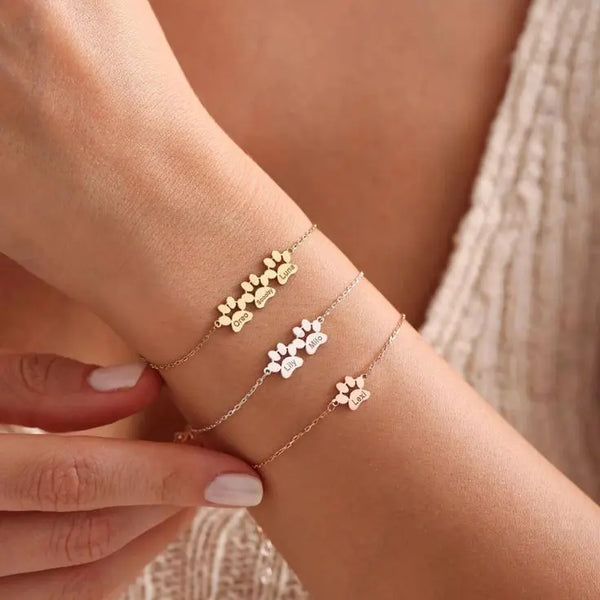
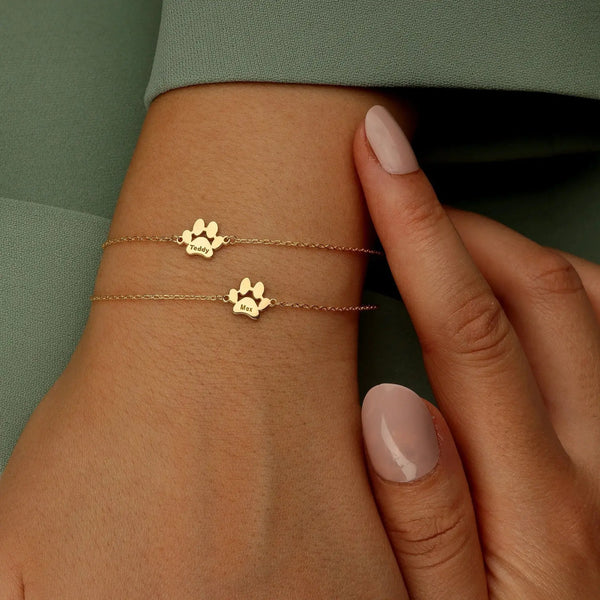
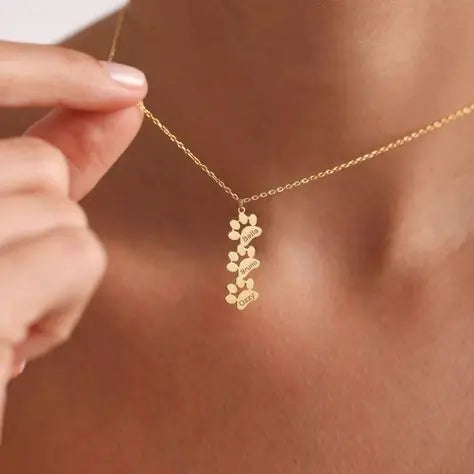
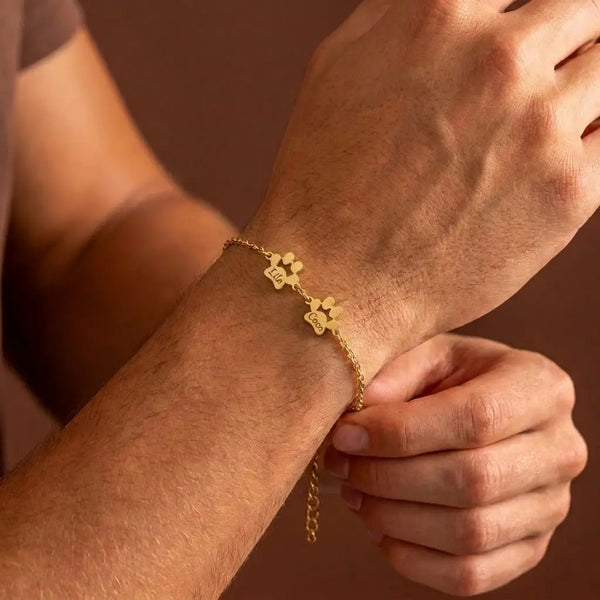
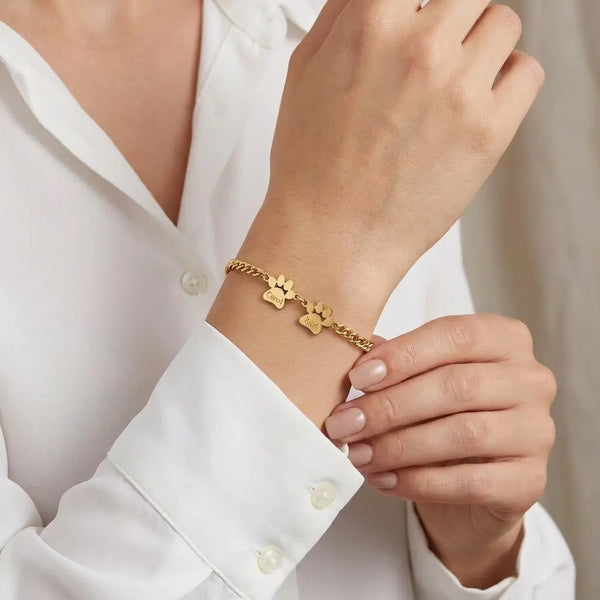
In early 2024, we shipped 50 paw bracelet samples to long-term customers with a request to wear daily, document their wear conditions, and return the piece in May 2026 for inspection.
Returned pieces (44 of 50):
- Tarnish observed: 0 of 44 pieces
- Visible color change: 0 of 44 pieces
- Engraving wear: 0 of 44 pieces
- PVD plating wear (gold-plated subset): 2 of 22 pieces showed minor thinning at the clasp — both customers reported daily swimming in chlorinated pools
- Chain wear: 3 of 44 showed minor chain stretch — all three from sleep-wear-only customers (chain stress from rolling over)
The data matches industry expectations: 316L itself does not tarnish or color-shift in normal use. PVD plating wear is the only consideration for daily wear over years, and it's localized to high-friction points.
"I got my ByHeart bracelet in 2024 and I have not taken it off — showers, ocean, sweat, two years of constant wear. Still looks identical to day one. My previous sterling silver chain needed polishing every six weeks. This is the upgrade I didn't know I needed."
— — Sofia M., ByHeart customer review (verified, May 2026)
If your stainless looks dull: how to restore it
If a 316L piece looks dull or slightly hazy, it's almost certainly surface buildup — soap residue, body oil, lotion, sunscreen — not tarnish. Try these in order:
- Soft cloth rub. Microfiber cloth, 30 seconds of polishing in one direction. Removes surface residue.
- Warm soapy water. Mild dish soap, soft toothbrush for crevices, rinse, pat dry.
- Avoid silver polish. Silver polish contains abrasives that can scratch the chromium oxide layer and damage PVD plating. Stainless doesn't need it.
- For PVD-plated pieces with visible thinning: have the piece re-plated by a jeweler ($30–$60) or contact the manufacturer (ByHeart's 2-year warranty covers plating defects).
Frequently asked questions
Will stainless steel jewelry turn my skin green?
No. Skin-greening is caused by copper in low-quality jewelry reacting with skin acids. 316L stainless contains no copper. The phenomenon is associated with brass, low-grade silver-plated copper, and costume jewelry — not with surgical-grade stainless.
Can stainless steel jewelry tarnish in saltwater?
Not tarnish in the traditional sense. Prolonged repeated saltwater exposure without rinsing can cause very minor surface micro-pitting over many months. Single exposures are harmless. Rinse with fresh water after the ocean.
How long does stainless steel jewelry stay shiny?
For 316L stainless: essentially indefinitely. Customers wearing pieces for 5–10 years report the same shine as day one. Surface buildup (lotion, residue) can dull the appearance temporarily — this cleans off with a soft cloth.
Why does my "stainless" piece look discolored after a year?
Most likely the piece is not 316L. Generic "stainless" listings — especially from marketplaces that don't disclose the grade — often use 304 or lower stainless that can show mild oxidation over time. The fix is to buy from manufacturers who disclose the grade.
What's the difference between "tarnish" and "plating wear"?
Tarnish is a chemical reaction (oxidation, sulfide formation) that changes the color of the metal itself. Plating wear is mechanical: a thin layer of metal is physically worn away by friction. Stainless base metal doesn't tarnish. PVD-plated stainless can show plating wear at clasps and friction points after 3–5 years.
Can I clean stainless steel jewelry in an ultrasonic cleaner?
Yes, for 316L base pieces. Avoid ultrasonic cleaners for PVD-plated pieces — the vibration can stress the plating bond.
Shop the collection: All stainless steel jewelry · Paw Print Bracelet (316L)
Read next: