PVD Coating on Stainless Steel: The Chemistry Behind Waterproof Jewelry
PVD Coating on Stainless Steel: The Chemistry Behind Waterproof Jewelry
TL;DR
PVD (physical vapor deposition) is the reason our gold and rose gold pieces don't turn your skin green. A solid metal is vaporized inside a vacuum chamber and fused to the surface of the jewelry at a molecular level — not painted, not dipped, not electroplated. This is why PVD-coated pieces survive daily wear for 5 to 10+ years instead of 6 to 24 months for standard electroplating. Every ByHeart piece uses 316L stainless steel with PVD gold, rose gold, or black coating where applicable, engraved by hand, waterproof for showers, sleep, workouts, and freshwater swimming.
PVD is one of those terms every jewelry brand puts on their product page and almost nobody explains. Physical vapor deposition. It sounds like a lab process because it is one. The reason it matters for personalized jewelry is that PVD is the difference between a piece that lasts a season and a piece that lasts a decade.
This is a plain-language explanation of what PVD actually does, how it's applied to our stainless steel, and why it's the reason our gold and rose gold pieces don't turn your skin green.
What PVD actually is
Physical vapor deposition is a process where a solid metal — gold, titanium, chromium — is heated inside a vacuum chamber until it turns into a vapor. That vapor then bonds to the surface of another metal at the molecular level. The result is a coating that is not painted on, not dipped, not electroplated. It's fused.
The coating layer is measured in microns — usually 1 to 4 microns thick — but its bond strength is what matters. Because the coating is molecularly fused rather than sitting on top of the base metal, it doesn't peel, chip, or flake with wear. This is the core difference between PVD and cheaper plating methods.

PVD versus electroplating: what changes for you
Electroplating is what most inexpensive gold jewelry uses. A base metal is dipped in a chemical bath with an electrical current, which deposits a thin layer of gold on the surface. The coating is real gold, but the bond is chemical, not molecular. Electroplated jewelry typically wears through in six months to two years of daily wear.
PVD-coated jewelry survives daily wear for five to ten years or more, and often much longer with reasonable care. The coating is harder than the underlying steel — PVD is used industrially to coat drill bits and machine tools because it resists abrasion. When you wear a PVD-coated bracelet in the shower, sleep in it, or bump it against a doorframe, the coating isn't giving up small amounts of gold. It's holding.
Why we use PVD on all our plated pieces
Personalized jewelry has a specific durability problem: it's engraved. Engraving cuts through any plating layer and exposes the base metal underneath. On electroplated pieces, this creates a corrosion vector — the cheaper base metal reacts with skin oils, sweat, and moisture, and the piece degrades from the engraving outward.
PVD solves this in two ways. First, the coating layer is thin enough that our engraving still cuts cleanly through it to the stainless steel underneath — so the engraving looks sharp and reads well against the gold surface. Second, the base metal is 316L stainless steel, which is corrosion-resistant on its own. Even where the engraving exposes the base metal, the piece doesn't degrade.
What colors PVD comes in, and what they're made of
Every PVD color is a specific chemistry. This matters because the color isn't paint — it's the actual metal that was vaporized in the coating chamber.
- Gold PVD is a titanium nitride and zirconium nitride blend, tuned to produce the specific warm gold tone. It's harder than real gold, so it wears better than solid gold plating.
- Rose gold PVD uses a similar base with copper added to shift the tone toward pink. The color is stable — it doesn't oxidize or shift toward orange over time.
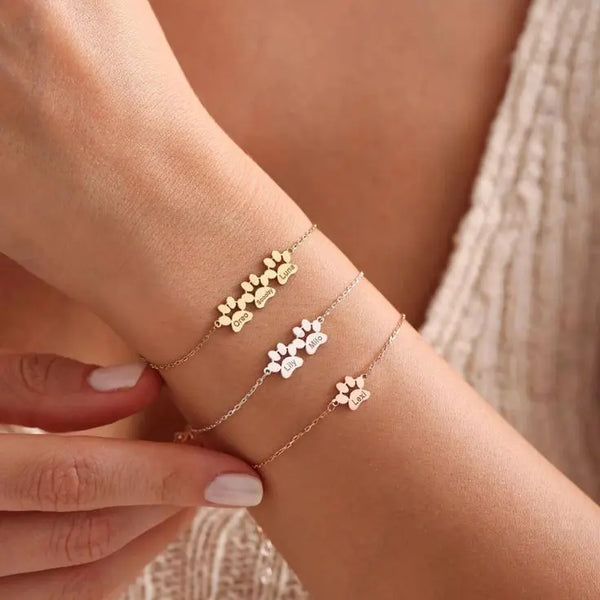
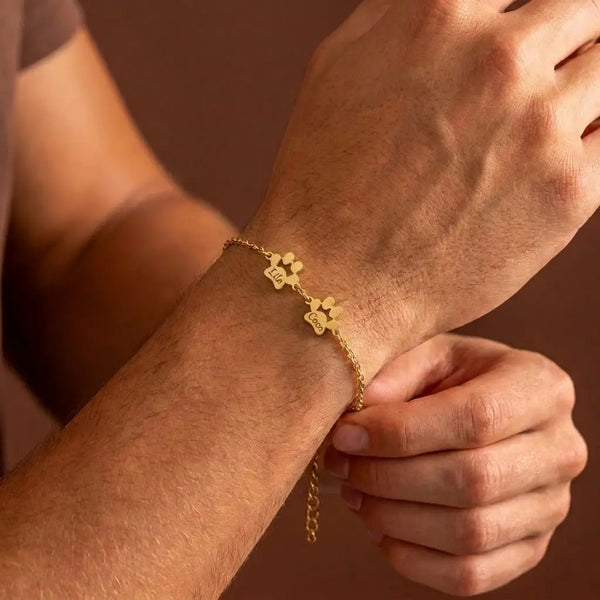
- Black PVD is typically titanium carbide or chromium carbide. Extremely hard, extremely scratch-resistant. Used on men's dog tags and paw print bracelets.
- Silver-tone pieces are usually not PVD-coated at all — they're the bare stainless steel, polished or brushed. This is why silver-tone pieces are effectively indestructible and why they cost less than gold-tone.
Why PVD-coated pieces are waterproof
The word waterproof gets thrown around loosely in jewelry marketing. Here's what it actually means for our pieces: you can shower in them, sweat in them, sleep in them, and swim in fresh water without any degradation of the coating or the engraving.
The reason is the combination of the base metal and the coating. 316L stainless steel — the same grade used in surgical implants and marine hardware — doesn't rust in freshwater exposure. The PVD coating doesn't dissolve in water because it's not a paint or a lacquer. It's a fused metal layer. Chlorine and salt water are the only real concerns.
What breaks PVD jewelry
PVD is hard, but it isn't indestructible. The failure modes worth knowing:
- Chlorine can gradually attack the coating over long, repeated exposure — hot tubs, chlorinated pools. Occasional pool wear is fine; daily hot-tub wear will shorten coating life.
- Salt water is more forgiving than chlorine but still worth rinsing off. Ocean swimming with your bracelet on is fine occasionally. Rinse with fresh water when you're done.
- Abrasive surfaces — sanding, rough workshop work, dragging the piece across concrete. PVD is harder than steel but not harder than sandpaper.
- Chemical cleaners — bleach, ammonia, harsh jewelry cleaners. Never use these on PVD. Warm soapy water and a soft cloth are enough.
The nickel question
316L stainless steel technically contains a small percentage of nickel — about 10 to 14 percent. The reason our pieces are safe for people with nickel allergies is that the nickel in 316L is chemically locked into the crystalline structure of the steel and does not leach out at normal skin contact. This is why 316L is used in medical implants.
PVD coating adds an additional layer between the base metal and the skin. On gold and rose gold PVD pieces, the surface you touch is not the stainless steel at all — it's titanium nitride. For people with severe nickel sensitivity, PVD-coated pieces are the safest bet, because the coating provides an additional barrier.

How to keep a PVD piece looking new
Realistic care, not fussy care. Wear it. Take it off before scrubbing floors or working with harsh chemicals. Rinse it with warm water and dry it with a soft cloth every few weeks. Store it in the original box when you're not wearing it for months at a time. That is genuinely all the care our pieces require.
If a piece develops surface scratches after years of wear, they're on the coating, not through it. The engraving stays sharp. The color stays true.
How to order
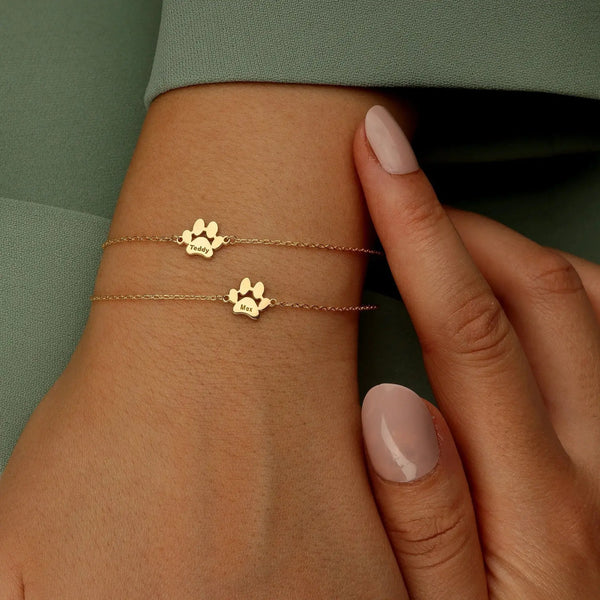
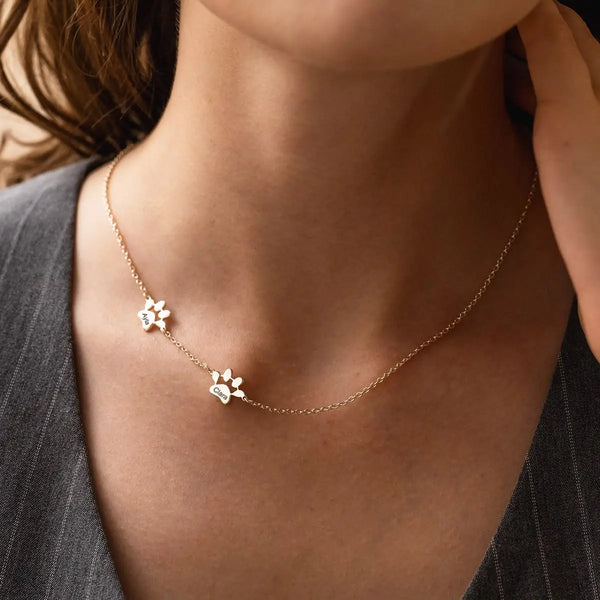
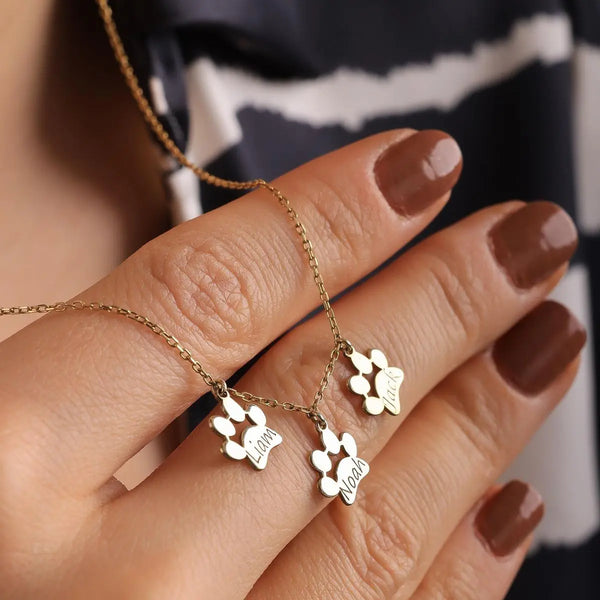
All our pieces use 316L stainless steel with PVD gold, rose gold, or black coating where applicable. Choose the tone that fits your daily wardrobe, add your engraving, and check out. Every piece is engraved by hand and ships in brand-neutral gift packaging.
Frequently Asked Questions
Will PVD coating wear off over time?
Slowly, and on friction points first. Because PVD is molecularly fused rather than glued on top, it doesn't flake or peel — it scratches gradually where the piece rubs against clothing, wrists, or countertops. After 5+ years of daily wear you may see surface scratches on high-friction edges, but the color stays true and the engraving stays sharp. This is very different from electroplated pieces, which flake and expose base metal at stress points within a year.
Can I wear PVD jewelry in the pool, the ocean, or a hot tub?
Fresh water is fine, including showers and swimming. Salt water is fine occasionally with a fresh water rinse afterward. Chlorinated pools are fine occasionally. Daily hot tub wear is what shortens coating life — the combination of heat and high chlorine concentration attacks the coating over repeated exposure. If you use a hot tub regularly, take the piece off first.
What is the difference between gold PVD and real gold plating?
Gold PVD is a titanium nitride and zirconium nitride blend tuned to a warm gold tone — harder than real gold, so it wears better than solid gold electroplating. Real gold electroplating deposits actual gold in a chemical bath, and the coating is softer and thinner, which is why it wears through in 6 to 24 months of daily contact. For daily wear, PVD outlasts real gold plating on a stainless steel base.
Is PVD-coated jewelry safe for nickel allergies?
Yes, and often safer than uncoated 316L. The base 316L contains nickel but locks it into the alloy, well below the EU release threshold. The PVD coating on gold and rose gold pieces adds a second barrier — the surface you actually touch is titanium nitride, not the steel underneath. For people with severe nickel sensitivity, PVD-coated pieces are the safest bet.
What ruins PVD jewelry?
Chemical cleaners (bleach, ammonia, harsh jewelry polishes), abrasive surfaces (sandpaper, rough workshop work), and prolonged repeated chlorine soaks. Warm soapy water and a soft cloth are all the care our pieces require. Store in the original box when you are not wearing the piece for months — that is genuinely the full care routine.