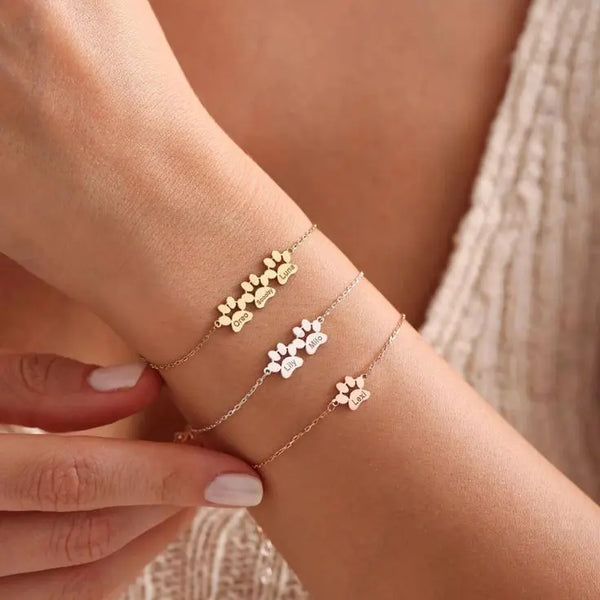
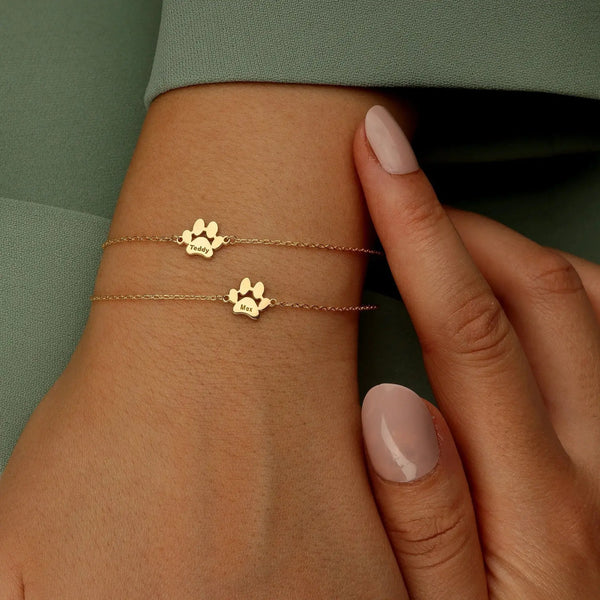
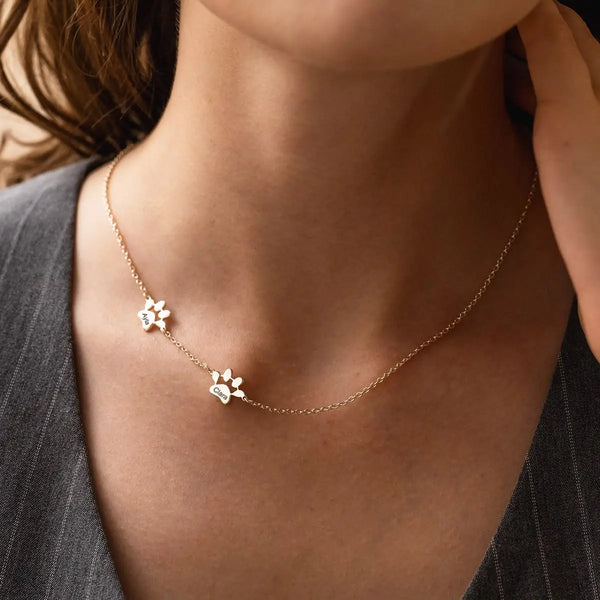
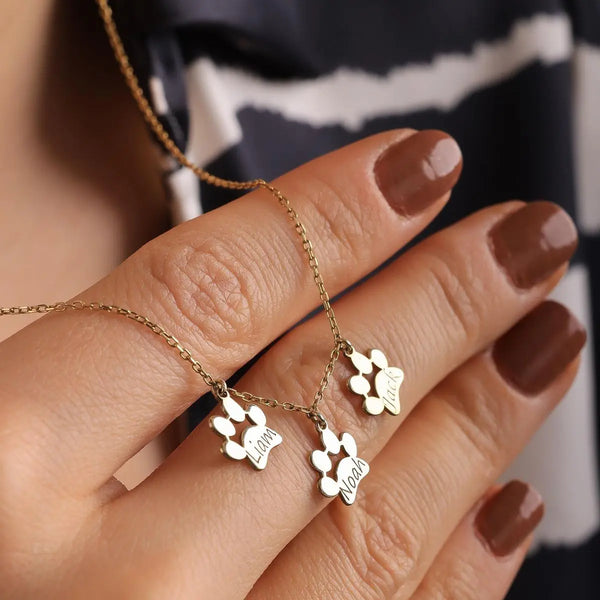
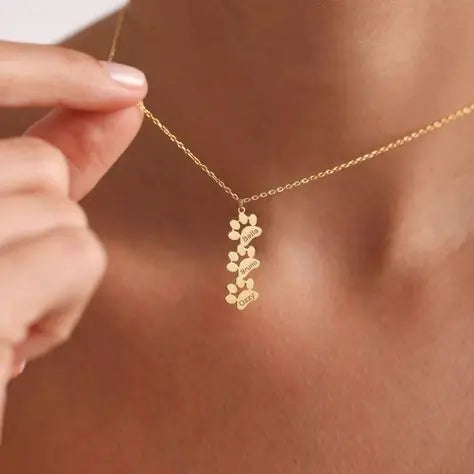
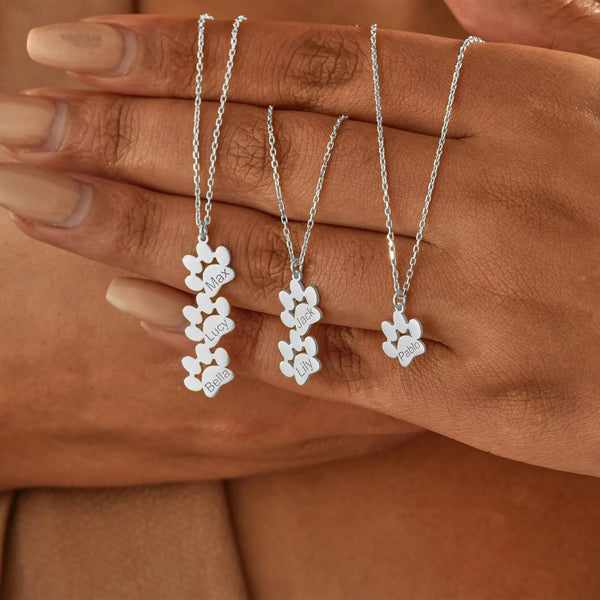
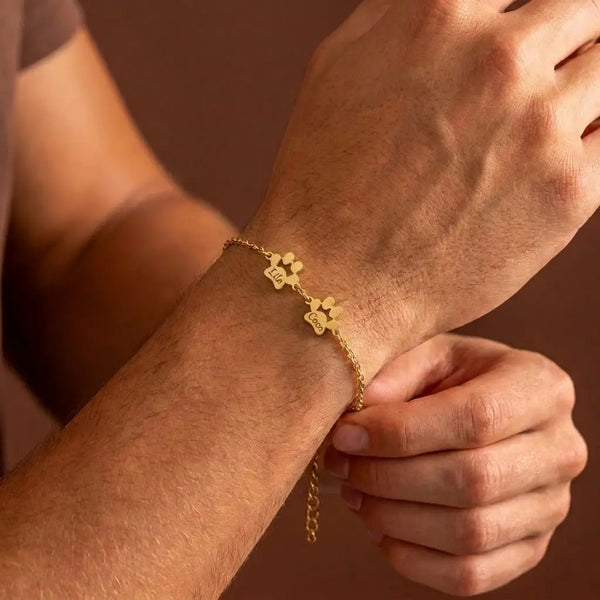
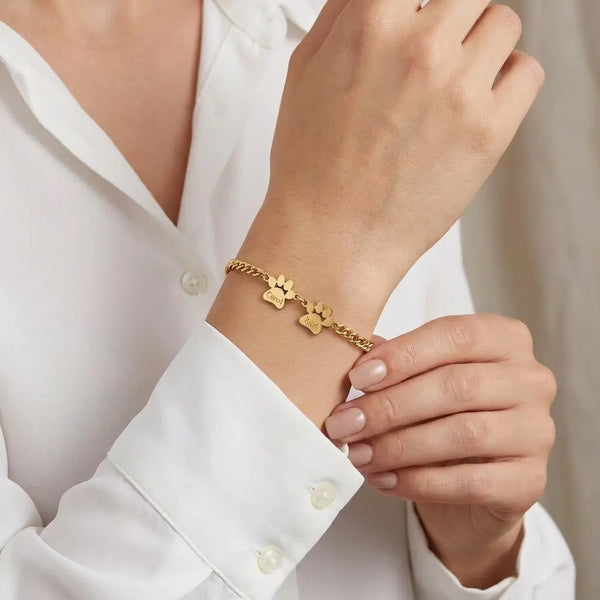
Do Engraved Names Fade? Causes, Prevention, Restoration
TL;DR
Real engraving cut into metal does not truly fade — it can visually soften from tarnish, coating wear, or friction filling the strokes with skin oils. Surface-marked (annealed) engraving does genuinely fade because the mark is only a thin oxide layer. Prevention is depth at purchase; restoration is limited but possible for tarnish-related dulling.
What "fading" actually looks like on engraved jewelry
Fading is a loose term. Buyers use it to describe several different things happening at the surface, and the fix for each is different.
Visual softening — engraving still there but harder to read
Engraved strokes fill with skin oils, dust, lotion residue, and micro-dust. The contrast between engraved lines and surrounding metal drops. The engraving looks softer even though the physical depth is unchanged. This is by far the most common thing people mean by "fading."
Coating wear-through on annealed pieces
If the engraving is a surface mark on a coated piece, wear of the coating removes the mark along with the coating layer. This is genuine loss, not softening. Repair means re-coating and re-engraving, which is rarely economical.
Metal polish-down from repeated cleaning
Aggressive polishing removes a microscopic layer of metal with each session. Over years, this can round off the crisp edges of engraved strokes, softening the visual sharpness even though depth remains.
True depth loss from mechanical abrasion
Rare on ordinary wear, common on rings that spend years against manual tools or gym equipment. The friction gradually wears the metal down, reducing the physical depth of engraving until the strokes disappear entirely.
Which of these is happening to your piece
Three tests separate the causes.
Fingernail test. If you can still feel the engraving with a fingernail, the depth is intact. The apparent fading is visual softening from filled strokes or surface haze. This is fully reversible.
Magnification check. Under a 10x loupe, look at the walls inside each engraved stroke. Clean, defined walls mean the engraving is fine and the surface just needs cleaning. Rounded, worn walls mean actual metal loss.
Coating check. On coated pieces, look at high-wear zones like the underside of a bracelet or the inside of a ring. If the coating has worn through, and the engraving was applied after coating, the engraved lines will show base-metal color instead of coating color. If the engraving was applied before coating, the engraving stays visible even as the surrounding coating wears.
Why some engraving fades and other engraving does not
Three factors govern engraving longevity: the method used, the metal it is cut into, and the coating (or absence of one).
Method
Cut engraving (laser or mechanical) removes metal. Surface annealing colors the metal without removing it. Cut engraving lasts. Annealing fades. See the depth breakdown for the numbers.
Metal
Harder base metals retain engraving longer. 316L stainless (Mohs 5.5-6.5) holds engraving well for daily wear. Sterling silver (Mohs 2.5-3) holds engraving fine but is softer, so the edges can round over years of polishing. Gold vermeil pieces are engraved on the silver base and behave like sterling. Solid gold pieces (14K, 18K) hold engraving well but see more polishing over decades of ownership, gradually softening the strokes.
Coating
Non-coated pieces show engraving as a groove in the same metal color; the visual effect depends on light and shadow. Coated pieces where engraving is applied after coating show engraving as a color contrast (base metal color exposed in the strokes) — highly readable but locally more vulnerable to coating wear. Our guide on PVD coating chemistry covers the layering physics in detail.
Prevention: what you decide at purchase
Most "my engraving faded" outcomes are decided before the buyer receives the piece.
Ask for cut engraving, not surface marking
The phrase "laser engraved" covers both. A brand that explicitly cuts (with a real depth mentioned) is describing a permanent process. A brand that vaguely says "laser engraved" without depth may be selling annealing.
Choose a hard-enough base metal
316L stainless is the workhorse. Sterling silver takes engraving fine but softens visually over decades of polishing. Gold vermeil behaves like sterling underneath the plating.
Verify the engraving depth in advance if possible
Reputable personalized-jewelry brands can quote an approximate depth. "Approximately 0.1 to 0.15 mm" is a real specification. "Deep enough to last" is not.
Consider engraving location
Engraving on the outside of a bracelet or ring wears differently than engraving on the inside. Inside surfaces see less impact but more sweat and friction. Outside surfaces see more knocks but less continuous contact. Neither is wrong; both influence longevity.
Prevention: care habits that extend engraving life
Clean the engraved area regularly with a soft brush
A soft toothbrush and mild soap once a month removes skin oils and lotion residue that visually soften engraving. This is not polishing — it does not remove metal — it just cleans debris out of the strokes.
Skip abrasive polish on engraved sections
Silver polishing cloths, jewelry polish paste, and cream cleaners will slowly round off engraved edges over years of use. If you polish sterling silver pieces, work around the engraved area, not across it.
Take off for hard manual work
Rings especially. Weightlifting, tools, gardening, gym equipment — remove the piece if it will see aggressive contact. Bracelets and necklaces are less exposed but still benefit from removal during intense physical work.
Dry after chloride exposure
Pool water and salt water can dull the finish around engraving, particularly on coated pieces where the engraved lines expose base metal. Rinse and dry after exposure. The finish stays crisper longer. Our 316L vs 304 stainless steel guide covers what chloride does to different alloys.
Restoration: what can and cannot be done
What responds well to restoration
- Filled strokes visually softening — a jeweler cleans with a soft brush and mild solvent. Full restoration.
- Tarnish on sterling silver dulling contrast — professional cleaning restores contrast. Full or near-full restoration.
- Light coating haze on PVD — soft microfiber and mild soap removes the haze. Full restoration.
What responds partially
- Rounded edges from years of polishing — some sharpening is possible on the strokes themselves via careful re-engraving of the same lines, but requires the original file or a very careful hand. Rarely economical below $200 pieces.
- Coating worn through around engraving — re-coating is possible but destroys and re-creates the engraving in the process. Realistically means "new piece."
What cannot be restored
- Surface-annealed marks that faded with coating wear. The mark was never a physical groove; there is nothing to restore.
- Fully worn-down engraving on ring shanks that saw years of manual work. The metal is gone.
Special case: personalized memorial pieces
Memorial jewelry carries higher emotional stakes for legibility over decades. Two rules matter more here.
First, insist on cut engraving with confirmed depth. Surface annealing is not appropriate for a piece intended to preserve a name for years.
Second, if the memorial is on a photo projection or photo locket piece, remember that the projection element itself is separate from the engraving. Our comparison of photo projection necklace types covers how the projection element ages.
The realistic longevity summary
| Engraving type + metal | Realistic visible life |
|---|---|
| Cut engraving (0.1+ mm) on 316L stainless | Decades |
| Cut engraving on sterling silver | Decades, softens gradually with polishing |
| Cut engraving on solid 14K/18K gold | Decades |
| Cut engraving on PVD-coated 316L (engraved before coating) | Decades, engraving survives coating wear |
| Surface annealing on PVD-coated stainless | 1-5 years, fades as coating wears |
| Surface annealing on bare stainless | 2-5 years, oxide layer wears with surface |
The pattern is consistent: real cut engraving lasts as long as the metal does. Surface marking is a different product and should not be sold as the same thing.